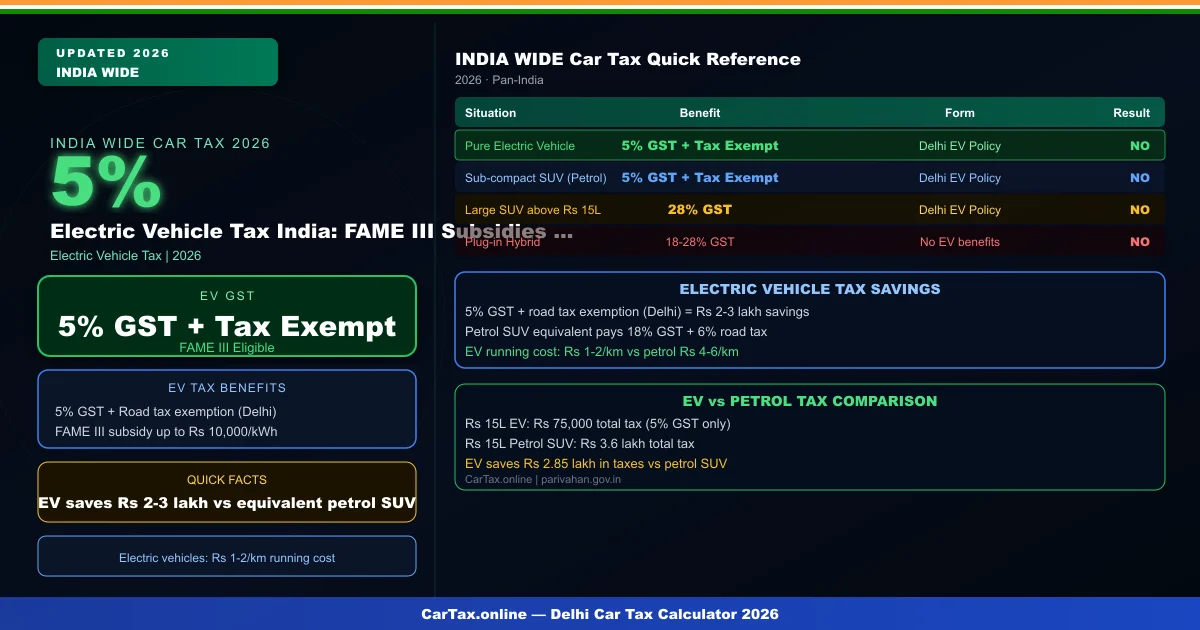
April 12, 2026 in India — Electric vehicle tax benefits in India have reached their most attractive levels ever. With 5% GST, FAME III subsidies, and state incentives, EVs can save you Rs 3-5 lakh compared to equivalent petrol/diesel vehicles. This guide covers all electric vehicle tax benefits available in 2026.
India's ambitious target of 30% EV penetration by 2030 has driven one of the world's most comprehensive incentive structures for electric vehicle buyers.
Electric Vehicle Tax Benefits Overview
| Tax Component | Petrol/Diesel Car | Electric Vehicle | Savings |
|---|---|---|---|
| GST | 18-28% | 5% | Rs 2-4 lakh |
| Road Tax | 2-15% | 0% (exempt) | Rs 0-3 lakh |
| Registration Fee | Rs 200-600 | Rs 0 (waived) | Rs 400-600 |
| FAME III Subsidy | Not applicable | Up to Rs 10 lakh | Up to Rs 10 lakh |
GST: The Biggest Tax Saver
Under India GST 2.0, pure electric vehicles attract only 5% GST:
- Small EV (< Rs 10L): Save Rs 1.30 lakh vs petrol
- Mid EV (Rs 10-20L): Save Rs 2.60 lakh vs petrol
- Premium EV (> Rs 20L): Save Rs 4.60 lakh vs luxury rate
FAME III Subsidies
The FAME III (Faster Adoption and Manufacturing of Electric Vehicles) scheme provides direct financial support:
| Vehicle Category | Subsidy Amount | Requirements |
|---|---|---|
| 2-Wheelers | Up to Rs 10,000 | AIS 038 certification |
| 3-Wheelers | Up to Rs 50,000 | AIS 038 certification |
| 4-Wheelers (< Rs 15L) | Up to Rs 2.5 lakh | Local assembly requirements |
| 4-Wheelers (> Rs 15L) | Up to Rs 10 lakh | PLI scheme compliance |
| Electric Buses | Up to Rs 20 lakh | Public transport focus |
State EV Incentives
Most Indian states offer additional state EV incentives:
- Delhi: Rs 1.5 lakh subsidy + free registration
- Maharashtra: Rs 2.5 lakh subsidy + road tax exemption
- Gujarat: Rs 1.5 lakh subsidy + registration waiver
- Karnataka: Rs 1.5 lakh subsidy + priority registration
- Punjab: Rs 1.5 lakh subsidy for all EV categories
Total EV Tax Savings Examples
Tata Tiago EV
- Ex-showroom: Rs 8.50 lakh
- GST (5%): Rs 42,500 vs Rs 1.53 lakh (18%)
- Road Tax: Rs 0 (exempt in most states)
- Total tax savings: Rs 2-3 lakh vs petrol Tiago
MG Windsor EV
- Ex-showroom: Rs 15.00 lakh
- GST (5%): Rs 75,000 vs Rs 2.70 lakh (18%)
- Road Tax: Rs 0 (exempt in most states)
- FAME III: Up to Rs 2.5 lakh
- Total tax savings: Rs 5+ lakh
How to Claim EV Tax Benefits
- GST: Automatic at dealer - 5% applied at billing
- Road Tax Exemption: Apply at RTO with EV certification
- State Subsidy: Apply through state EV portal post-purchase
- FAME III: Dealers claim on your behalf at time of purchase
EV Running Cost Advantages
Beyond taxes, EVs offer lower running costs:
- Electricity cost: Rs 0.80-1.20 per km vs Rs 3-5 for petrol
- Maintenance: No oil changes, fewer brake replacements
- Zero green tax: No annual pollution tax
Frequently Asked Questions
What is the GST rate on electric cars in India?
Pure electric vehicles attract only 5% GST under India GST 2.0. This is a significant reduction from 18% for regular cars and 28% for luxury vehicles.
How much is the FAME III subsidy for 4-wheelers?
FAME III subsidies for 4-wheelers range from Rs 50,000 to Rs 10 lakh depending on vehicle price, localization content, and PLI scheme compliance. Premium EVs above Rs 15 lakh qualify for the highest subsidies.
Are all Indian states offering road tax exemption for EVs?
Most states have complete road tax exemption for EVs, but some have limited exemptions or phase-out schedules. Check your state transport department for current rules.
Can I claim both state subsidy and FAME III?
Yes, state subsidies and FAME III are stackable. Combined incentives can reach Rs 5+ lakh on premium EVs, making electric vehicles significantly cheaper than petrol equivalents.
Conclusion
EV tax benefits can save lakhs. Use our EV savings calculator to see your total benefits including GST, subsidies, and state incentives.
Disclaimer: This article is for informational purposes only. Subsidies are subject to government approvals and state budgets. Verify before purchasing.
अस्वीकरण: यह लेख केवल सूचनात्मक उद्देश्यों के लिए है। प्रोत्साहन राशि सरकारी अनुमोदन के अधीन है।
Official Resources: Parivahan Portal | Vahan Road Tax | India GST Portal