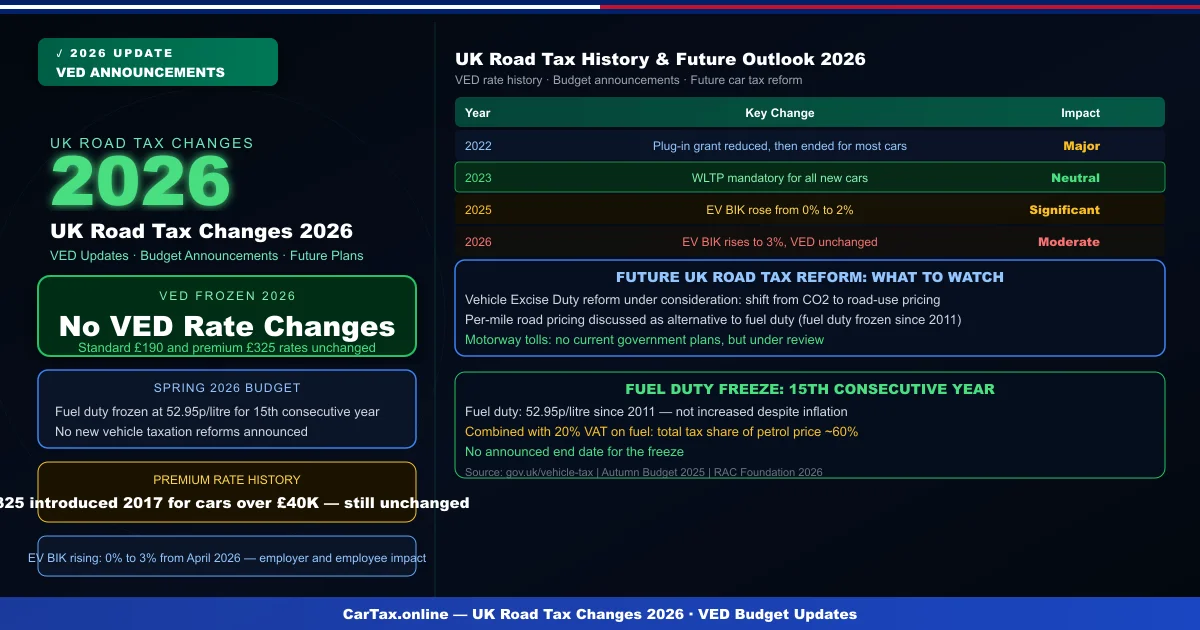
The United Kingdom's Vehicle Excise Duty system has undergone significant changes over the past decade, and drivers should stay informed about how the landscape continues to evolve. The 2026 tax year brings new considerations, particularly around electric vehicle taxation and the gradual phasing out of incentives that have supported EV adoption since 2018.
UK drivers face a wide range of tax obligations that apply from the moment a vehicle is purchased through to its entire lifespan on British roads. Understanding how UK car tax works in 2026 is essential for budgeting, legal compliance, and making informed decisions about vehicle purchases. Whether you drive a petrol hatchback, a diesel SUV, or a pure electric vehicle, the tax rules affect your wallet directly.
## How Does UK Car Tax Work in 2026?
The primary form of car tax in the United Kingdom is Vehicle Excise Duty (VED), commonly called road tax even though the Road Fund it was originally tied to was abolished in 1937. VED is an annual charge applied to most vehicles registered for use on public roads. The amount you pay depends on several factors including the vehicle type, its CO2 emissions at the point of first registration, its list price, and whether it qualifies for any exemptions.
The standard rate for most cars registered after April 2018 is £190 per year from year two onwards. The first-year rate is calculated based on official CO2 emission grades, ranging from £0 for zero-emission vehicles to £2,605 for the highest-emitting cars. Pure electric vehicles enjoy a significant advantage, paying nothing for the first five years of registration. This makes choosing an electric car one of the most effective ways to reduce motoring costs in the long term.
Different rules apply to other vehicle categories. Motorcycles fall into their own VED bands based on engine size, with rates starting as low as £21 per year for machines under 150cc. Vans are taxed separately from cars, with light goods vehicles currently paying £320 per year. Larger goods vehicles over 3.5 tonnes gross weight are classified as heavy goods vehicles and face different rates including the HGV Road User Levy.
### The Gradual Reduction of EV Tax Advantages
One of the most significant recent changes is the tapering of the electric vehicle VED exemption. While pure electric vehicles still pay £0 road tax for their first five years of registration, the future trajectory suggests this advantage will diminish. Fleet managers and private buyers considering electric vehicles should factor in the eventual standard rate of £190 per year when calculating long-term running costs.
The Company Car Tax BIK system has been more stable, maintaining the 0% rate for pure electric vehicles through 2026-27. However, this rate was originally intended as a transitional measure, and fiscal forecasts suggest the BIK rate for EVs will begin rising in coming tax years toward parity with low-emission internal combustion engine vehicles.
### VED Rate Adjustments for 2026
The standard annual VED rate for most passenger cars remained at £190 for the 2026 tax year, continuing the freeze that has been in place for several years. The premium rate for vehicles with a list price exceeding £40,000 also remains unchanged at £325 per year, applying from the second through sixth year of registration.
CO2 emission bands used for first-year VED rates are reviewed periodically. Drivers purchasing new vehicles should verify current band thresholds, as these determine the initial tax liability and influence the long-term cost of ownership calculation.
### Consultation on Vehicle Taxation Reform
HM Treasury has continued consulting on the future structure of motoring taxation. With declining fuel duty receipts as electric vehicle adoption accelerates, the government is exploring alternative funding mechanisms for road infrastructure. Potential approaches include road pricing based on mileage, congestion charging expansion, and revised VED structures that more directly link taxation to road usage.
Fleet managers and individuals should monitor these developments closely, as fundamental reform to vehicle taxation could significantly affect vehicle selection decisions and long-term transport planning.
## Frequently Asked Questions
**Has the premium car rate (£40,000 threshold) changed?**
The £40,000 list price threshold and £325 annual premium rate remained unchanged for 2026. However, this threshold has not been inflation-adjusted and is increasingly catching mid-market premium vehicles.
**When will EV VED exemptions end?**
No firm end date has been confirmed for the electric vehicle VED exemption. The 2026 tax year maintains the exemption, but fiscal statements suggest a gradual phase-in of minimum rates in future budgets.
**Are there proposed changes to road pricing?**
Several government consultations have explored mileage-based road pricing as a replacement for fuel duty. No legislation has been enacted as of 2026, but drivers should expect continued debate on sustainable road funding.
**Do VED rates differ between England, Scotland, and Wales?**
VED rates are set by the UK government and apply uniformly across all four nations of the United Kingdom. Scotland, Wales, and Northern Ireland have devolved powers in other areas but Vehicle Excise Duty remains a reserved matter.
Disclaimer: CarTax.online provides general information for guidance purposes only. Tax rules and rates are subject to change. Always verify current rates with gov.uk or HMRC before making financial decisions. This guide was last reviewed in 2026.
Frequently Asked Questions
Q: How much is car tax (VED) in the UK 2026?
Car tax rates in the UK depend on your vehicle's CO2 emissions and list price. Standard rates start from £190 per year for petrol and diesel cars, with zero-rated VED for EVs. First-year rates vary from £0 to £2,605 depending on emissions. Additional premiums apply for vehicles over £40,000.
Q: How do I check if my car is taxed online?
You can check your vehicle's tax status for free on the Gov.uk website at gov.uk/check-vehicle-tax. You'll need your vehicle's registration number (number plate). You can also check via the Motor Insurance Database to verify road tax and insurance status simultaneously.
Q: Can I get a refund on car tax if I sell my vehicle?
Yes — if you sell or scrap your vehicle, you can claim a refund on any full months of remaining road tax. Contact DVLA with the V11 reminder letter or apply online at gov.uk. Refunds are usually processed within 4-6 weeks. Related: Big Car Tax Changes Coming to UK 2026 | Car Tax Changes 2026 UK | Car Tax Changes UK 2026 | UK Road Tax Bands 2026.
Q: Is road tax refund available when transferring ownership?
No — road tax does not transfer with the vehicle. When you sell your car, the tax is automatically cancelled and any remaining months are refunded to you by DVLA. The new owner must tax the vehicle immediately. As a buyer, always verify the vehicle's tax status before purchasing.
Q: What is the luxury car tax threshold in the UK 2026?
The additional rate for vehicles over £40,000 (list price) adds £410 per year to standard VED rates for years 2-6 of registration. This surcharge brings the annual cost for high-emission vehicles over £40,000 to around £600-690 per year. Pure EVs under £40,000 pay zero VED.
⚠ Financial & Legal Disclaimer
All information provided in this article is for educational and informational purposes only. The content is synthesized based on verbal communications, extensive internet research, and official government website data as of the date of publishing. Tax laws and insurance policies are subject to frequent changes by the authorities. We strive for accuracy, but we recommend that you consult a qualified professional (CA, CPA, or Tax Consultant) before making any financial decisions. For personalized assistance, you can also connect with our in-house experts through our Contact Us page.
Ready to calculate your car tax?
Use our free calculator to get an instant, accurate estimate for your country and state.
Open Car Tax Calculator →