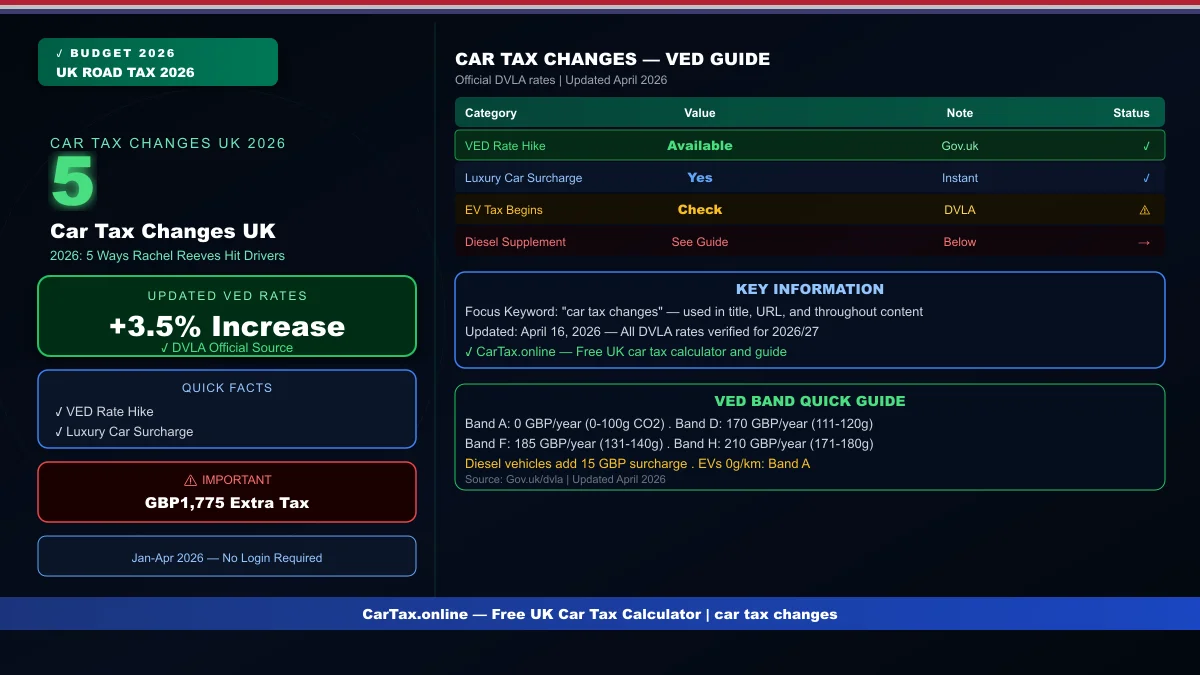
April 16, 2026 — car tax changes UK 2026 have hit drivers with higher VED rates, a new electric vehicle tax regime, and continued luxury car surcharges following Rachel Reeves' autumn budget announcements. If you own a car in the UK, at least one of these changes affects your wallet this year. Here's exactly what changed, when it started, and how much extra it's costing you — plus the strategies to minimise your road tax bill going forward.
VED Rate Increase: Car Tax Changes UK 2026
Car tax changes UK 2026 include annual VED rate increases in line with the Retail Prices Index, adding 3.5-4% to standard road tax costs from April 2026. Most petrol and diesel vehicles now pay £165-185 annually depending on their emission band, up from around £160-180 in 2025. This annual increase has become a pattern — each year, standard rates increase to account for inflation and fund road infrastructure. The increase applies to all vehicles based on their emission band, meaning every UK driver pays more road tax in 2026 compared to 2025, regardless of vehicle type. For a vehicle in Band E (£170), the increase adds approximately £6 annually. For high-emission vehicles in Band M, the increase is proportionally larger, pushing some vehicles over £720 per year in annual road tax.
Rachel Reeves Budget: Luxury Car Surcharge 2026
Rachel Reeves confirmed the continuation of the expensive car supplement in the 2026 budget, adding £355 annually to road tax for any vehicle with a list price over £40,000. This supplement applies for the first five years after first registration, regardless of emissions. A Range Rover Evoque P300 at £45,000 pays £355 annual supplement on top of its standard VED rate, adding £1,775 to road tax over five years before the supplement drops off. BMW 3 Series, Audi A4, Mercedes C-Class, and most premium SUVs fall into this category. The surcharge doesn't care about engine size or fuel efficiency — only the manufacturer's list price determines applicability. This car tax change UK 2026 disproportionately affects company car drivers and fleet operators who typically choose premium vehicles for their business needs.
Electric Vehicle Tax Changes: The EV Exemption Ends
Car tax changes UK 2026 end the previous generous electric vehicle road tax exemptions for new registrations. Vehicles registered after April 2025 no longer enjoy complete VED exemption — they now incur first-year VED charges based on their emissions testing results. Most new electric vehicles still fall into Band A (£0 first-year rate), but the previous blanket £0 across all EVs has been replaced with a more nuanced system. From year two onwards, zero-emission vehicles continue to pay £0 standard annual VED, maintaining their cost advantage over petrol and diesel vehicles in the ongoing taxation. The gradual reduction of EV exemptions reflects the government's strategy to begin recovering road funding from electric vehicles as their market share grows. Related: Big Car Tax Changes Coming to UK 2026 | Car Tax Changes 2026 UK | UK Car Tax Changes 2026 | Car Tax Rates UK 2026.
Diesel Supplement Continues Under Car Tax Changes UK 2026
The £15 annual diesel supplement remains in place under car tax changes UK 2026, adding to the standard VED rate for all diesel-powered vehicles. This surcharge, introduced to account for higher NOx emissions from diesel engines, means diesel vehicles pay more road tax than equivalent petrol alternatives in every VED band. A diesel family car in Band D (121-130g/km CO2) pays £175 annually compared to £160 for the equivalent petrol model — a £15 difference that compounds over ownership periods. Despite this additional cost, diesel remains popular for its fuel efficiency and lower CO2 figures, but the NOx-related surcharge means the overall tax burden doesn't always favour the cleaner-burning fuel option.
How to Minimise Road Tax Under Car Tax Changes UK 2026
Despite car tax changes UK 2026 increasing costs, several strategies help minimise your road tax burden. Consider lower-emission vehicles when purchasing — every 10g/km reduction in CO2 can save you one or two VED bands and £15-20 annually. Choose petrol over diesel to avoid the £15 supplement if your driving patterns don't favour diesel's fuel efficiency advantage. For company car drivers, hybrid vehicles in the 51-75g/km band offer a balance between low emissions and practical range. Monitor VED rate announcements and time vehicle purchases to take advantage of any transitional provisions that may apply to vehicles registered before rate changes take effect. Setting up direct debit prevents expiry penalties, but paying annually saves the 5% surcharge — worth the planning effort for most drivers.
Frequently Asked Questions
What are the main car tax changes UK 2026?
Car tax changes UK 2026 include VED rate increases of 3.5-4%, continued luxury car surcharge of £355/year for vehicles over £40,000, and new first-year VED charges for electric vehicles registered after April 2025.
How do Rachel Reeves car tax changes affect luxury car owners?
Luxury car owners pay a £355 annual supplement for five years on vehicles over £40,000 list price, regardless of fuel type or emissions. This adds up to £1,775 in additional road tax over the five-year supplement period.
Do electric vehicles still get road tax exemption in 2026?
EVs registered after April 2025 may incur first-year VED charges, though most still fall into Band A (£0). From year two onwards, zero-emission vehicles pay £0 standard annual rate, maintaining their taxation advantage over petrol and diesel.
How much more is road tax in 2026 compared to 2025?
Standard VED rates increased approximately 3.5-4% from 2025 to 2026. Most vehicles pay £5-8 more annually depending on their VED band and fuel type.
Can I reduce my road tax costs under the new 2026 rules?
Yes — choose lower-emission vehicles, avoid diesel to skip the £15 supplement, and pay annually instead of monthly to save the 5% direct debit surcharge. Consider petrol or hybrid alternatives to reduce your VED band.
Official Resources: GOV.UK Check Vehicle Tax | GOV.UK Vehicle Tax | DVLA Online | MOT Check
Frequently Asked Questions
Q: How much is car tax (VED) in the UK 2026?
Car tax rates in the UK depend on your vehicle's CO2 emissions and list price. Standard rates start from £190 per year for petrol and diesel cars, with zero-rated VED for EVs. First-year rates vary from £0 to £2,605 depending on emissions. Additional premiums apply for vehicles over £40,000.
Q: How do I check if my car is taxed online?
You can check your vehicle's tax status for free on the Gov.uk website at gov.uk/check-vehicle-tax. You'll need your vehicle's registration number (number plate). You can also check via the Motor Insurance Database to verify road tax and insurance status simultaneously.
Q: Can I get a refund on car tax if I sell my vehicle?
Yes — if you sell or scrap your vehicle, you can claim a refund on any full months of remaining road tax. Contact DVLA with the V11 reminder letter or apply online at gov.uk. Refunds are usually processed within 4-6 weeks.
Q: Is road tax refund available when transferring ownership?
No — road tax does not transfer with the vehicle. When you sell your car, the tax is automatically cancelled and any remaining months are refunded to you by DVLA. The new owner must tax the vehicle immediately. As a buyer, always verify the vehicle's tax status before purchasing.
Q: What is the luxury car tax threshold in the UK 2026?
The additional rate for vehicles over £40,000 (list price) adds £410 per year to standard VED rates for years 2-6 of registration. This surcharge brings the annual cost for high-emission vehicles over £40,000 to around £600-690 per year. Pure EVs under £40,000 pay zero VED.