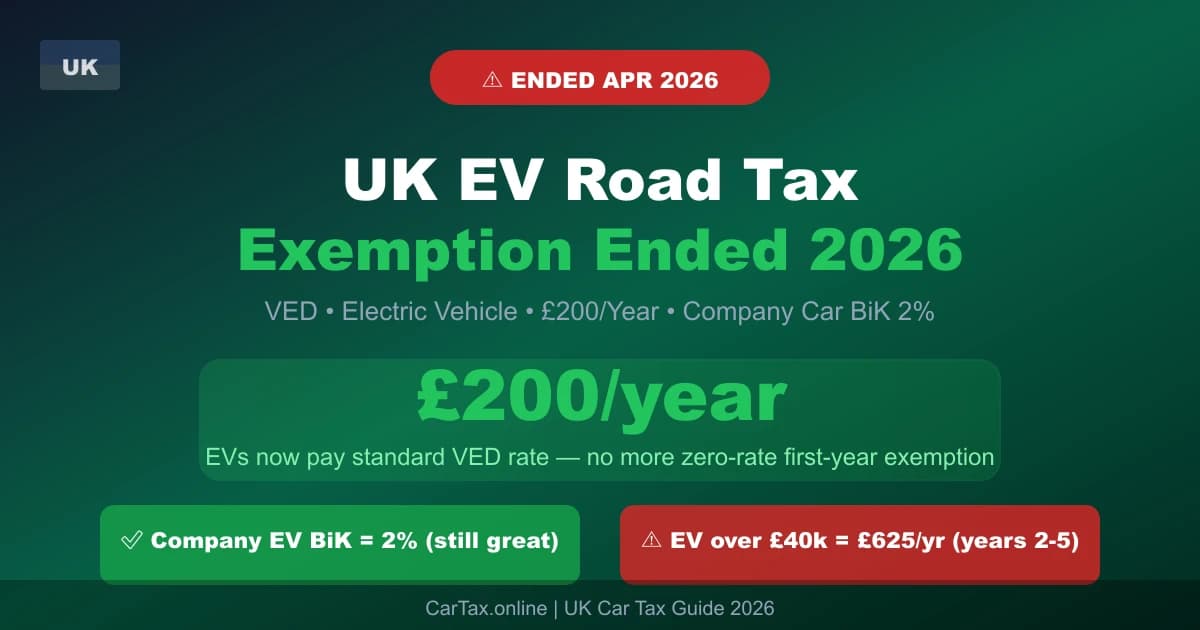
April 26, 2026 in London, United Kingdom — April 1, 2026 marked the end of an era for UK electric vehicle owners. The government's zero-emission Vehicle Excise Duty (VED) exemption, which saved EV drivers hundreds of pounds in first-year road tax, officially ended. All EVs registered from this date now pay the standard £200/year road tax rate from year 1.
What Changed on April 1, 2026
Before April 1, 2026, electric vehicles with zero CO2 emissions were exempt from the first-year VED rate — effectively paying £0 road tax in their first year. Some qualifying low-emission plug-in hybrids also benefited from reduced first-year rates. From April 1, 2026, these exemptions are removed.
The changes implemented were:
- EVs no longer exempt from first-year VED: Zero-emission EVs now pay the standard rate of £200/year from registration
- Luxury car threshold reduced: The expensive car supplement threshold dropped from £50,000 to £40,000, affecting more EVs
- PHEVs unaffected: Plug-in hybrids were already taxed at their respective CO2 band rates
New VED Rules for EVs in 2026
| Vehicle Type | Price | VED From Apr 2026 | Years 2-5 |
|---|---|---|---|
| Electric Vehicle | Under £40,000 | £200/year | £200/year |
| Electric Vehicle | £40,000+ | £200/year | £625/year (£200 + £425 supplement) |
| Plug-in Hybrid | Any | Band rate (e.g. 1-50g/km = £10) | £200/year |
| Petrol/Diesel | Under £40,000 | Band rate (e.g. 151g/km = £350) | £200/year |
| Petrol/Diesel | £40,000+ | Band rate | £625/year |
How This Affects Popular EVs
| Vehicle | Price | VED Before Apr 2026 | VED After Apr 2026 |
|---|---|---|---|
| Tesla Model 3 RWD | £38,990 | £0 first year | £200/year (all years) |
| Tesla Model Y RWD | £44,990 | £0 first year | £200 first year, £625 years 2-5 |
| Hyundai Ioniq 5 | £46,000 | £0 first year | £200 first year, £625 years 2-5 |
| BMW i4 eDrive35 | £52,000 | £0 first year | £200 first year, £625 years 2-5 |
| Mercedes EQS 450+ | £107,000 | £0 first year | £200 first year, £625 years 2-5 |
Good News: Company Car EV BiK Remains 2%
Despite the VED changes, the company car Benefit-in-Kind (BiK) rate for electric vehicles remains at just 2% for the 2026-27 tax year. This makes EVs extremely tax-efficient as company vehicles:
Example: Tesla Model Y Performance at £60,000
- BiK value (2%): £1,200/year
- Tax at 40% rate: £480/year personal tax
- Vs petrol equivalent at 37%: £22,200/year BiK = £8,880/year personal tax
For employers, employer NIC on company car BiK is also reduced for EVs compared to high-emission vehicles.
Still Worth Buying an EV in 2026?
Despite the VED change, EVs remain financially compelling when you factor in the total cost of ownership:
- Fuel savings: Charging at home costs 30-50% less per mile than petrol or diesel
- Maintenance savings: EVs have fewer moving parts, no oil changes, no transmission service
- Company car BiK: 2% BiK rate for EVs vs 37% for high-emission cars
- London Congestion Charge: EVs still qualify for 100% discount (up to £18.50/day saving)
- VED cost: £200/year is the same as the cheapest petrol car — not a disadvantage
What About Plug-In Hybrids?
Plug-in hybrids were never eligible for the zero-rate VED exemption. They are taxed at their respective CO2 band rates. A PHEV emitting 45g/km pays £10 first-year VED. From year 2, all PHEVs pay the standard £200/year rate.
The government has been gradually reducing BiK support for PHEVs. Many employers are now choosing pure EVs over PHEVs for their company fleets.
How to Check Your Vehicle's VED Status
You can check your vehicle's current tax status and which VED band it falls into at the GOV.UK vehicle tax check service: check-vehicle-tax.service.gov.uk
Conclusion
The end of the EV road tax exemption on April 1, 2026 removes a minor financial advantage but does not fundamentally change the economics of EV ownership. EVs still pay the lowest road tax rate available (£200/year), benefit from significantly lower running costs, and enjoy the best company car BiK rate at just 2%. The £200/year VED cost is equal to the cheapest petrol car rate — EVs remain a strong financial choice.
Disclaimer: VED rates based on DVLA confirmed figures for April 2026. Confirm with DVLA before purchasing.
Official Resources: GOV.UK Vehicle Tax | GOV.UK EV Tax | GOV.UK Company Car Tax