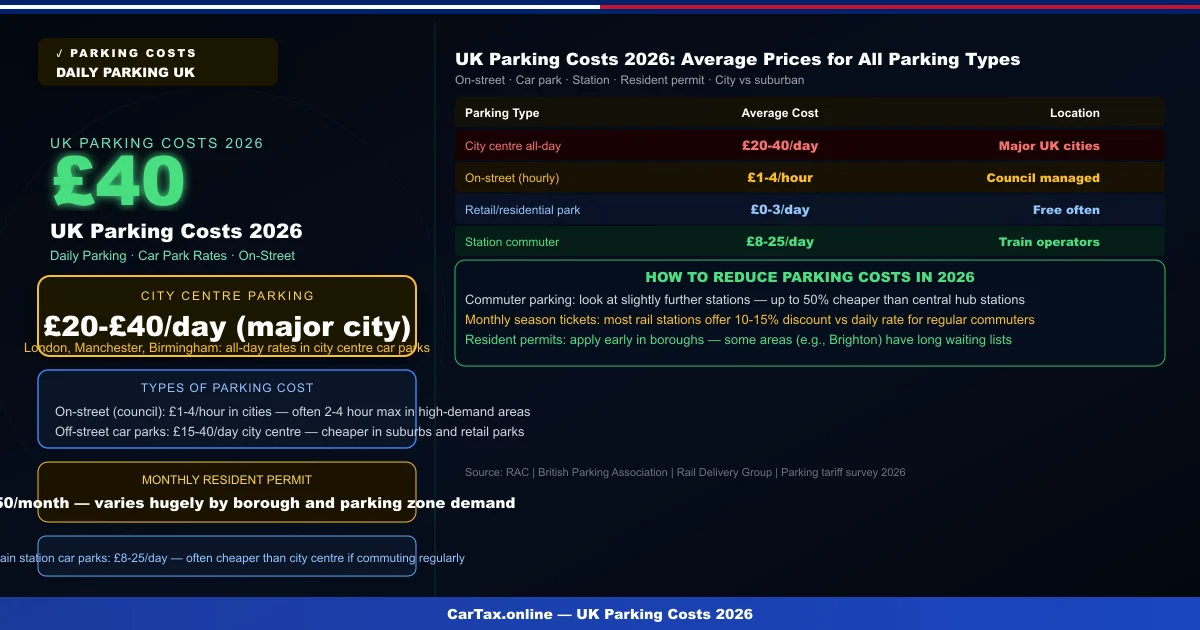
UK local authorities set on-street parking charges through Traffic Regulation Orders, with significant variation between regions. Commercial car park operators including NCP, Q-Park, and APCOA set their own commercial rates, while supermarket chains and retail parks offer free parking as a commercial incentive to attract shoppers.
## Parking Costs Rates and Regulations
Westminster on-street parking reaches £6.50 per hour for the highest-demand zones. City centre NCP car parks typically charge £20 to £40 per day in major cities. Monthly season tickets range from £200 in smaller towns to £600 or more in central London locations.
### London Parking: The Most Expensive in the UK
Central London parking charges represent some of the highest urban parking costs in the world. Westminster Council's on-street parking charges reach £6.50 per hour during peak periods, with no daily cap for on-street parking. Parking bays in Mayfair, Knightsbridge, and the City of London can cost £50 or more per day at commercial car parks during business hours.
The Congestion Charge adds £15 per day on top of parking costs for vehicles entering the Congestion Charge zone between 7am and 6pm on weekdays. Blue Badge holders are exempt from both the Congestion Charge and many local authority parking charges, representing a significant financial benefit of the scheme.
### Strategies for Reducing Parking Costs
Park and ride schemes offer one of the most effective cost-reduction strategies for city centre commuting. Parking at suburban rail stations and completing the journey by train is typically cheaper than city centre parking while also reducing door-to-door journey time for many commuters.
Advance booking through platforms such as JustPark, ParkRight, and RingGo frequently offers discounts of 30 to 50 percent compared to gate prices. Booking even a few hours in advance through these platforms can transform an expensive parking decision into a manageable one.
Business parking expenses can be claimed as allowable deductions for tax purposes. Self-employed individuals and employees required to park at client sites should retain parking receipts and include these as deductible business expenses through their self-assessment return or employer expense claim process.
### Free Parking Opportunities
Many UK supermarkets offer two to three hours of free parking with no minimum spend, making them practical options for short urban trips. NHS hospitals in England have capped parking at £3.10 per visit for patients and visitors, while hospital staff parking is provided free or at nominal cost.
National Trust car parks offer free parking at many of their properties across England and Wales, as do many local authority-run parks and green spaces.
## Frequently Asked Questions
**Are parking fines tax deductible for employees?**
Parking fines issued for illegal parking are generally not tax deductible as they represent penalties for wrongdoing rather than business expenses. However, parking fines incurred in the course of mandatory business activities, such as attending court as a witness, may qualify as deductible expenses.
**Do employers have to pay for employee parking?**
Employers have no legal obligation to provide or fund employee parking. However, providing free workplace parking is a valuable tax-free benefit that is exempt from Income Tax and NICs for the employee and deductible for the employer.
**Is parking included in mileage allowance claims?**
Parking costs are separate from mileage allowances. When calculating business journey expenses, employees should claim both the mileage reimbursement at AMAP rates and any parking fees incurred, both of which can be claimed as allowable business expenses.
**Do electric vehicles get free parking anywhere?**
Some local authorities offer free or reduced-rate parking for electric vehicles as an air quality incentive. These concessions vary by council and are typically time-limited or subject to eligibility criteria. Many EV owners also benefit from free charging at shopping centres and retail parks that includes free parking.
Disclaimer: CarTax.online provides general information for guidance purposes only. Tax rules and rates are subject to change. Always verify current rates with gov.uk or HMRC before making financial decisions. This guide was last reviewed in 2026.
Frequently Asked Questions
Q: How much is car tax (VED) in the UK 2026?
Car tax rates in the UK depend on your vehicle's CO2 emissions and list price. Standard rates start from £190 per year for petrol and diesel cars, with zero-rated VED for EVs. First-year rates vary from £0 to £2,605 depending on emissions. Additional premiums apply for vehicles over £40,000.
Q: How do I check if my car is taxed online?
You can check your vehicle's tax status for free on the Gov.uk website at gov.uk/check-vehicle-tax. You'll need your vehicle's registration number (number plate). You can also check via the Motor Insurance Database to verify road tax and insurance status simultaneously.
Q: Can I get a refund on car tax if I sell my vehicle?
Yes — if you sell or scrap your vehicle, you can claim a refund on any full months of remaining road tax. Contact DVLA with the V11 reminder letter or apply online at gov.uk. Refunds are usually processed within 4-6 weeks. Related: UK Car Insurance Costs 2026 | Car Ownership Costs Uk | UK Car Parking Charges 2026 | UK Car Parking Sensors Guide 2026.
Q: Is road tax refund available when transferring ownership?
No — road tax does not transfer with the vehicle. When you sell your car, the tax is automatically cancelled and any remaining months are refunded to you by DVLA. The new owner must tax the vehicle immediately. As a buyer, always verify the vehicle's tax status before purchasing.
Q: What is the luxury car tax threshold in the UK 2026?
The additional rate for vehicles over £40,000 (list price) adds £410 per year to standard VED rates for years 2-6 of registration. This surcharge brings the annual cost for high-emission vehicles over £40,000 to around £600-690 per year. Pure EVs under £40,000 pay zero VED.
⚠ Financial & Legal Disclaimer
All information provided in this article is for educational and informational purposes only. The content is synthesized based on verbal communications, extensive internet research, and official government website data as of the date of publishing. Tax laws and insurance policies are subject to frequent changes by the authorities. We strive for accuracy, but we recommend that you consult a qualified professional (CA, CPA, or Tax Consultant) before making any financial decisions. For personalized assistance, you can also connect with our in-house experts through our Contact Us page.
Ready to calculate your car tax?
Use our free calculator to get an instant, accurate estimate for your country and state.
Open Car Tax Calculator →