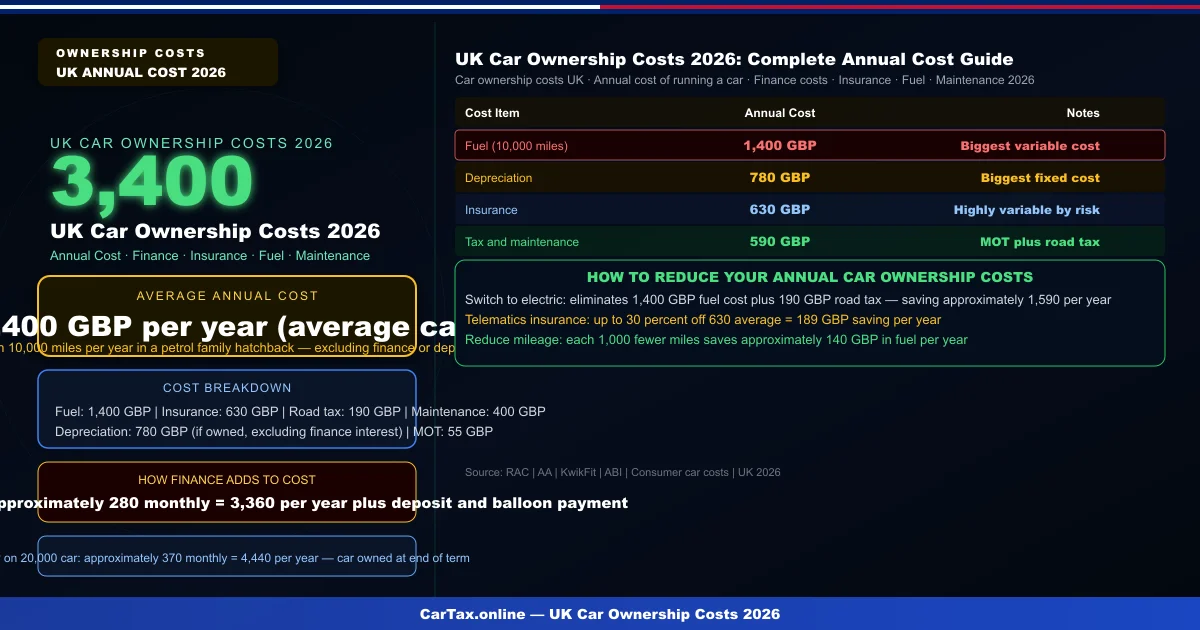
Car ownership in the UK involves far more than the purchase price or monthly finance payment. The total annual cost of running a car, including fuel, insurance, road tax, maintenance and depreciation, can reach 3,000 to 5,000 GBP per year for an average family car, making it one of the largest household expenses after housing and food.
Average Annual Car Ownership Costs 2026
Based on 10,000 miles per year in a petrol family hatchback, the average annual cost of car ownership in 2026 breaks down approximately as follows: fuel at 1,400 GBP, depreciation at 780 GBP, insurance at 630 GBP, road tax at 190 GBP, maintenance and servicing at 400 GBP, and MOT at 55 GBP. This totals approximately 3,455 GBP per year, or 288 GBP per month, before accounting for finance costs or停车 charges.
Depreciation is the largest single cost for owners who purchased their car rather than leasing it. While it is not a cash outlay for finance customers, it represents the real economic cost of vehicle consumption and should be factored into any ownership cost comparison.
How Finance Adds to the Cost
For buyers using PCP finance on a 20,000 GBP car, monthly payments of approximately 280 GBP equate to 3,360 GBP per year, plus any deposit paid upfront. At the end of the PCP term, the owner faces either a GMFV balloon payment to retain the car or returns it having paid for the full depreciation cost. Related: UK Car Running Costs 2026 | UK Car Insurance Costs 2026 | UK Car Service Costs 2026 | UK Motoring Costs 2026.
HP finance on the same 20,000 GBP car would cost approximately 370 GBP per month over 60 months, or 4,440 GBP per year, resulting in outright ownership at the end of the term. While HP costs more per month than PCP, the car belongs to the owner at the end, providing a clearer financial outcome.
Cost Differences by Fuel Type
Electric vehicles eliminate fuel costs (approximately 1,400 GBP per year) and road tax (190 GBP per year), reducing annual cash costs to approximately 1,400 GBP for electricity plus insurance and maintenance. However, EVs still face depreciation risk and may require battery replacement outside warranty. Diesel cars offer better fuel economy on motorway journeys but carry higher maintenance costs and, for pre-Euro 6 vehicles, ULEZ charges in London.
How to Reduce Annual Car Ownership Costs
Switching to electric is the single most impactful change, saving approximately 1,590 GBP per year in fuel and road tax combined. Telematics-based insurance can reduce premiums by up to 30 percent, saving approximately 190 GBP per year on the average premium. Reducing annual mileage by 2,000 miles saves approximately 280 GBP in fuel per year. Using independent garages rather than main dealers for servicing saves 30 to 50 percent on labour rates.
Frequently Asked Questions
What is the average cost of running a car per month in the UK? Approximately 288 GBP per month for fuel, insurance, tax and maintenance on a 10,000-mile annual average, before finance costs. With depreciation, this rises to approximately 350-400 GBP per month.
How can I reduce my car ownership costs? The biggest savings come from switching to electric (fuel and tax savings), telematics insurance (up to 30 percent off), reducing mileage and using independent garages for servicing.
Is it cheaper to own or lease a car? For cash buyers, owning a car outright over five-plus years is typically cheaper than leasing, particularly if you choose a car with good residual values. Leasing provides predictability of monthly cost and removes depreciation risk but can work out more expensive long-term.
Official Resources: GOV.UK Check Vehicle Tax | GOV.UK Vehicle Tax | DVLA Online | MOT Check
Frequently Asked Questions
Q: How much is car tax (VED) in the UK 2026?
Car tax rates in the UK depend on your vehicle's CO2 emissions and list price. Standard rates start from £190 per year for petrol and diesel cars, with zero-rated VED for EVs. First-year rates vary from £0 to £2,605 depending on emissions. Additional premiums apply for vehicles over £40,000.
Q: How do I check if my car is taxed online?
You can check your vehicle's tax status for free on the Gov.uk website at gov.uk/check-vehicle-tax. You'll need your vehicle's registration number (number plate). You can also check via the Motor Insurance Database to verify road tax and insurance status simultaneously.
Q: Can I get a refund on car tax if I sell my vehicle?
Yes — if you sell or scrap your vehicle, you can claim a refund on any full months of remaining road tax. Contact DVLA with the V11 reminder letter or apply online at gov.uk. Refunds are usually processed within 4-6 weeks.
Q: Is road tax refund available when transferring ownership?
No — road tax does not transfer with the vehicle. When you sell your car, the tax is automatically cancelled and any remaining months are refunded to you by DVLA. The new owner must tax the vehicle immediately. As a buyer, always verify the vehicle's tax status before purchasing.
Q: What is the luxury car tax threshold in the UK 2026?
The additional rate for vehicles over £40,000 (list price) adds £410 per year to standard VED rates for years 2-6 of registration. This surcharge brings the annual cost for high-emission vehicles over £40,000 to around £600-690 per year. Pure EVs under £40,000 pay zero VED.