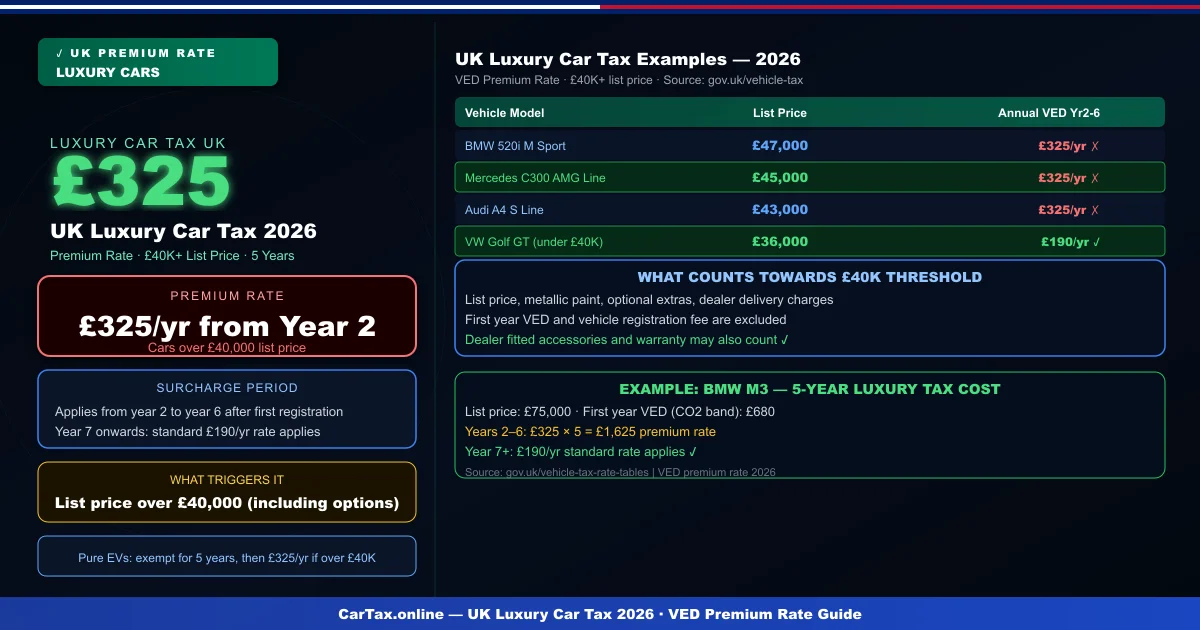
The luxury car tax in the United Kingdom operates through the Vehicle Exercise Duty (VED) system, specifically through what is known as the premium rate surcharge. If you are purchasing or own a vehicle with a list price exceeding £40,000, you will be subject to an additional annual charge of £325 for years two through six of the vehicle's lifecycle. This premium rate applies to a wide range of vehicles, from high-performance saloons to luxury SUVs, making it essential for prospective buyers to understand how this tax impacts the overall cost of ownership.
What Is the Premium Rate VED Surcharge?
The standard VED structure in the UK bands vehicles according to their carbon dioxide (CO2) emissions, with first-year rates ranging from £0 for zero-emission vehicles to over £2,000 for high-emission cars. However, once the first-year rate has been paid, vehicles with a list price exceeding £40,000 attract what HM Revenue and Customs officially calls the "premium rate" supplement. This additional charge adds £325 per year to the standard rate for years two, three, four, five, and six of the vehicle's registered life.
It is crucial to understand that this surcharge applies regardless of the vehicle's emissions. A plug-in hybrid with very low CO2 emissions will still pay the £325 premium rate if its list price exceeds £40,000. The rationale behind this structure is that higher-priced vehicles are assumed to have greater value and therefore should contribute more to the public road infrastructure through which they travel.
Which Vehicles Qualify as Luxury Cars for Tax Purposes?
The £40,000 threshold encompasses an extensive range of vehicles. The list price used for this calculation is the published price of the vehicle when new, before any discounts, negotiations, or trade-in arrangements. This price must be obtained from the vehicle's manufacturer or main dealer and is documented on the V5C registration certificate and related DVLA records. Related: Big Car Tax Changes Coming to UK 2026 | Car Tax Changes UK 2026 | Car Tax Rates UK 2026 | Tax My Car UK.
Performance Saloons and Executive Cars
Many popular performance saloons and executive cars fall into this category. The BMW M3 Competition, with its standard specification price beginning around £70,000, clearly exceeds the threshold. Similarly, the Mercedes-AMG C63 and Audi RS4 Avant all command prices well above the £40,000 limit and therefore attract the premium rate surcharge from year two onwards.
Luxury Saloons and Flagship Sedans
The Mercedes-Benz S-Class represents the quintessential luxury saloon in the UK market. With prices for the entry-level S350d starting at approximately £85,000 and the range-topping S680 reaching well beyond £200,000, these vehicles are firmly within the premium rate bracket. The BMW 7 Series, Audi A8, and Jaguar XJ all follow similar pricing structures that place them comfortably above the £40,000 threshold.
Premium SUVs and Large Crossovers
The SUV market has seen significant growth in vehicles commanding premium prices. The Range Rover Sport, with prices starting from around £55,000, falls subject to the premium rate. The BMW X5 xDrive45e plug-in hybrid, Mercedes GLE, and Porsche Cayenne all exceed the threshold with their standard specifications.
Sports Cars and High-Performance Models
Sports cars such as the Porsche 911 Carrera, BMW Z4 M40i, and Mercedes-AMG GT all carry price tags that trigger the premium rate requirement. Even the entry-level Porsche Taycan electric sports saloon starts above £80,000, placing it squarely in the premium rate category for years two through six.
What Counts Towards the £40,000 Threshold?
The list price calculation for the luxury car tax includes more than just the base vehicle price. Understanding precisely what components contribute to the £40,000 figure is essential for accurately predicting your ongoing tax liability.
Base Vehicle Price
The manufacturer's recommended retail price (MRRP) forms the foundation of the calculation. This is the published price for the vehicle in its standard specification, excluding any optional additions or dealer preparation fees.
Manufacturer-Installed Options
Any options fitted by the manufacturer at the factory are included in the list price calculation. This includes premium paint finishes such as metallic or special colours, upgraded interior leather packages, advanced driver assistance systems, enhanced audio equipment, and performance upgrades. For example, if a BMW M3 with a base price of £68,000 is specified with £12,000 worth of options including the M Driver's Package, carbon fibre interior trim, and premium paint, the total list price for VED purposes becomes £80,000.
Dealer-Fitted Accessories
Items fitted by the dealer after the vehicle has left the factory may or may not be included depending on how they are documented. If accessories are included in the published price list or invoiced as part of the initial purchase price, they typically count towards the threshold. However, genuinely post-purchase additions made after registration are generally not included.
Delivery and Preparation Charges
Standard delivery charges and dealer preparation fees are usually included in the list price calculation. These administrative costs, often referred to as on-the-road charges, contribute to the final figure used by the DVLA.
How CO2 Emissions Affect Your First-Year Tax
Despite the premium rate applying to vehicles over £40,000 from year two onwards, the first-year VED rate is still determined entirely by the vehicle's CO2 emissions. This creates an important distinction in how the total tax liability is calculated across the vehicle's lifecycle.
First-Year VED Bands
Vehicles are placed into one of several emission bands for the first-year payment. Zero-emission vehicles (pure electric cars) pay £0 for the first year. Vehicles emitting 1-50g/km of CO2 pay between £10 and £530 depending on the exact emission level. Those emitting 51-75g/km pay £690, while vehicles emitting 76-90g/km pay £875. Higher emitters fall into progressively more expensive bands, with vehicles exceeding 255g/km paying £2,605 for the first year.
Example: BMW M3 Competition
Consider a BMW M3 Competition with CO2 emissions of 234g/km. For the first year, this vehicle falls into the 226-255g/km band, attracting a first-year VED charge of £2,605. From year two onwards, the owner pays the standard rate for the emission band plus the £325 premium rate supplement. The standard rate for this emission band is £680, making the total annual payment £1,005 for years two through six.
Example: Mercedes S350d
The Mercedes-Benz S350d emits approximately 159g/km of CO2. This places it in the 151-170g/km first-year band, requiring a payment of £915. In subsequent years, the standard rate for this band is £195, plus the £325 premium rate supplement, totaling £520 per year.
Electric Vehicle Exceptions and Transitions
Pure electric vehicles enjoy significant advantages under the current VED system, but these advantages have specific time limits that future owners should understand.
Pure EV Exemption Period
Vehicles that produce zero tailpipe emissions, including all pure electric cars, are exempt from VED for the first five years of registration. This exemption applies regardless of the vehicle's list price. Therefore, a Tesla Model S Plaid priced at £100,000 will pay £0 VED for five years, followed by £325 per year from year six onwards.
Plug-in Hybrid Considerations
Plug-in hybrid vehicles (PHEVs) with CO2 emissions below 50g/km receive a reduced first-year rate but are not exempt from the premium rate surcharge. A BMW 530e with a list price of £55,000 and CO2 emissions of 36g/km will pay approximately £15 for the first year (the 1-50g/km band) but will then be subject to the £325 premium rate from year two onwards, in addition to the standard rate for its emission band.
Post-Exemption Period Planning
When purchasing a used pure electric vehicle that has already passed its five-year exemption period, the new owner should budget for the premium rate if the vehicle's original list price exceeded £40,000. This consideration is particularly relevant for premium electric vehicles such as the Tesla Model S, Tesla Model X, Jaguar I-PACE, and Audi e-tron GT.
Worked Example: Three-Year Ownership Cost
To illustrate the total luxury car tax impact over a typical ownership period, consider the following example involving a Mercedes S-Class S500.
The Mercedes-Benz S500 4MATIC has a list price of £95,000 and produces approximately 195g/km of CO2. In the first year, the vehicle falls into the 191-220g/km band, requiring a VED payment of £1,240. In years two through six, the standard rate for this band is £265, plus the £325 premium rate supplement, totaling £590 per year. Over three years of ownership, the total VED payments would be £1,240 (year one) plus £590 (year two) plus £590 (year three), equaling £2,420.
If the same vehicle had a list price of £38,000 (just below the threshold), the three-year total would be £1,240 plus £265 plus £265, equaling £1,770. The £650 difference directly represents the cost of the premium rate surcharge over three years.
Claiming and Managing Your VED
VED is typically paid annually, although it can be paid monthly or six-monthly for convenience. The DVLA will send a reminder before renewal is due, and payments can be made online through the official government portal, by phone, or by post using the reminder slip.
When purchasing a vehicle, the first-year VED is often included in the dealer's on-the-road pricing. Subsequent years are the responsibility of the registered keeper. If you sell or scrap the vehicle, you may be entitled to a refund for any complete months remaining in the tax period.
External Resources and Official Information
For the most current and detailed information about luxury car tax rates and the premium rate surcharge, consult the official government vehicle tax guidance. These resources are updated annually to reflect any changes to rates or qualifying criteria.
Frequently Asked Questions
Does the luxury car tax apply to company cars?
Company cars are subject to the same VED premium rate rules as privately-owned vehicles. However, company car drivers also pay Benefit-in-Kind (BiK) tax based on the vehicle's list price and CO2 emissions, which is a separate consideration from the annual VED payment.
Are imported cars subject to the premium rate?
Yes, imported vehicles that have a list price exceeding £40,000 are subject to the premium rate surcharge. The list price for imported vehicles is typically determined by the UK published price for the equivalent model or an assessed value if no UK specification exists.
Can I avoid the premium rate by modifying my car to reduce its value?
No, the list price threshold is based on the original manufacturer's published price at the point of first registration. Subsequent modifications or depreciation do not affect the premium rate calculation, which is fixed for the first six years of the vehicle's life.
Do classic cars exempt from VED also avoid the premium rate?
Vehicles over 40 years old that are registered with the DVLA as historic vehicles are exempt from VED entirely and therefore do not pay the premium rate. However, this exemption applies to the vehicle's age, not its list price.
What happens in year seven for a luxury car?
In year seven and thereafter, the premium rate surcharge of £325 no longer applies. The vehicle owner pays only the standard rate for their emission band, which for most vehicles in the 131-150g/km range is £165 per year.
Disclaimer
This article provides general information about UK Vehicle Exercise Duty (VED) and the premium rate surcharge for luxury vehicles. Tax rates, thresholds, and regulations may change, and individual circumstances vary. For personalized advice regarding your specific vehicle and tax situation, please consult a qualified tax professional or visit the official DVLA website. The figures and examples provided are illustrative and based on rates current at the time of writing.