Fuel duty represents one of the largest single components of the price paid at the UK petrol pump. Understanding how fuel duty works, who sets the rates, and why fuel duty has been frozen since 2011 is essential for any driver looking to understand the full cost of motoring.
The United Kingdom operates one of the most comprehensive vehicle taxation systems in the world. From the moment a car is first registered to the day it reaches historic vehicle status, every stage of ownership carries distinct tax implications. Understanding these Fuel Duty rules in 2026 enables drivers to budget accurately, identify legitimate savings opportunities, and maintain full legal compliance throughout their vehicle ownership journey.
## Understanding Fuel Duty in the UK Context
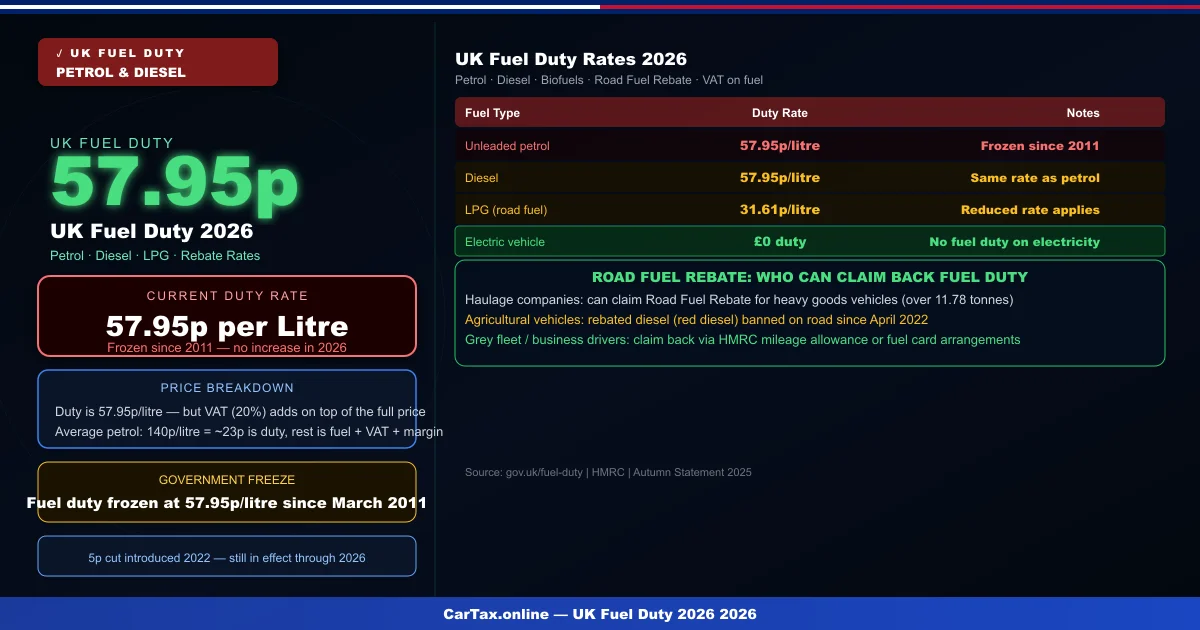
Fuel duty in the United Kingdom is charged at a flat rate per litre regardless of the actual price of fuel. This means the government receives the same duty revenue whether oil prices are high or low, making fuel duty a stable source of Treasury income. The duty rate has been frozen at 57.95 pence per litre since March 2011, representing a significant policy choice that has cost the Treasury billions in foregone revenue.
## Current Fuel Duty Rates and Regulations
The standard fuel duty rate is 57.95p per litre for both petrol and diesel. This rate applies to all road fuel sold in the United Kingdom. LPG used as a road fuel attracts a reduced rate of 31.61p per litre, making it a marginally cheaper option for vehicles converted to run on LPG.
### Why Has Fuel Duty Been Frozen?
The fuel duty freeze has been maintained by successive chancellors as a cost-of-living measure. Despite periodic reviews and speculation about duty increases, no Chancellor has increased fuel duty since January 2011. The 5p per litre cut introduced in the March 2022 Spring Statement was the first reduction in fuel duty since the 1990s.
The political sensitivity of fuel prices, combined with the visibility of petrol station price boards, has made fuel duty a politically toxic tax to increase. However, as electric vehicle adoption accelerates and fuel duty receipts decline, the Treasury faces growing pressure to find alternative revenue sources for road funding.
### The VAT on Fuel Complication
Fuel duty is just one component of the pump price. Value Added Tax at 20% is applied to the full retail price including the duty element, meaning VAT is effectively charged on duty. For a litre of petrol at 140p per litre, approximately 48p is fuel duty and 12p is VAT, with the remainder covering wholesale costs, retail margins, and distribution.
This creates a cascading effect where any fuel duty increase automatically increases VAT revenue on top, giving the Treasury a double benefit from any future duty rise. This structure has been criticised by motoring organisations as disproportionate.
### Road Fuel Rebate for Heavy Vehicles
Haulage companies operating heavy goods vehicles over 11.78 tonnes gross weight can claim a Road Fuel Rebate, effectively recovering the fuel duty paid on diesel used for on-road transport. This rebate is administered through the HMRC excise duty drawback system and is critical to the economics of the UK logistics industry.
Following the 2022 abolition of the red diesel rebate for on-road use, agricultural and construction vehicles can no longer claim road fuel rebate for on-road driving, though they retain limited exemptions for certain off-road activities.
## Frequently Asked Questions
**Has fuel duty increased since 2011?**
No. Fuel duty has been frozen at 57.95p per litre since March 2011. The 5p cut introduced in March 2022 brought the nominal rate to 52.95p before the previous rate was restored, but the freeze has been maintained throughout.
**Do electric car drivers pay any form of fuel duty?**
No. Pure electric vehicles consume no petrol or diesel and therefore incur no fuel duty. However, electricity used for charging at public networks may be subject to different commercial pricing structures.
**Is there a separate duty rate for premium fuels?**
No. Fuel duty applies uniformly to all petrol and diesel regardless of octane rating or fuel quality. Premium unleaded and standard unleaded carry the same duty rate per litre.
**How does fuel duty compare to other European countries?**
UK fuel duty is among the highest in Europe. Only Norway, the Netherlands, and Italy have higher petrol duty rates, largely due to the UK's absence of lower excise duty regimes used by some other EU member states historically.
Disclaimer: CarTax.online provides general information for guidance purposes only. Tax rules and rates are subject to change. Always verify current rates with gov.uk or HMRC before making financial decisions. This guide was last reviewed in 2026.
Frequently Asked Questions
Q: How much is car tax (VED) in the UK 2026?
Car tax rates in the UK depend on your vehicle's CO2 emissions and list price. Standard rates start from £190 per year for petrol and diesel cars, with zero-rated VED for EVs. First-year rates vary from £0 to £2,605 depending on emissions. Additional premiums apply for vehicles over £40,000.
Q: How do I check if my car is taxed online?
You can check your vehicle's tax status for free on the Gov.uk website at gov.uk/check-vehicle-tax. You'll need your vehicle's registration number (number plate). You can also check via the Motor Insurance Database to verify road tax and insurance status simultaneously.
Q: Can I get a refund on car tax if I sell my vehicle?
Yes — if you sell or scrap your vehicle, you can claim a refund on any full months of remaining road tax. Contact DVLA with the V11 reminder letter or apply online at gov.uk. Refunds are usually processed within 4-6 weeks. Related: UK Advisory Fuel Rates 2026 | UK Car Fuel Consumption Guide 2026 | UK Car Fuel Filter Guide 2026 | UK Car Fuel Injectors Guide 2026.
Q: Is road tax refund available when transferring ownership?
No — road tax does not transfer with the vehicle. When you sell your car, the tax is automatically cancelled and any remaining months are refunded to you by DVLA. The new owner must tax the vehicle immediately. As a buyer, always verify the vehicle's tax status before purchasing.
Q: What is the luxury car tax threshold in the UK 2026?
The additional rate for vehicles over £40,000 (list price) adds £410 per year to standard VED rates for years 2-6 of registration. This surcharge brings the annual cost for high-emission vehicles over £40,000 to around £600-690 per year. Pure EVs under £40,000 pay zero VED.
⚠ Financial & Legal Disclaimer
All information provided in this article is for educational and informational purposes only. The content is synthesized based on verbal communications, extensive internet research, and official government website data as of the date of publishing. Tax laws and insurance policies are subject to frequent changes by the authorities. We strive for accuracy, but we recommend that you consult a qualified professional (CA, CPA, or Tax Consultant) before making any financial decisions. For personalized assistance, you can also connect with our in-house experts through our Contact Us page.
Ready to calculate your car tax?
Use our free calculator to get an instant, accurate estimate for your country and state.
Open Car Tax Calculator →