What Is an HPI Check?
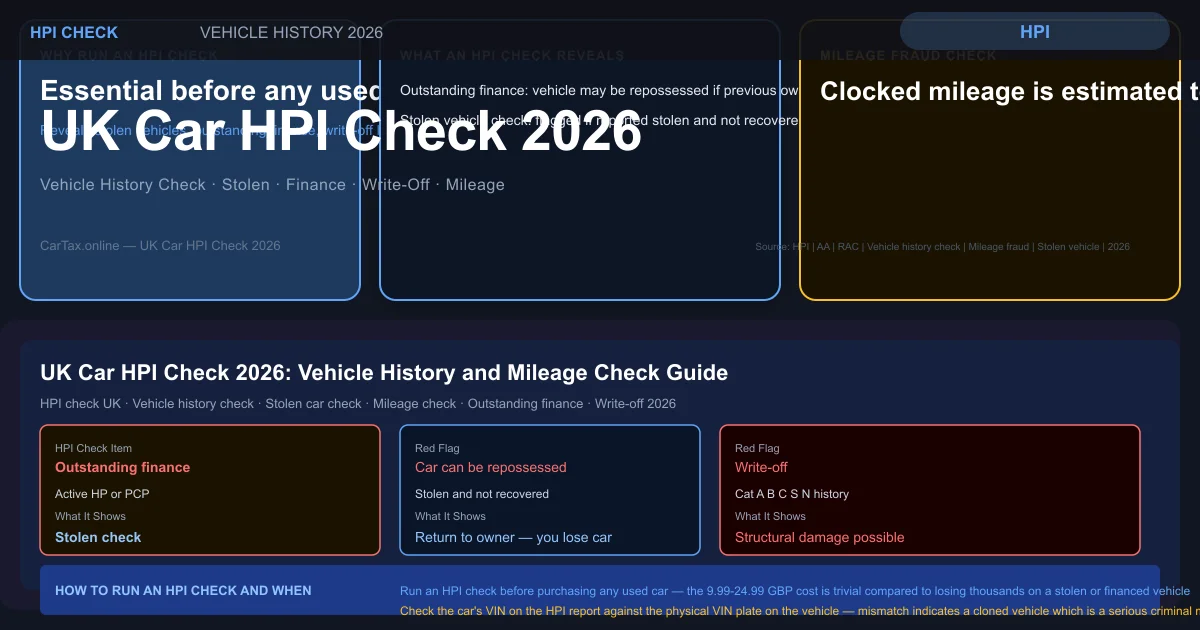
An HPI check is a comprehensive vehicle history report that reveals critical information about a used car's past. The HPI database contains records from major insurers, finance companies, police forces, and DVLA, covering around 40 million vehicles. An HPI check can identify outstanding finance, report the vehicle as stolen or salvaged, confirm the true mileage, and reveal if the car has been involved in a write-off.
In the UK, HPI is one of several vehicle data providers, alongside Experian, Movatic, and the AA Vehicle Checks. All operate on a similar principle — you provide the vehicle's registration number and chassis number (VIN), and the service returns a detailed report on the car's history. The checks typically cost between 10 and 25 GBP depending on the depth of the report.
What Does an HPI Check Reveal?
Outstanding finance is the most significant risk that an HPI check identifies. If a previous owner took out a personal loan or hire purchase agreement secured against the vehicle, the finance company may have a legal claim on it. Buying a car with outstanding finance means the asset could be repossessed, and you lose both the car and the money you paid.
The check also reveals write-off history. If the vehicle has been declared a total loss by an insurer, this is recorded in the database. Knowing whether a car is a Category S or N write-off is essential for understanding what you are buying and the potential repair quality. Write-offs typically affect insurance premiums and future resale value. Related: Check If Car Is Taxed UK | UK Car Tax Check 2026 | Big Car Tax Changes Coming to UK 2026 | Car Tax Changes UK 2026.
Mileage discrepancies are another critical finding. HPI compares the recorded mileage at MOT tests, service records, and previous HPI checks to flag any inconsistencies. Clocked mileage — where the odometer has been wound back to increase the car's apparent value — is one of the most common forms of vehicle fraud in the UK.
Stolen Vehicle Check
The HPI database includes records of vehicles reported stolen to police forces across the UK. Before completing a purchase, the check verifies that the vehicle has not been reported stolen and recovered. The check also identifies vehicles that have been subject to a VIN replacement, which can indicate an attempt to disguise a stolen identity.
The stolen vehicle check also includes records from the Police National Computer (PNC), cross-referenced against vehicle registration numbers and chassis numbers. This provides a comprehensive alert system for vehicles with a criminal history, including those used in ram-raids, burglary, or other offences.
How to Run an HPI Check
The simplest way to run an HPI check is through the HPI website directly or through third-party providers that access the HPI database. You will need the vehicle's registration number and, in most cases, the VIN (chassis number). The VIN can be found on the V5C log book, on a plate inside the driver's door frame, or stamped into the chassis somewhere beneath the car.
Many car dealership websites and classified advertising platforms now include free or paid HPI checks as part of their listing. However, these are often limited checks that cover only the basics. For a comprehensive check, especially when buying privately, you should run the check yourself rather than relying on a third party's summary.
Understanding the HPI Check Result
A clean HPI report means the vehicle has no flagged issues across finance, write-off, stolen, or mileage databases. This is the green light that most buyers hope for. However, it is worth noting that an HPI check is not a substitute for a full vehicle inspection — it will not reveal mechanical faults, rust damage, or the quality of past repairs.
If the check reveals issues, the nature of the problem determines your options. Outstanding finance can sometimes be resolved by the seller clearing the debt before the sale, though this is not guaranteed. A write-off marker requires you to decide whether the reduced price makes the vehicle worth purchasing, knowing the repair history. A stolen vehicle flag should immediately end the transaction.
HPI Check vs AA Vehicle Check
HPI and AA Vehicle Check both access similar databases and provide comparable protection against finance fraud, write-offs, and stolen vehicles. The primary difference is the depth of additional data. The AA vehicle check includes a comprehensive valuation based on the vehicle's condition and includes a free 50-point inspection checklist that a qualified mechanic can follow.
For a thorough pre-purchase investigation, many experts recommend running both an HPI check and an independent mechanical inspection. The HPI check identifies fraud and history issues, while the inspection checks the current physical condition of the vehicle. Together they provide the most complete picture of a used car's true state.
Official Resources: GOV.UK Check Vehicle Tax | GOV.UK Vehicle Tax | DVLA Online | MOT Check
Frequently Asked Questions
Q: How much is car tax (VED) in the UK 2026?
Car tax rates in the UK depend on your vehicle's CO2 emissions and list price. Standard rates start from £190 per year for petrol and diesel cars, with zero-rated VED for EVs. First-year rates vary from £0 to £2,605 depending on emissions. Additional premiums apply for vehicles over £40,000.
Q: How do I check if my car is taxed online?
You can check your vehicle's tax status for free on the Gov.uk website at gov.uk/check-vehicle-tax. You'll need your vehicle's registration number (number plate). You can also check via the Motor Insurance Database to verify road tax and insurance status simultaneously.
Q: Can I get a refund on car tax if I sell my vehicle?
Yes — if you sell or scrap your vehicle, you can claim a refund on any full months of remaining road tax. Contact DVLA with the V11 reminder letter or apply online at gov.uk. Refunds are usually processed within 4-6 weeks.
Q: Is road tax refund available when transferring ownership?
No — road tax does not transfer with the vehicle. When you sell your car, the tax is automatically cancelled and any remaining months are refunded to you by DVLA. The new owner must tax the vehicle immediately. As a buyer, always verify the vehicle's tax status before purchasing.
Q: What is the luxury car tax threshold in the UK 2026?
The additional rate for vehicles over £40,000 (list price) adds £410 per year to standard VED rates for years 2-6 of registration. This surcharge brings the annual cost for high-emission vehicles over £40,000 to around £600-690 per year. Pure EVs under £40,000 pay zero VED.