Two of the most significant annual costs of car ownership are road tax and car insurance. Understanding the relationship between these costs — and what drives the difference — helps you budget more effectively and make better decisions when buying a vehicle.
Road Tax: A Fixed Cost
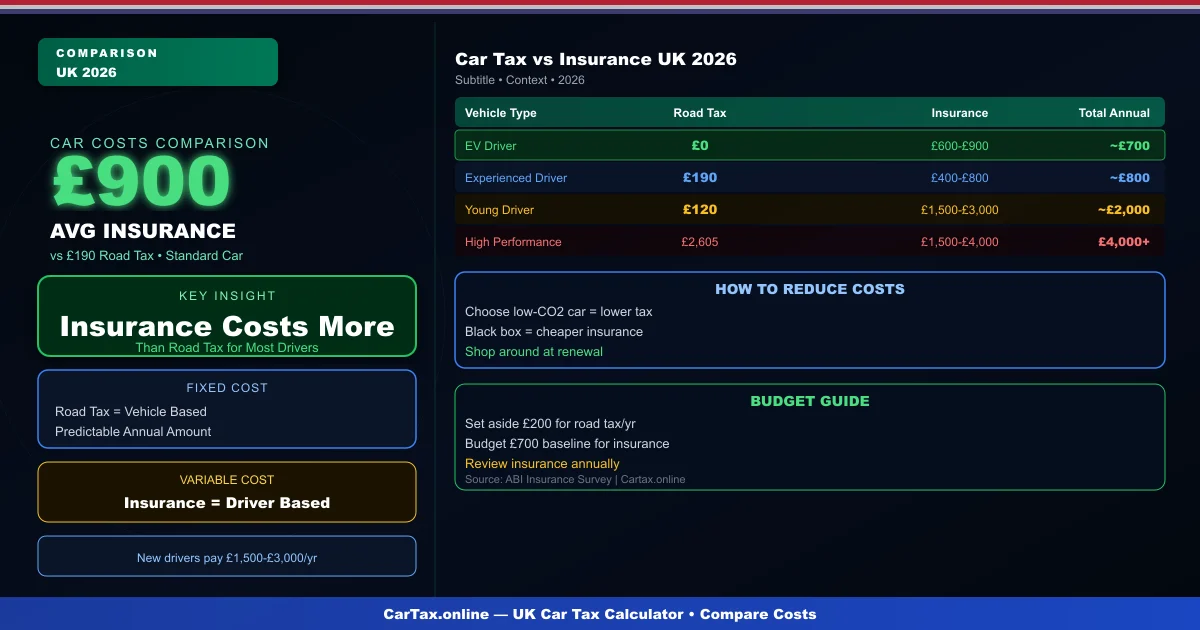
Vehicle Excise Duty is a fixed annual cost based on your vehicle's characteristics. It does not vary by age, location, driving history, or claims record. Electric vehicles pay £0 road tax. A standard petrol car pays around £190 per year. A high-performance car emitting over 255g/km CO2 pays £2,605 in the first year and £245 per year thereafter. Road tax is predictable — you know exactly what you will pay when you buy the vehicle.
Car Insurance: A Variable Cost
Car insurance premiums vary dramatically based on your personal profile, vehicle, and driving history. A new driver in their early 20s might pay £1,500-£3,000 per year for comprehensive cover. An experienced driver with a clean record might pay £400-£800. The same vehicle can carry wildly different insurance costs depending on who drives it. Insurers assess risk based on age, occupation, location, claims history, and the vehicle's performance and repair costs.
What Costs More?
For most drivers, car insurance costs significantly more than road tax. The average annual insurance premium for a UK driver is around £700-£900, compared to a road tax bill of £190 for a standard car. However, for high-performance vehicle owners, first-year road tax can exceed £2,000 — making it comparable to or greater than the insurance premium for that vehicle. Electric vehicle owners pay £0 road tax but may still face high insurance premiums due to repair costs. Related: Car Tax vs Insurance UK 2026 | UK Car Insurance Costs 2026 | UK Car Insurance Quotes 2026 | Car Insurance Groups and Vehicle Tax UK 2026.
How Vehicle Choice Affects Both
Your choice of vehicle affects both costs simultaneously. A low-CO2, low-performance hatchback will have low road tax and relatively modest insurance premiums. A high-CO2 sports car will have high road tax and expensive insurance due to its performance profile and repair costs. Choosing a vehicle with strong safety ratings, lower repair costs, and a large owner base typically reduces insurance premiums. Electric vehicles reduce road tax to £0 but may attract higher insurance premiums due to battery repair costs and specialist parts.
Ways to Reduce Insurance Costs
While road tax is fixed by the vehicle, insurance costs can be reduced through several strategies. Installing a black box tracker can reduce premiums for young drivers. Increasing your voluntary excess reduces your premium. Paying annually rather than monthly saves on interest charges. Shopping around at renewal rather than auto-renewing can uncover significant savings. Comparing at least three insurance quotes before buying a vehicle is also a sensible approach.
Budgeting for Both
When budgeting for car ownership, plan for road tax as a known annual cost and insurance as a variable cost that requires annual review. Set aside £200-£250 per year for road tax on a standard vehicle. For insurance, budget for your previous year's premium as a baseline and expect increases of 5-15% annually if your circumstances change. Using price comparison websites for insurance and the GOV.UK vehicle enquiry service for road tax keeps both costs visible and manageable.
Official Resources: GOV.UK Check Vehicle Tax | GOV.UK Vehicle Tax | DVLA Online | MOT Check
Frequently Asked Questions
Q: How much is car tax (VED) in the UK 2026?
Car tax rates in the UK depend on your vehicle's CO2 emissions and list price. Standard rates start from £190 per year for petrol and diesel cars, with zero-rated VED for EVs. First-year rates vary from £0 to £2,605 depending on emissions. Additional premiums apply for vehicles over £40,000.
Q: How do I check if my car is taxed online?
You can check your vehicle's tax status for free on the Gov.uk website at gov.uk/check-vehicle-tax. You'll need your vehicle's registration number (number plate). You can also check via the Motor Insurance Database to verify road tax and insurance status simultaneously.
Q: Can I get a refund on car tax if I sell my vehicle?
Yes — if you sell or scrap your vehicle, you can claim a refund on any full months of remaining road tax. Contact DVLA with the V11 reminder letter or apply online at gov.uk. Refunds are usually processed within 4-6 weeks.
Q: Is road tax refund available when transferring ownership?
No — road tax does not transfer with the vehicle. When you sell your car, the tax is automatically cancelled and any remaining months are refunded to you by DVLA. The new owner must tax the vehicle immediately. As a buyer, always verify the vehicle's tax status before purchasing.
Q: What is the luxury car tax threshold in the UK 2026?
The additional rate for vehicles over £40,000 (list price) adds £410 per year to standard VED rates for years 2-6 of registration. This surcharge brings the annual cost for high-emission vehicles over £40,000 to around £600-690 per year. Pure EVs under £40,000 pay zero VED.