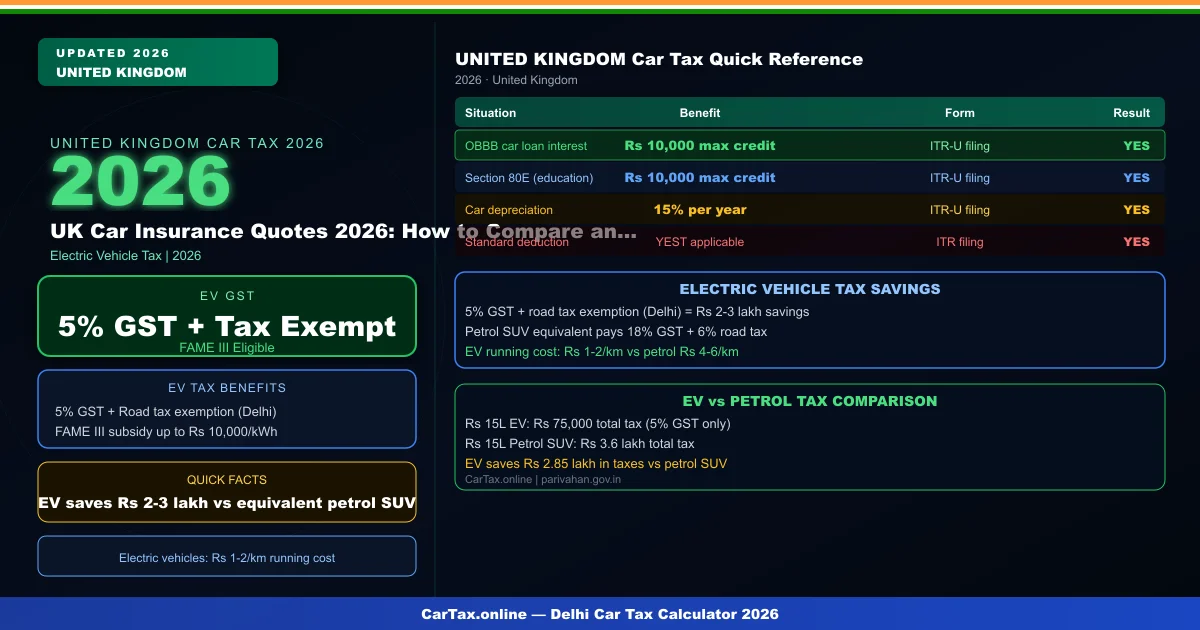
Getting the right car insurance quote requires understanding where to look, what information insurers need, and how to interpret the many factors that determine your premium. In 2026, the UK car insurance market remains competitive, with significant savings available for drivers who take time to compare providers.
Where to Get Car Insurance Quotes
Comparison Websites
Comparison websites including Compare the Market, Confused.com, and Gocompare remain the most popular way to find car insurance in the UK. These platforms allow you to enter your details once and receive quotes from multiple insurers simultaneously, saving significant time. However, comparison websites do not always include every insurer. Some providers, including certain direct-only insurers and broker networks, are not represented on comparison platforms and may offer competitive quotes for specific customer profiles.
Direct Insurers
Many major UK insurers, including Aviva, LV, and Saga, sell policies directly without intermediary commissions. For loyal customers with established no claims bonuses, direct insurers can offer competitive prices without the overhead of comparison site commissions. Older drivers in particular may find that direct insurers offer preferential rates that are not available on comparison platforms.
Insurance Brokers
Insurance brokers provide personalised advice and access to specialist insurers that do not sell directly to the public. Brokers are particularly valuable for drivers with complex circumstances such as non-standard occupations, previous claims, driving convictions, or unusual vehicle types. The broker service typically adds a small fee but can result in significant savings or access to cover that would otherwise be unavailable. Related: UK Car Insurance Increase 2026 | UK Car Insurance Teenager 2026 | UK Insurance Quotes 2026 | Canada Car Insurance Tax 2026.
Factors Insurers Consider for Quotes
Vehicle Type and Insurance Group
The vehicle's insurance group rating is one of the most significant factors determining your premium. Insurers assess the repair cost, parts availability, theft risk, and performance characteristics of your vehicle. Small economical cars in Groups 1 to 10, such as the Volkswagen Up, Skoda Citigo, and Seat Mii, consistently attract the lowest premiums. High-performance vehicles and luxury SUVs in Groups 35 to 50 can cost two to three times more to insure.
Annual Mileage
Insurers estimate risk based on how many miles you drive annually. Lower annual mileage reduces your exposure to accident risk and typically reduces your premium. Most insurers offer standard tiers such as up to 5,000 miles, 5,000 to 10,000 miles, and 10,000 to 15,000 miles, with premiums increasing at each tier. Be accurate when estimating mileage as understating your annual mileage could invalidate your policy.
Occupation and Use
Your occupation is used as a risk factor by insurers, with some occupations associated with higher or lower claim frequencies. Social, domestic, and pleasure use is the standard and cheapest classification. Commuting to a single place of work costs more, while business use involving multiple locations carries the highest premium. Some occupations such as driving instructors or delivery drivers may require specialist cover.
Best Time to Buy Car Insurance
Car insurance prices fluctuate throughout the year, with the most competitive pricing typically available 21 to 30 days before your renewal date. Insurers update their pricing regularly, and the third Wednesday of December is historically known as Black Wednesday when many major insurers revise their rates. Buying outside of this period can sometimes yield better prices. Never simply renew with your existing insurer without comparing alternatives, as loyalty rarely results in the best price.
Official Resources: Parivahan Portal | Vahan Road Tax | India GST Portal | FAME-III Scheme
Frequently Asked Questions
Q: What is the current road tax rate for cars in India 2026?
Road tax rates in India vary by state and vehicle category. For new cars, GST is charged at 5% for EVs, 18% for hybrids under 1,200cc, and up to 28% for petrol/diesel SUVs. State road tax is charged separately and varies from Rs3,000-15,000 annually depending on the state's slab system. Check your specific state's RTO website for current rates.
Q: How do I calculate my car road tax online in India?
You can calculate your car road tax using online calculators available on state RTO portals and CarTax.online. The calculation considers your vehicle's ex-showroom price, fuel type, engine capacity, and state of registration. Road tax is payable annually or for the vehicle's lifetime depending on your state's rules.
Q: Is GST included in the road tax for new cars in India?
No — GST and road tax are separate charges. GST is a central tax charged by the vehicle manufacturer at the time of purchase. State road tax is a separate annual or one-time charge levied by your state's transport department. Both apply at the time of first registration, and annual road tax continues for subsequent years.
Q: Do electric vehicles get tax benefits in India 2026?
Yes — electric vehicles in India qualify for a reduced GST rate of 5% (down from 28% for petrol cars). Under FAME-III subsidies, EVs may also qualify for additional state-level incentives, reduced road tax, and free registration in many states. The exact benefits vary by state.
Q: What happens if I don't pay my car road tax on time?
If you don't pay road tax, your vehicle's registration can be flagged in the Vahan database, preventing renewal of fitness certificates and creating legal liability during police checks. Penalties range from Rs200-500 per day of default in most states. Road tax is a legal requirement under the Motor Vehicles Act.