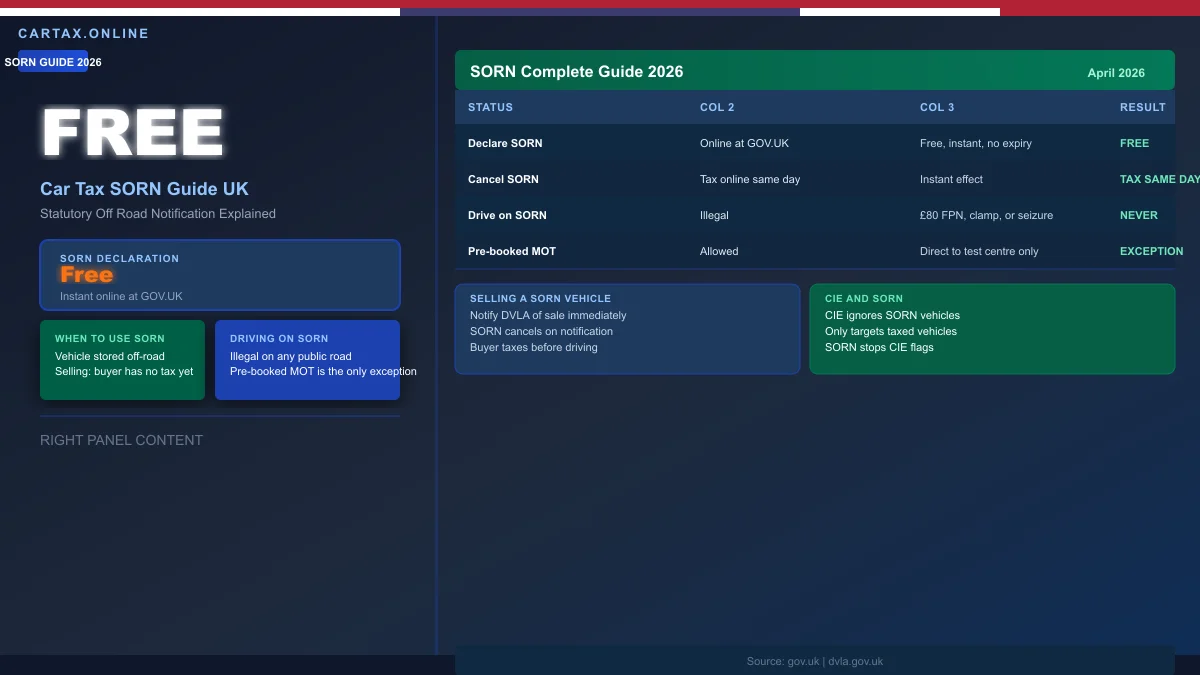
April 13, 2026 in United Kingdom — A Statutory Off Road Notification (SORN) is one of the most important tools for UK drivers who want to stop paying road tax when their vehicle is not in use. This comprehensive guide explains what SORN is, when to use it, how to declare and cancel it, and what happens if you break the rules.
What Is a SORN?
A SORN (Statutory Off Road Notification) is a legal declaration that your vehicle is not being used on a public road. Once declared, your vehicle is exempt from road tax for the duration of the SORN. You cannot drive or keep a SORN'd vehicle on a public road — doing so is an offence.
When to Declare a SORN
You should declare a SORN when:
- You have a vehicle that will not be used on any public road for a period of time
- You are selling a vehicle and the buyer has not yet taxed it — declare SORN immediately
- You are keeping a vehicle off the road while restoring or repairing it
- You are storing a seasonal vehicle (sports car, convertible) during its off-season
- You are buying a vehicle without tax and cannot immediately tax it — declare SORN until you can
How to Declare a SORN
You can declare a SORN online at GOV.UK (the fastest method), by phone (0300 790 6802), or by post. Online is instant — your SORN takes effect immediately when you submit it. You will need your V5C reference number (11-digit number from your logbook) to complete the declaration. The SORN declaration is free.
How Long Does a SORN Last?
A SORN lasts indefinitely until you either cancel it or the vehicle is sold, scrapped, or exported. There is no maximum duration for a SORN — you can keep a vehicle on SORN for as long as you want, as long as it remains off public roads. However, if the vehicle is registered to you, you are responsible for ensuring a SORN remains in place if it is not taxed.
What Happens When You Sell a SORN Vehicle
If you sell a vehicle that is on SORN, the SORN is automatically cancelled when you notify the DVLA of the sale. The new keeper must tax the vehicle before driving it on any public road. As the seller, you should declare the sale to the DVLA immediately — the buyer's ability to tax the vehicle is not your responsibility, but notifying the sale protects you from penalties on a vehicle you no longer own.
What Happens If You Drive a SORN Vehicle
Driving a vehicle that is on SORN on any public road is a criminal offence. Penalties include:
- Fixed Penalty Notice: £80 (reduced to £40 if paid within 21 days)
- Court prosecution: Unpaid FPNs can escalate to court, with fines up to £5,000 for the most serious cases
- Vehicle seizure: Police can seize and potentially crush an uninsured or untaxed vehicle
The only exception is driving to a pre-booked MOT test — this is permitted even without tax, but the journey must be directly from the vehicle's storage location to the MOT test centre.
Can You Insure a SORN Vehicle?
Yes — you can insure a vehicle that is on SORN. Many owners keep continuous insurance on stored vehicles to maintain a no-claims history or for peace of mind. However, the insurance must cover the vehicle for the specific risks while stored (e.g., fire, theft, damage). Standard road insurance policies do not automatically cover vehicles on SORN — check with your insurer.
Can You Tax a SORN Vehicle?
Yes — you can cancel a SORN and tax a vehicle at any time. Go to GOV.UK vehicle tax service, select the vehicle, and choose to cancel SORN and tax. The tax takes effect immediately and the vehicle can be driven the same day. If the vehicle is over 3 years old, you need a valid MOT to tax it.
SORN and the Motor Insurance Database
A vehicle on SORN does not need insurance because it is not on a public road. The Continuous Insurance Enforcement (CIE) programme ignores SORN'd vehicles — it only targets taxed vehicles that appear to lack insurance. However, if you have insurance on a SORN vehicle and the policy is active, this is recorded on the Motor Insurance Database (MID). If the vehicle is stolen and driven without your knowledge, the MID records may be relevant.
SORN vs Parking Off Road
Keeping a vehicle on a driveway or public road without taxing it requires a SORN. However, keeping a vehicle on private land (in a garage, on a farm, in a private car park not visible from or accessible from a public road) technically does not require a SORN — but it is still recommended to formally declare the SORN to avoid confusion. The DVLA's system is the authoritative record.
SORN When Moving House
If you move house and cannot immediately transfer your vehicle to the new address, you should update the V5C address and ensure your vehicle remains taxed or on SORN. A vehicle without tax and without SORN on a public road is an offence.
Conclusion
A SORN legally declares your vehicle off the road and stops road tax liability. Declare online at GOV.UK (free, instant), lasts indefinitely until cancelled, and protects you from road tax costs when the vehicle is not in use. Never drive a SORN'd vehicle on a public road — penalties from £80 FPN to vehicle seizure. Tax the vehicle before driving again. Use GOV.UK SORN service to declare or cancel a SORN.