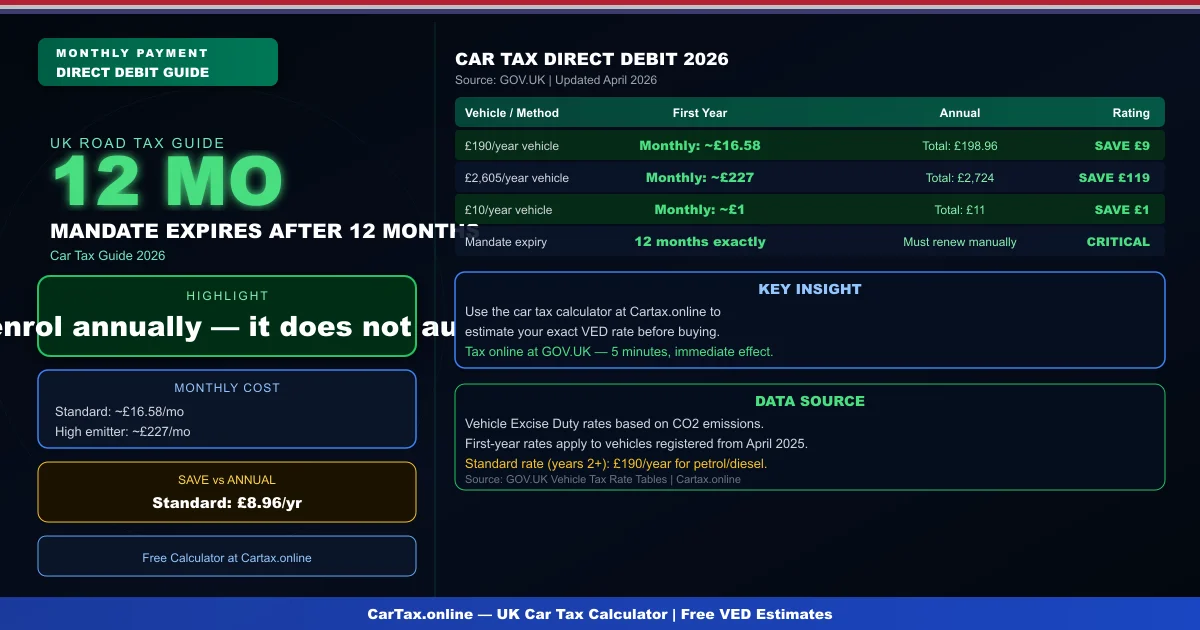
Paying road tax by Direct Debit spreads the cost across the year but costs more overall. Understanding how to set up, manage and cancel Direct Debit helps you make the right choice for your budget.
Setting Up a Direct Debit for Road Tax
You can set up a Direct Debit when you tax your vehicle online at GOV.UK. Choose the monthly instalment option and enter your bank details. DVLA processes monthly payments via Direct Debit in 12 equal instalments. You will receive a monthly reminder of the payment and an annual summary. The Direct Debit is managed by DVLA's bank — not your car insurer or a third party.
The True Cost of Monthly Payments
Monthly road tax by Direct Debit costs more than annual payment because DVLA adds an administrative spread fee to cover the cost of processing 12 payments instead of one. The exact additional cost depends on the VED rate — it is typically a few pounds per month. Over a year, you pay more for the convenience of spreading the cost. If budget is not a constraint, annual payment is always the cheaper option.
Switching from Monthly to Annual
You can switch from monthly to annual payment at any renewal point. When your current 12-month Direct Debit period ends, do not set up the renewal Direct Debit and instead choose the annual payment option. You will need to pay the annual amount upfront. Contact DVLA if you want to switch mid-period — you can pay the remaining balance and switch, though you may not receive a refund for overpaid instalments. Related: Car Tax Direct Debit UK 2026 | Car Tax Direct Debit UK 2026 | Car Tax Direct Debit UK 2026 | Car Tax Annual Payment UK 2026.
Managing Your Direct Debit
You can view your Direct Debit status and payment history at GOV.UK. If your bank details change, update them with DVLA immediately to avoid missed payments. Ensure there are sufficient funds before each collection date. If a payment fails, DVLA will contact you to resolve the issue. A failed payment does not immediately cancel your tax — you have a short window to rectify it.
Cancelling Your Direct Debit
To cancel a Direct Debit, contact DVLA at least 5 working days before the next payment date. You can cancel by phone or through the GOV.UK vehicle tax service. Cancellation means the vehicle must be re-taxed manually for the next period — you remain responsible for ensuring continuous road tax. Do not simply cancel with your bank without notifying DVLA, as this does not cancel the instruction.
Official Resources: GOV.UK Check Vehicle Tax | GOV.UK Vehicle Tax | DVLA Online | MOT Check
Frequently Asked Questions
Q: How much is car tax (VED) in the UK 2026?
Car tax rates in the UK depend on your vehicle's CO2 emissions and list price. Standard rates start from £190 per year for petrol and diesel cars, with zero-rated VED for EVs. First-year rates vary from £0 to £2,605 depending on emissions. Additional premiums apply for vehicles over £40,000.
Q: How do I check if my car is taxed online?
You can check your vehicle's tax status for free on the Gov.uk website at gov.uk/check-vehicle-tax. You'll need your vehicle's registration number (number plate). You can also check via the Motor Insurance Database to verify road tax and insurance status simultaneously.
Q: Can I get a refund on car tax if I sell my vehicle?
Yes — if you sell or scrap your vehicle, you can claim a refund on any full months of remaining road tax. Contact DVLA with the V11 reminder letter or apply online at gov.uk. Refunds are usually processed within 4-6 weeks.
Q: Is road tax refund available when transferring ownership?
No — road tax does not transfer with the vehicle. When you sell your car, the tax is automatically cancelled and any remaining months are refunded to you by DVLA. The new owner must tax the vehicle immediately. As a buyer, always verify the vehicle's tax status before purchasing.
Q: What is the luxury car tax threshold in the UK 2026?
The additional rate for vehicles over £40,000 (list price) adds £410 per year to standard VED rates for years 2-6 of registration. This surcharge brings the annual cost for high-emission vehicles over £40,000 to around £600-690 per year. Pure EVs under £40,000 pay zero VED.