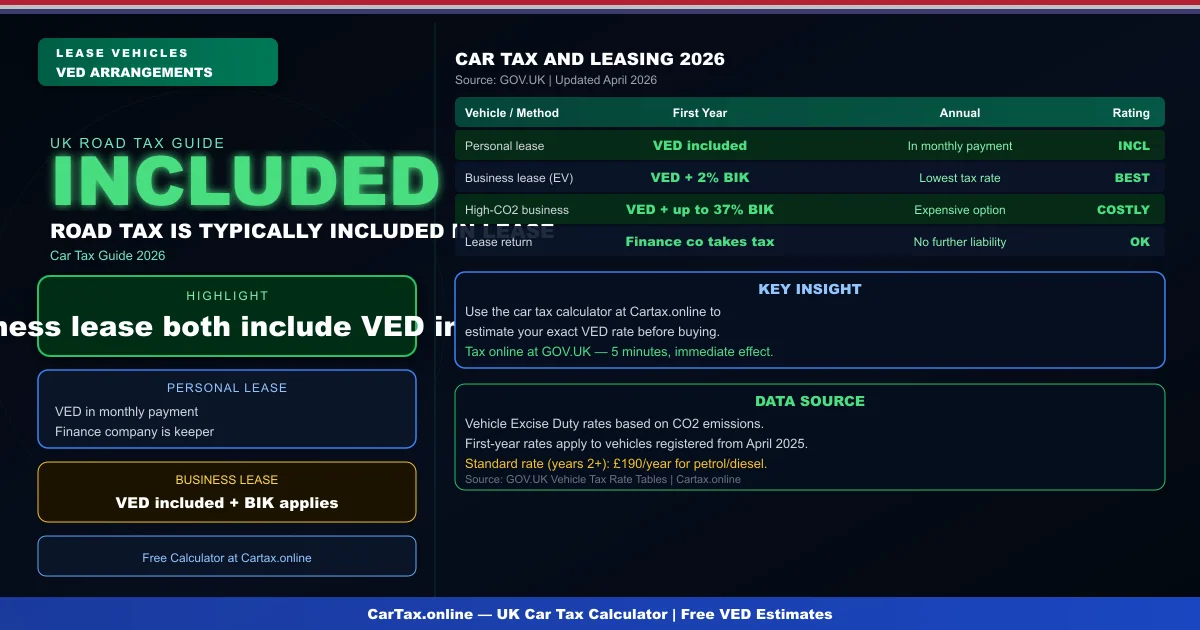
Car tax leasing UK — if you lease a vehicle, the road tax arrangements depend on whether it is a personal or business lease. Here is what you need to know about VED for leased vehicles in 2026.
Personal Lease: Who Pays Road Tax?
On a personal lease, the registered keeper is typically the finance company, not the lessee. Road tax is included in the monthly lease payment — you do not pay it separately. The leasing company handles taxation with DVLA. Your monthly payment covers the full road tax cost for the lease period.
Business Lease: BIK and Road Tax
On a business or company car lease, you pay Benefit-in-Kind (BIK) tax on the personal use of the vehicle. Road tax is typically included in the lease rental. The key consideration for business lease is the BIK rate — low-CO2 vehicles (especially EVs at 2%) are the most tax-efficient option for company car drivers.
VED and Lease Vehicle Type
The lease payment for a high-emission vehicle includes higher road tax costs. A vehicle at 220g/km costing £2,605 first-year VED will have this factored into its lease value. Leasing an electric vehicle eliminates the first-year VED cost and reduces years 2-6 standard rate to just £10/year (or £365 if over £40,000).
Lease End: Road Tax on Return
When you return a leased vehicle, the leasing company receives it and taxes it under their name or takes it off the road. You have no further VED responsibility as long as you have completed the lease agreement correctly and notified the leasing company of any early return.
Conclusion
Car tax leasing UK is usually included in monthly payments. Business lease vehicles attract BIK tax — choose low-CO2 for efficiency. GOV.UK BIK rates apply for company car drivers.