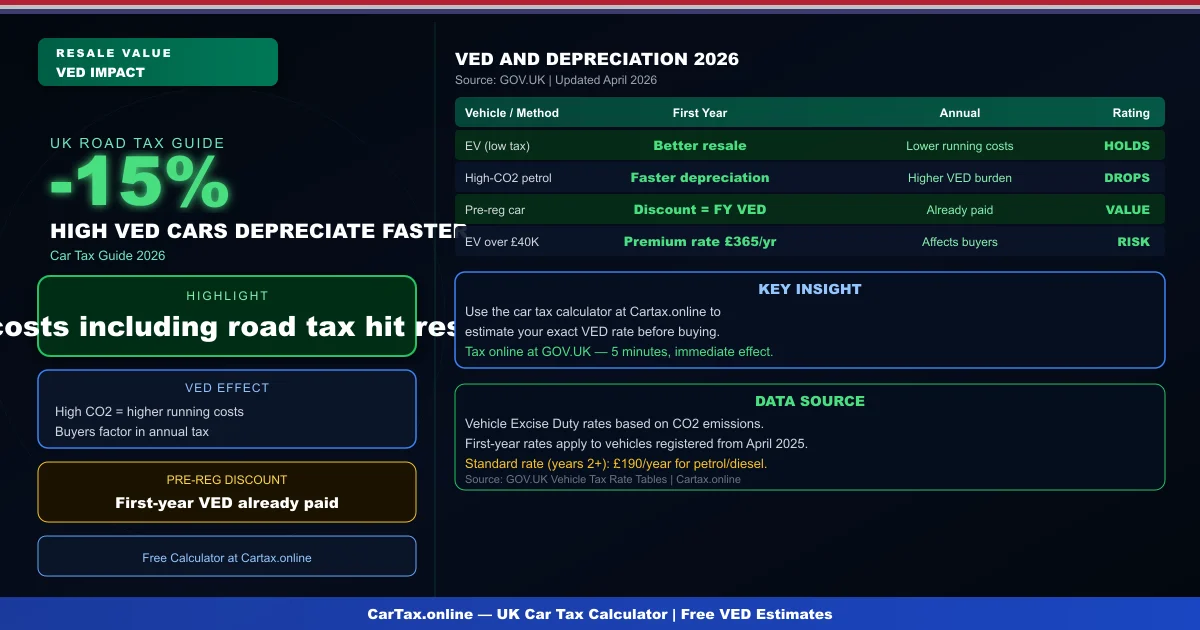
Car tax depreciation UK — your annual road tax bill is one of the hidden factors that affects how quickly your car loses value. High-emission vehicles cost more to own and depreciate faster as tax-conscious buyers avoid them.
How VED Influences Used Car Prices
When evaluating a used car, buyers increasingly factor in annual road tax costs. A vehicle that costs £2,605 in first-year VED will always be compared to alternatives with lower running costs. High-CO2 used cars — once bought at a premium price — drop significantly below their pre-registration value once the first-year VED has already been consumed.
First-Year VED and Pre-Registered Cars
Pre-registered cars (where the dealer absorbs the first-year VED) sell at a discount precisely because that first-year tax burden has been cleared. A pre-registered car at 200g/km effectively saves the buyer £2,605 — making the price discount a real calculation, not just a perception.
Premium Rate Impact on Luxury Used EVs
Electric vehicles over £40,000 that pay the £355 premium rate are more expensive to own long-term than their road tax savings suggest. Used EV buyers should factor in the £365/year cost (years 2-6) when comparing to a petrol equivalent at £190/year. The £175/year difference compounds over ownership duration. Related: Car Tax Depreciation UK 2026 | New Vs Used Car Uk | Car Depreciation Uk | 7 Things to Know About Car Tax When Buying Second-Hand.
Low-Tax Cars Hold Value Better
Cars with low CO2 emissions — EVs, PHEVs, and small hybrids — tend to hold their value better because running costs are lower. A £0 road tax electric car is more attractive to a cost-conscious buyer than a petrol equivalent, all else being equal. This is one reason why EVs have historically held value better in the used market despite higher purchase prices.
Conclusion
Car tax depreciation UK means factoring in running costs before buying. High-emission cars depreciate faster due to ongoing VED costs. Use our car tax calculator to compare total ownership costs.
Official Resources: GOV.UK Check Vehicle Tax | GOV.UK Vehicle Tax | DVLA Online | MOT Check
Frequently Asked Questions
Q: How much is car tax (VED) in the UK 2026?
Car tax rates in the UK depend on your vehicle's CO2 emissions and list price. Standard rates start from £190 per year for petrol and diesel cars, with zero-rated VED for EVs. First-year rates vary from £0 to £2,605 depending on emissions. Additional premiums apply for vehicles over £40,000.
Q: How do I check if my car is taxed online?
You can check your vehicle's tax status for free on the Gov.uk website at gov.uk/check-vehicle-tax. You'll need your vehicle's registration number (number plate). You can also check via the Motor Insurance Database to verify road tax and insurance status simultaneously.
Q: Can I get a refund on car tax if I sell my vehicle?
Yes — if you sell or scrap your vehicle, you can claim a refund on any full months of remaining road tax. Contact DVLA with the V11 reminder letter or apply online at gov.uk. Refunds are usually processed within 4-6 weeks.
Q: Is road tax refund available when transferring ownership?
No — road tax does not transfer with the vehicle. When you sell your car, the tax is automatically cancelled and any remaining months are refunded to you by DVLA. The new owner must tax the vehicle immediately. As a buyer, always verify the vehicle's tax status before purchasing.
Q: What is the luxury car tax threshold in the UK 2026?
The additional rate for vehicles over £40,000 (list price) adds £410 per year to standard VED rates for years 2-6 of registration. This surcharge brings the annual cost for high-emission vehicles over £40,000 to around £600-690 per year. Pure EVs under £40,000 pay zero VED.