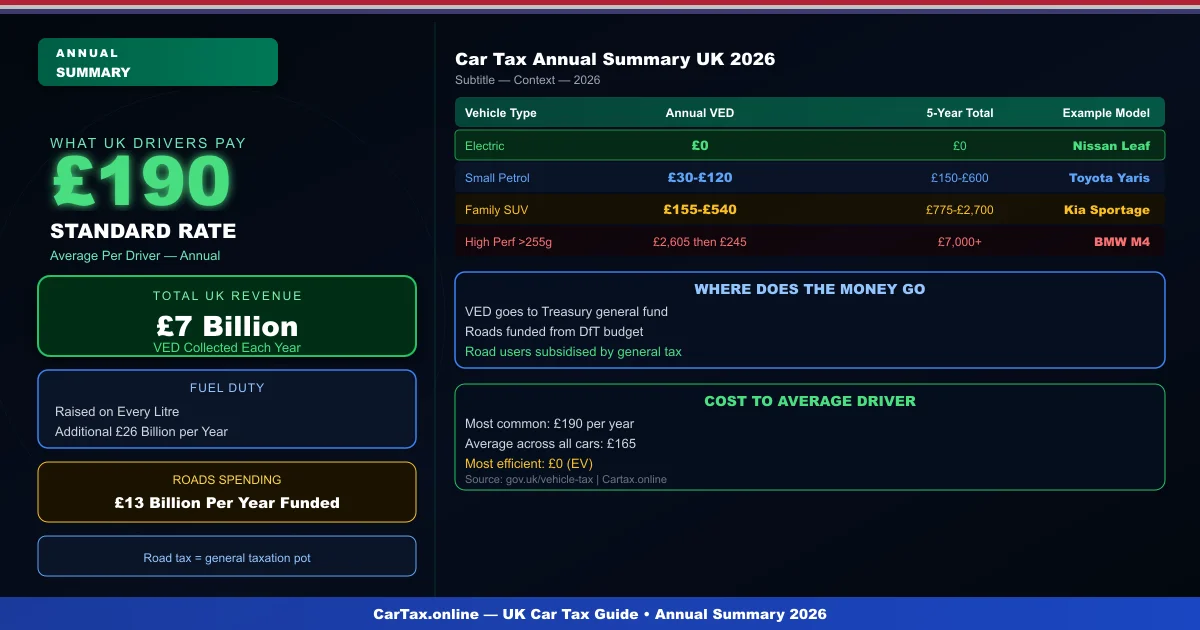
For most UK drivers, road tax is an annual cost that can range from £0 for electric vehicles to over £2,600 for the highest-emitting cars. Here is a complete summary of what UK drivers pay and why.
The Most Common Road Tax Cost
The most common annual road tax cost is the standard rate of £190 per year for petrol and diesel cars emitting 131-150g/km CO2. This applies to the majority of cars on UK roads — mid-sized family cars, SUVs, and most vehicles in the most popular segment. Cars emitting 121-130g/km pay slightly less at around £155-£180 per year.
Electric Vehicle Tax: £0
Electric vehicles with zero CO2 emissions pay £0 in road tax, making them the cheapest category. This applies in every year of ownership — there is no scheduled end to this exemption for currently registered vehicles. With approximately 1 million EVs now on UK roads, the VED revenue lost to EVs is growing but remains a small fraction of total VED collection.
High-Emitter Road Tax
Cars emitting over 255g/km CO2 — typically high-performance sports cars, large luxury SUVs, and some performance diesels — pay the maximum first-year rate of £2,605. In subsequent years, they pay £245 per year (or £245 plus the £355 additional rate if the list price exceeds £40,000). Over five years, a high-emitter can pay £7,000-£9,000 in road tax alone. Related: Car Tax Annual Summary UK 2026 | UK Car Insurance Costs 2026 | Car Maintenance Uk | Car Ownership Costs Uk.
Average Road Tax Per Driver
The average annual road tax per driver is approximately £160-£170, reflecting the mix of standard-rate cars and the large number of lower-emitting vehicles on the road. This average does not account for EVs pulling the average down significantly — among petrol and diesel car owners, the average is closer to £185 per year.
Road Tax Revenue
Total VED revenue collected by HM Treasury is approximately £7 billion per year. This figure has been relatively stable despite the growth of EVs, because the increasing number of vehicles on the road offsets the revenue lost to zero-emission exemptions. Fuel duty — a separate tax — raises approximately £26 billion annually from petrol and diesel sales.
Where the Money Goes
VED revenue goes to the Treasury's general consolidated fund, not directly to roads. Roads are funded through the Department for Transport's separate budget allocation of approximately £10 billion per year for national roads and £3 billion for local roads. This means road tax drivers pay approximately £7 billion in VED but receive around £13 billion in road infrastructure spending — a subsidy from general taxation to road users.
Official Resources: GOV.UK Check Vehicle Tax | GOV.UK Vehicle Tax | DVLA Online | MOT Check
Frequently Asked Questions
Q: How much is car tax (VED) in the UK 2026?
Car tax rates in the UK depend on your vehicle's CO2 emissions and list price. Standard rates start from £190 per year for petrol and diesel cars, with zero-rated VED for EVs. First-year rates vary from £0 to £2,605 depending on emissions. Additional premiums apply for vehicles over £40,000.
Q: How do I check if my car is taxed online?
You can check your vehicle's tax status for free on the Gov.uk website at gov.uk/check-vehicle-tax. You'll need your vehicle's registration number (number plate). You can also check via the Motor Insurance Database to verify road tax and insurance status simultaneously.
Q: Can I get a refund on car tax if I sell my vehicle?
Yes — if you sell or scrap your vehicle, you can claim a refund on any full months of remaining road tax. Contact DVLA with the V11 reminder letter or apply online at gov.uk. Refunds are usually processed within 4-6 weeks.
Q: Is road tax refund available when transferring ownership?
No — road tax does not transfer with the vehicle. When you sell your car, the tax is automatically cancelled and any remaining months are refunded to you by DVLA. The new owner must tax the vehicle immediately. As a buyer, always verify the vehicle's tax status before purchasing.
Q: What is the luxury car tax threshold in the UK 2026?
The additional rate for vehicles over £40,000 (list price) adds £410 per year to standard VED rates for years 2-6 of registration. This surcharge brings the annual cost for high-emission vehicles over £40,000 to around £600-690 per year. Pure EVs under £40,000 pay zero VED.