Understanding Impuesto de Circulacion in Spain
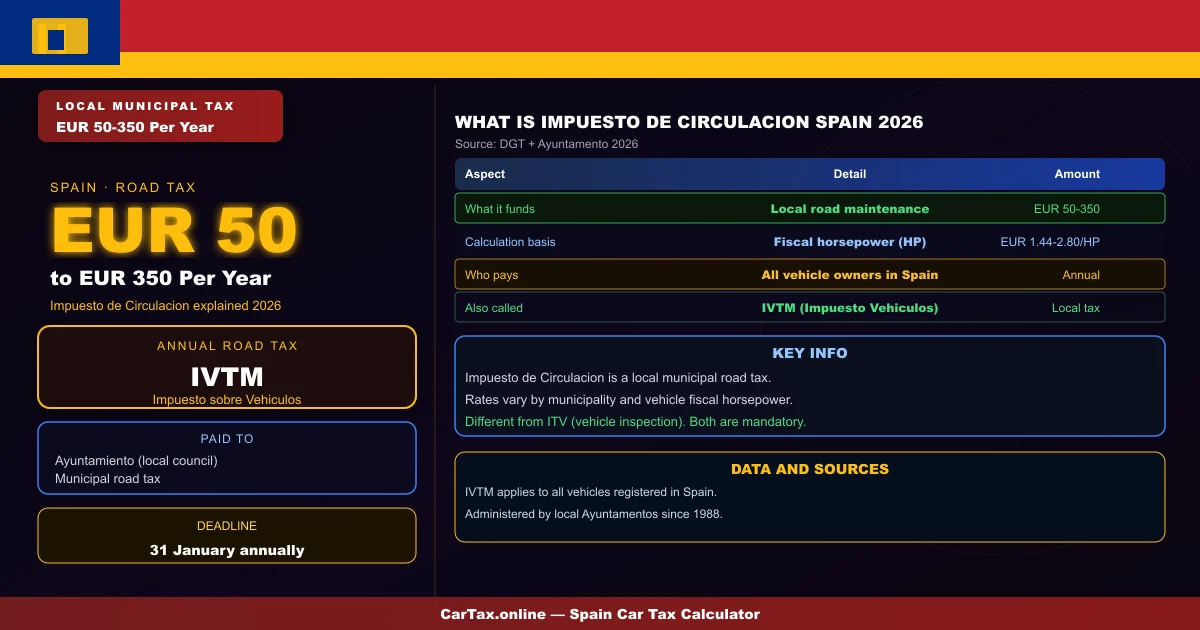
If you own a vehicle in Spain, there is one tax you cannot avoid: the Impuesto de Circulacion, also known as IVTM (Impuesto sobre Vehiculos de Traccion Mecanica). This annual road tax is one of the oldest local taxes in Spain, dating back to legislation from 1988, and it applies to every vehicle registered within Spanish territory that is capable of being driven on public roads. ITV.es and DGT.
Many newcomers to Spain, particularly those arriving from the UK, find this tax system different from what they are used to. The UK combines road tax with vehicle registration and administers it centrally through the DVLA. Spain takes a different approach: road tax is a local municipal tax, collected by your Ayuntamiento (town hall), with rates varying by city and municipality.
What Exactly Is Impuesto de Circulacion?
The Impuesto de Circulacion is a direct tax on vehicle ownership levied by municipal governments. Every year, vehicle owners must pay this tax to their local Ayuntamiento to legally keep their vehicle on the road. The revenue generated funds local road maintenance, traffic infrastructure, and other municipal services.
The tax applies to:
- Passenger cars (coches)
- Motorcycles and scooters
- Vans and light commercial vehicles
- Buses and coaches
- Heavy goods vehicles
- Agricultural and construction vehicles (with some exemptions)
In practical terms, if your vehicle has license plates and is registered with the DGT, you owe this tax.
How It Differs from ITV
The ITV (Inspeccion Tecnica de Vehiculos) is Spain's vehicle inspection system, roughly analogous to the UK's MOT test. It checks your vehicle's roadworthiness, emissions, and safety standards. While both ITV and Impuesto de Circulacion must be kept current for legal driving, they are entirely separate obligations:
| Aspect | ITV | Impuesto de Circulacion |
|--------|-----|-------------------------|
| What it tests | Vehicle condition | Vehicle ownership |
| Administered by | ITV stations | Ayuntamiento |
| Frequency | Every 1-2 years | Annual |
| Deadline | Based on registration date | 31 January each year |
| Cost | EUR 40-90 | EUR 50-350 depending on vehicle |
Many drivers mistakenly believe they can pay one and ignore the other, but both must be current. If your ITV expires, you cannot legally drive. If you don't pay road tax, you accumulate penalties and your vehicle can be flagged in official databases.
How the Tax Is Calculated
The calculation is based on your vehicle's fiscal horsepower (caballos fiscales), a metric that reflects engine power, displacement, and weight. The formula varies slightly for different vehicle categories but essentially converts your vehicle's technical specifications into a fiscal horsepower figure.
Once you have your fiscal horsepower rating, it is multiplied by your municipality's rate per horsepower. Each Ayuntamiento sets its own rate within national guidelines, which is why the same vehicle pays different amounts in Madrid versus Barcelona.
Factors affecting your rate:
- Engine displacement and power output
- Vehicle weight
- Fuel type (diesel vs petrol vs electric)
- Emissions category (Euro 4, 5, 6, etc.)
- Your municipality of registration
Example calculation:
A 1.6L petrol car might have 10 fiscal horsepower. In Madrid at EUR 1.44/HP, annual road tax = EUR 144. In Barcelona at EUR 2.03/HP, the same vehicle = EUR 203.
Who Must Pay
Every person who owns a vehicle registered in Spain must pay this tax, with very limited exceptions. This includes:
Spanish Residents
All Spanish residents who own a vehicle registered in Spain must pay annually. The tax applies regardless of how much you use the vehicle - even a car sitting in your garage for the entire year still owes road tax.
EU Citizens Living in Spain
If you are an EU citizen with a vehicle registered at your Spanish address, you must pay. If you have a foreign-registered vehicle and spend more than 183 days per year in Spain, you are considered a tax resident and must either register the vehicle locally or face potential issues.
Non-EU Residents
Non-EU citizens with vehicles registered in Spain must pay road tax like anyone else. UK citizens post-Brexit are now treated as non-EU for vehicle registration purposes, requiring local registration if staying beyond tourist periods.
Exemptions and Reductions
While most vehicle owners must pay, certain categories qualify for exemptions or reductions:
Full Exemptions:
- Vehicles over 25 years old in some municipalities (historic vehicle exemption)
- Agricultural tractors used exclusively for farming (in many municipalities)
- Vehicles owned by disabled persons (degree of disability determines eligibility)
- Zero-emission electric vehicles (exempt for 2-4 years in most municipalities)
- Emergency services and official government vehicles
Reduced Rates:
- Hybrid vehicles (typically 25-50% reduction in many municipalities)
- Vehicles meeting the latest Euro emissions standards (some municipalities offer discounts)
- Multiple vehicle families (limited discounts in some areas)
Payment Process
Annual Cycle
Road tax is levied for each calendar year. The standard deadline is 31 January for the current year's payment. If you register a new vehicle mid-year, you pay for the remaining months in that year, then annually thereafter.
How to Pay
Most Ayuntamientos offer multiple payment channels:
1. Online Portal - The most convenient option. Log in to your Ayuntamiento's website, locate the IVTM payment section, and pay by credit or debit card. Many municipalities offer a small discount for online payment.
2. Mobile App - Madrid and several other cities have dedicated apps for tax payments including road tax.
3. Bank Transfer - Set up a standing order or one-time payment to the Ayuntamiento's account.
4. In Person - Visit your local Ayuntamiento offices or designated banks with your vehicle reference number.
What You'll Need:
- Your vehicle's referencia catastro (tax reference number for the vehicle, found on previous tax bills)
- Vehicle registration certificate (Permiso de Circulacion)
- Your NIE or NIF number
Consequences of Non-Payment
The Ayuntamiento takes non-payment seriously. Here's what happens if you don't pay:
Immediate Consequences:
- 5% surcharge added if paid within the first month after deadline
- 10% surcharge if paid 1-3 months late
- 15% surcharge if paid 3-6 months late
- 20% surcharge plus interest if paid after 6 months
Long-term Consequences:
- Vehicle flagged in DGT database as having unpaid road tax
- Potential difficulty passing ITV inspection (some ITV stations check for unpaid tax)
- Tax debt can be sent to debt collection agencies
- Vehicle transfer blocked until debt is cleared
- In extreme cases, the Ayuntamiento can pursue legal action
Refunds and Adjustments
If your circumstances change, you may be entitled to a refund:
Scrap or Permanent Deregistration (Baja Definitiva)
When you permanently remove a vehicle from the road (scrapping, exporting, etc.), notify the ITV station and get the baja definitiva certificate. Present this to your Ayuntamiento to receive a pro-rata refund for unused months.
Sale or Transfer
When you sell a vehicle, the road tax for the year remains your responsibility unless you specifically transfer it as part of the sale agreement. Some sellers credit the remaining months of road tax to the buyer.
Change of Municipality
If you move your vehicle registration to a different municipality mid-year, you should receive a proportional refund from the original municipality and pay the prorated amount to the new one.
The Bottom Line
The Impuesto de Circulacion is an inescapable part of vehicle ownership in Spain. Budgeting for it is straightforward once you know your vehicle's fiscal horsepower and your municipality's rate. Pay on time every January to avoid surcharges, and keep your ITV current as both are essential for legal driving.
For the most accurate and up-to-date information about your specific situation, contact your local Ayuntamiento or visit their online portal. Rates and regulations can change, and municipal authorities are the definitive source for your local road tax requirements.
Official Resources: ITV.es - ITV Booking | DGT - Direccion General de Trafico