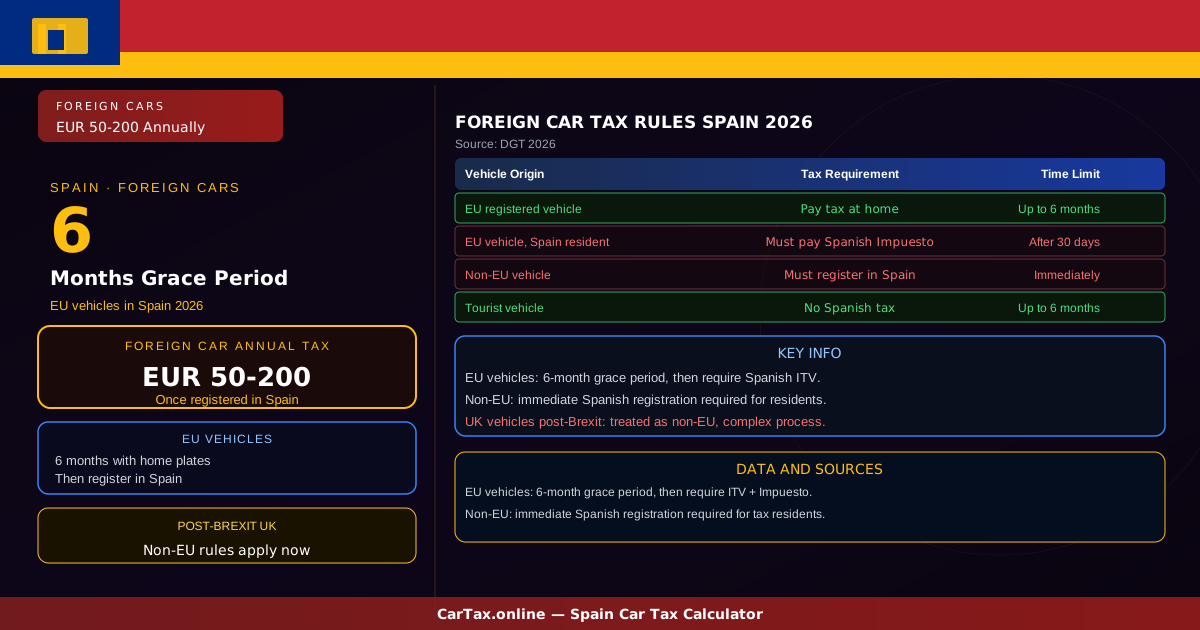
On 23 April 2026, across Spain ports, airports, and motorways, foreign-registered vehicles are a common sight. Whether you are a UK expat, a German tourist, or an American living in Spain, understanding the car tax spain foreign cars rules is essential to avoid fines, vehicle seizure, and unexpected tax bills. This guide covers every scenario for drivers bringing foreign vehicles to Spain.
Use our Spain road tax calculator to estimate your annual vehicle costs.
The Two Key Rules: EU vs Non-EU Vehicles
Spain applies different rules depending on whether your vehicle is registered in an EU country or a non-EU country. This distinction affects how long you can drive the vehicle in Spain, what taxes apply, and what registration process is required for permanent use. The car tax spain foreign cars rules create a clear divide between EU and non-EU vehicles that every foreign vehicle owner in Spain should understand.
EU-Registered Vehicles in Spain
Vehicles registered in any EU country can be driven in Spain under the following car tax spain foreign cars rules:
- Tourists and short-term visitors: up to 6 months without restriction
- Tax residents of the EU country where the vehicle is registered: up to 6 months before Spanish registration is required
- The vehicle must be registered where the owner has their normal residence
- Insurance from the home EU country is recognised in Spain through the Green Card (Carta Verde) system
For German, French, or Italian residents temporarily in Spain, the rules are straightforward. Your home country road tax covers you in Spain and your home country insurance provides coverage through the Green Card extension. You simply need to ensure both documents are valid and up to date before driving in Spain.
Non-EU Vehicles in Spain: The Stricter Rules
Vehicles registered in non-EU countries, including the UK post-Brexit, face stricter rules for car tax spain foreign cars compliance:
- Tourist use: generally limited to 6 months, though enforcement varies by border crossing point
- Tax residents in Spain: immediate Spanish registration is typically required once residency is established
- Non-EU vehicles need full type-approval homologation to be registered in Spain, which involves a process of verifying the vehicle meets Spanish and EU safety and emissions standards
The UK Post-Brexit Reality for Car Tax Spain Foreign Cars
Since 1 January 2021, UK vehicles are treated as non-EU vehicles in Spain. For UK expats who are tax residents in Spain, this creates significant challenges for car tax spain foreign cars compliance. UK vehicles must be fully homologated to Spanish and EU standards, which many UK-spec vehicles do not meet. The homologation process requires testing and certification by an authorised body (ITV can conduct homologation testing).
Many UK vehicles, particularly those with right-hand drive, cannot be fully homologated for Spanish registration due to headlight and signalling differences. Spain drives on the right, and EU regulations require headlights to be designed for the traffic side of the registration country. This makes many UK vehicles unregistrable in Spain without expensive modifications.
The 6-Month Rule Explained
The car tax spain foreign cars 6-month rule is the most important concept for temporary vehicle use in Spain. For tourists from any country, the 6-month rule provides a grace period where your home registration and insurance remain valid. During this period you can drive freely in Spain without paying Spanish road tax or registering locally.
For tax residents in Spain, the rule is stricter. If you are a Spanish tax resident, you cannot keep a foreign vehicle on Spanish roads beyond the 6-month limit. You must either register the vehicle locally or ensure you spend less than 6 months per year in Spain. Many tax residents discover this rule only when stopped by police, resulting in fines and vehicle immobilization.
What UK Expats Should Do With Their UK Car
For UK expats establishing tax residency in Spain, the practical options for your UK car are straightforward. Option 1: sell the UK car and buy a Spanish-registered vehicle. This is the most common solution and Spain has a well-developed used car market with Spanish-registered vehicles available at competitive prices.
Option 2: attempt full homologation. If your UK vehicle has left-hand drive (from a European market) and meets EU emissions standards, full homologation may be possible. This involves ITV testing and certification. Cost: EUR 500-2000 depending on vehicle and required modifications. Success rate: low for most UK-spec vehicles.
Option 3: keep the UK car in the UK. Leave the vehicle with a family member or in storage in the UK. Maintain UK registration and road tax. Visit Spain as a tourist in your UK car. This works if your visits to Spain are under 6 months per year.
Complete Registration Process for Foreign Cars in Spain
When car tax spain foreign cars rules require local registration, here is the complete process. Step 1: obtain your NIE or TIE - as a non-EU national, you need a Tarjeta de Identidad de Extranjero (TIE) or NIE number before you can register a vehicle. EU citizens use their EU national identity document.
Step 2: verify homologation. Your foreign vehicle must meet Spanish and EU safety and emissions standards to be registered. ITV stations can perform homologation testing to verify compliance. If your vehicle does not meet standards, you cannot register it.
Step 3: ITV inspection. Once homologation is confirmed, book an ITV inspection at any ITV station. Bring your foreign registration documents, NIE/TIE, and proof of Spanish address. The ITV inspection verifies your vehicle meets current roadworthiness standards.
Step 4: register with DGT. Take your ITV certificate, NIE/TIE, and vehicle documents to your local DGT office or Gestoria to complete registration. Pay the registration fee and receive your Spanish number plates.
Step 5: pay Impuesto de Circulacion. Once registered, you immediately owe road tax for the current year. Pay your first Impuesto de Circulacion to your local Ayuntamento. From this point forward, you pay car tax spain foreign cars obligations just like any other Spanish vehicle owner.
Insurance Requirements for Foreign Cars in Spain
Regardless of your car tax spain foreign cars situation, insurance is mandatory in Spain. EU-registered vehicles are covered by their home country Green Card insurance extension in Spain, which is automatically included with standard EU motor insurance policies. This means you do not need to purchase separate Spanish insurance for temporary visits.
For UK vehicles in Spain, post-Brexit insurance coverage is more complex. UK motor insurance policies may no longer automatically extend to Spain. Check with your UK insurer whether your policy covers driving in Spain. You may need to purchase a separate Spanish policy or add a Spain extension to your existing coverage. The Carta Verde system no longer automatically covers UK vehicles post-Brexit.
Once your vehicle is registered in Spain, you must purchase Spanish motor insurance from a Spanish insurer. Spanish insurance is competitively priced and comprehensive. Third-party insurance is the legal minimum, but fully comprehensive policies are recommended for valuable vehicles.
Key Takeaways
Car tax spain foreign cars rules: EU vehicles have a 6-month grace period, then Spanish registration is required. Non-EU vehicles including UK post-Brexit face immediate registration requirements for tax residents. UK vehicles post-Brexit face a complex homologation process that often makes keeping UK plates impractical.
Spanish Impuesto de Circulacion applies once registered in Spain. ITV inspection is required for all Spanish-registered vehicles. Most UK expats sell their UK cars and buy Spanish-registered vehicles instead of attempting homologation. Right-hand drive UK vehicles generally cannot be registered in Spain without significant modifications.
Official Resources: DGT - Direccion General de Trafico | ITV.es - ITV Stations