UK insurance data consistently shows that drivers under 25 are significantly more likely to be involved in road accidents than older, more experienced drivers. This elevated risk profile translates directly into higher insurance premiums, creating a financial barrier to driving that affects young people disproportionately in rural areas with limited public transport alternatives.
## Young Driver Insurance Rates and Regulations
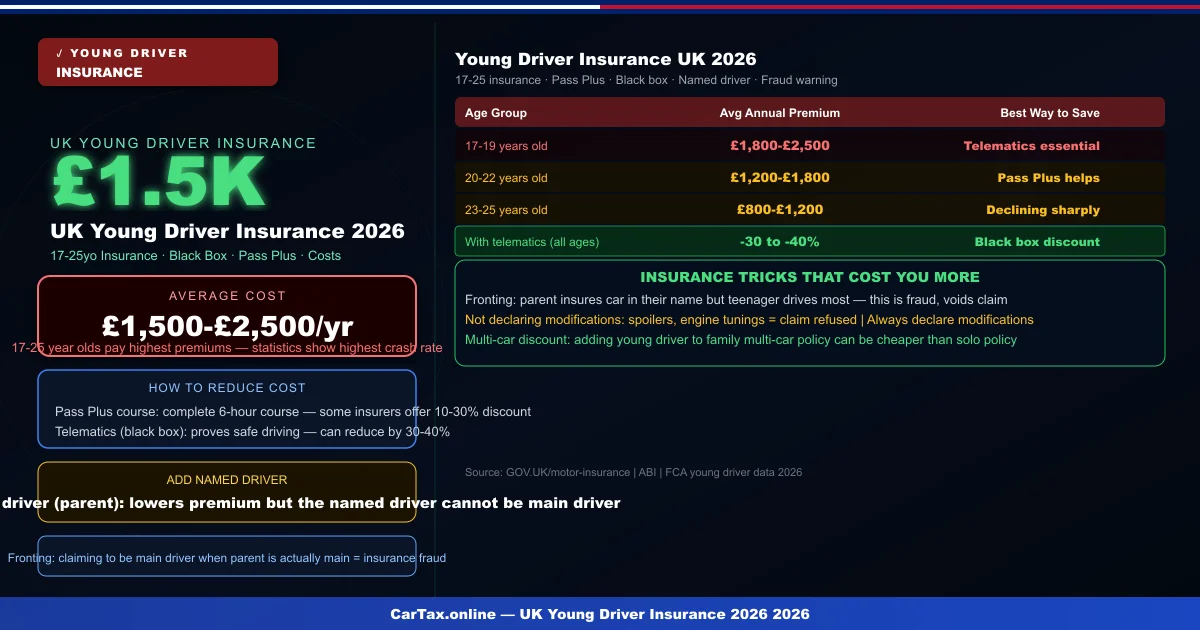
Average annual premiums for 17-year-old new drivers range from £1,500 to £2,500 depending on location, vehicle, and policy type. Telematics policies can reduce these premiums by 30 to 40 percent for careful drivers, bringing effective costs below £1,000 in many cases.
### Telematics: The Most Effective Premium Reduction
For young drivers who accept a black box policy, telematics insurance can be transformative. Insurers including Admiral LittleBox, Co-op Young Driver, and Insure The Box all offer policies specifically designed for drivers aged 17 to 25 that base pricing substantially on actual driving behaviour rather than age demographics alone.
The key to maximising telematics savings is consistent demonstration of careful driving patterns: smooth acceleration, gentle braking, adherence to speed limits, and minimal night-time driving. Drivers who maintain excellent telematics scores throughout their first policy year typically see renewal premiums that reflect their improved risk profile.
### Pass Plus: Does It Actually Reduce Premiums?
The Pass Plus scheme, operated by the Driving Standards Agency, offers a six-hour post-test training course that some insurers recognise with premium discounts. However, the discount value varies significantly between insurers, and some major insurers offer no discount at all for Pass Plus completion.
Young drivers should research specific insurer requirements before paying for a Pass Plus course. For some drivers, the £130 to £200 course cost may take several years to recoup through premium savings, while others may find that their chosen insurer offers equivalent discounts to new drivers regardless of Pass Plus status.
### Reducing Premium Without Telematics
For young drivers who prefer to avoid black box policies, several strategies can reduce standard premiums. Selecting a lower-engined, higher-safety-rated vehicle in a lower insurance group can reduce premiums by hundreds of pounds. Adding an experienced, older named driver with a clean record can sometimes reduce costs, but this must reflect genuine vehicle sharing rather than fronting.
Increasing the voluntary excess reduces premium costs while accepting greater financial liability in the event of a claim. Annual payment rather than monthly instalments avoids interest charges, typically saving 5 to 10 percent on the annual premium total.
## Frequently Asked Questions
**Is fronting illegal?**
Yes. Fronting occurs when a younger driver is listed as an additional driver while an older person is shown as the main driver despite the younger driver actually being the primary user. This is insurance fraud that can invalidate claims, result in criminal prosecution, and permanently damage your insurance record.
**What is the cheapest way for a 17-year-old to get car insurance?**
Telematics policies from specialist young driver insurers typically offer the lowest available rates for careful new drivers. A 125cc learner-legal bike or scooter is far cheaper to insure than a car, and passing the test while riding a cheap insured vehicle builds no-claims history before buying a car.
**Do premium differences between car models really matter?**
Yes. Insurance groups range from 1 to 50, with group 1 cars typically costing hundreds of pounds less to insure than group 50 equivalents. Choosing a car in a low insurance group is one of the most effective ways for young drivers to reduce premiums.
**Does where I live affect my young driver insurance?**
Yes. Insurance premiums are heavily influenced by postcode area due to theft rates, accident statistics, and repair costs in each location. Young drivers in urban areas typically pay substantially more than those in rural areas with lower claim frequencies.
Disclaimer: CarTax.online provides general information for guidance purposes only. Tax rules and rates are subject to change. Always verify current rates with gov.uk or HMRC before making financial decisions. This guide was last reviewed in 2026.
Frequently Asked Questions
Q: How much is car tax (VED) in the UK 2026?
Car tax rates in the UK depend on your vehicle's CO2 emissions and list price. Standard rates start from £190 per year for petrol and diesel cars, with zero-rated VED for EVs. First-year rates vary from £0 to £2,605 depending on emissions. Additional premiums apply for vehicles over £40,000.
Q: How do I check if my car is taxed online?
You can check your vehicle's tax status for free on the Gov.uk website at gov.uk/check-vehicle-tax. You'll need your vehicle's registration number (number plate). You can also check via the Motor Insurance Database to verify road tax and insurance status simultaneously.
Q: Can I get a refund on car tax if I sell my vehicle?
Yes — if you sell or scrap your vehicle, you can claim a refund on any full months of remaining road tax. Contact DVLA with the V11 reminder letter or apply online at gov.uk. Refunds are usually processed within 4-6 weeks. Related: Auto Insurance Uk | Black Box Insurance UK 2026 | Car GAP Insurance UK 2026 | UK Car Insurance 2026.
Q: Is road tax refund available when transferring ownership?
No — road tax does not transfer with the vehicle. When you sell your car, the tax is automatically cancelled and any remaining months are refunded to you by DVLA. The new owner must tax the vehicle immediately. As a buyer, always verify the vehicle's tax status before purchasing.
Q: What is the luxury car tax threshold in the UK 2026?
The additional rate for vehicles over £40,000 (list price) adds £410 per year to standard VED rates for years 2-6 of registration. This surcharge brings the annual cost for high-emission vehicles over £40,000 to around £600-690 per year. Pure EVs under £40,000 pay zero VED.
⚠ Financial & Legal Disclaimer
All information provided in this article is for educational and informational purposes only. The content is synthesized based on verbal communications, extensive internet research, and official government website data as of the date of publishing. Tax laws and insurance policies are subject to frequent changes by the authorities. We strive for accuracy, but we recommend that you consult a qualified professional (CA, CPA, or Tax Consultant) before making any financial decisions. For personalized assistance, you can also connect with our in-house experts through our Contact Us page.
Ready to calculate your car tax?
Use our free calculator to get an instant, accurate estimate for your country and state.
Open Car Tax Calculator →