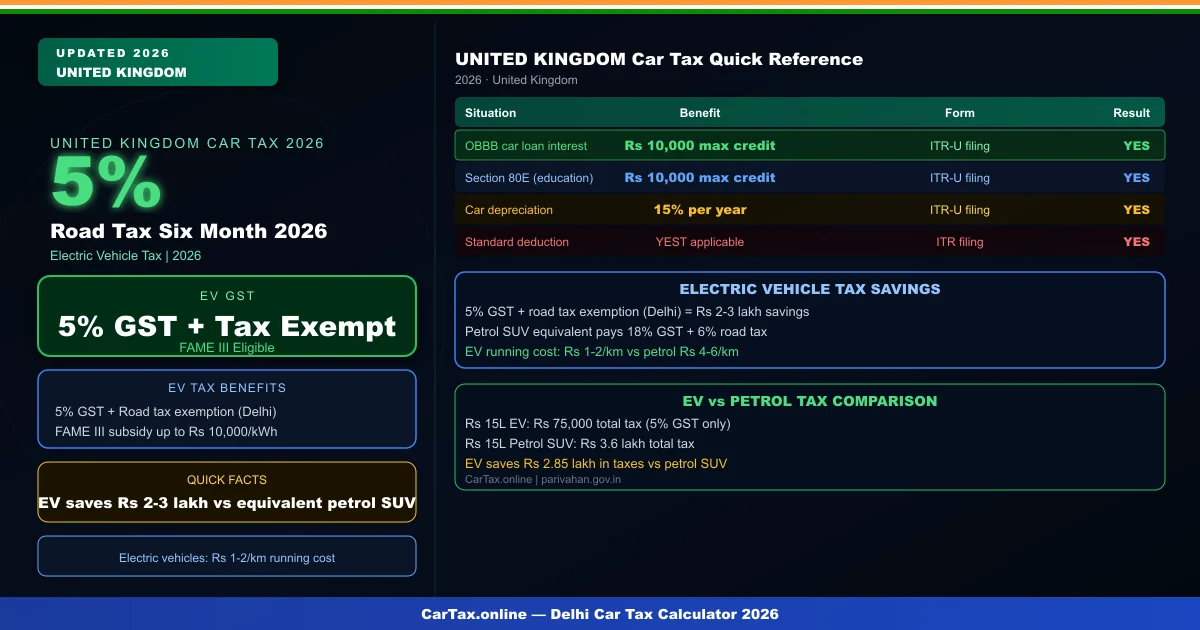
Not every vehicle owner can or wants to pay their annual road tax in one lump sum. The DVLA offers a six-monthly payment option for drivers who prefer to split their VED costs across two payments per year. While this is more expensive than paying annually, it is cheaper than monthly instalments and provides a practical middle ground for those who cannot afford the full annual payment upfront. This guide explains how six-monthly road tax works, the current rates, and when it makes sense to choose this option.
How six-monthly road tax works
Six-monthly VED allows you to pay your road tax twice per year instead of once. Each payment covers exactly six months of road tax, and the vehicle must be taxed for the full six-month period. To set up six-monthly tax, you need to use the DVLA vehicle tax service online or at a post office branch that offers vehicle licensing services. The first payment covers months 1-6 and the second payment covers months 7-12 of the annual tax year. Both payments must be made to maintain continuous road tax — failing to make the second payment will result in the vehicle becoming untaxed.
Current six-monthly rates
- Standard car (under 40k): approximately 104.75 per 6 months = 209.50 per year total
- Luxury car (over 40k): approximately 178.75 per 6 months = 357.50 per year total
- Motorcycles: half of the annual rate (different per engine size)
- Vans: approximately 176 per 6 months
Compared to paying annually: the six-monthly option costs approximately 19.50 GBP more per year for a standard car, and 32.50 GBP more per year for a luxury car. This is because DVLA applies a small administrative charge to cover the cost of processing two payments instead of one.
Six-monthly vs annual: the cost difference
The cost difference between annual and six-monthly road tax is the DVLA admin charge for processing two payments. For a standard car: annual = 190 GBP, six-monthly = 209.50 GBP, difference = 19.50 GBP per year. For a luxury car: annual = 325 GBP, six-monthly = 357.50 GBP, difference = 32.50 GBP per year. While 19.50 GBP per year may seem minor, over a 10-year ownership period, paying six-monthly instead of annual costs 195 GBP more in total. If cash flow is manageable, paying annually is always the financially optimal choice. Related: Andhra Pradesh Road Tax Calculator 2026 — AP Vehicle Rates | Bangalore Road Tax Calculator 2026 — Karnataka Vehicle Guide | Chennai Road Tax 2026 — Tamil Nadu Vehicle Calculator | Delhi Road Tax Calculator 2026 — NCT Rates That Save You Mon.
When six-monthly tax makes sense
Six-monthly tax is most useful when: you cannot afford the full annual payment upfront; you sell or plan to sell the vehicle mid-year — six-monthly means you only pay for the months you own the vehicle; you prefer the predictability of a twice-yearly payment to manage your budget; you are buying a vehicle partway through a tax year and want to align tax renewals with your finances. The key advantage for vehicle sellers is that if you sell mid-year, the unused months of tax are automatically refunded on a six-monthly tax arrangement — just as they would be on an annual arrangement.
Setting up six-monthly tax
Six-monthly tax is not the default — you must specifically choose this option when taxing the vehicle. Visit the DVLA vehicle tax service online or go to a participating post office branch. You will need: your vehicle log book (V5C); proof of insurance; MOT certificate if the vehicle is over 3 years old; your payment method (debit or credit card for online transactions). Note that not all vehicles are eligible for six-monthly tax — certain vehicle types and some specialist vehicles may only be available for annual payment. Check with DVLA if unsure about eligibility.
Disclaimer
Six-monthly VED rates are indicative as of April 2026 and include the DVLA administrative premium. Rates are subject to annual RPI uplift. Always verify current rates at gov.uk/vehicle-tax. This article does not constitute financial advice.
Official Resources: Vehicle Tax Guide | Car Tax Calculator
Frequently Asked Questions
Q: How is car tax calculated in 2026?
Car tax is calculated based on your vehicle's value, engine capacity, fuel type, emissions, and state or country of registration. Tax rates vary significantly between regions — check your local transport authority website or use an online car tax calculator for an accurate estimate for your specific vehicle.
Q: Can I pay my car tax online?
Yes — most regions allow online road tax payment through their transport department portal. In India, use parivahan.gov.in. In the UK, use gov.uk. In the USA, check your state's DMV website. Have your vehicle registration number and insurance certificate ready for online payments.
Q: What happens if I don't pay car tax?
Driving without valid road tax is illegal in most jurisdictions and can result in fines, vehicle seizure, or number plate clamping. Penalties range from a percentage of the tax owed to fixed daily amounts. Always ensure your vehicle is taxed before driving — even short lapses can accumulate significant penalties.
Q: Are there tax exemptions for electric or hybrid vehicles?
Most countries offer tax benefits for EVs and hybrids including reduced GST/VAT rates, road tax exemptions, and purchase subsidies. In India, EVs attract 5% GST versus 28% for petrol cars. In the UK, EVs are exempt from VED. Check your country's specific EV incentive programs for current rates and eligibility.
Q: Can I claim tax relief on car expenses for business use?
Business vehicle owners can typically claim deductions for fuel, maintenance, insurance, depreciation, and interest on car loans. Methods vary: standard mileage rates, actual expense tracking, or lease deduction. Keep detailed records including mileage logs, receipts, and business purpose documentation for all trips.