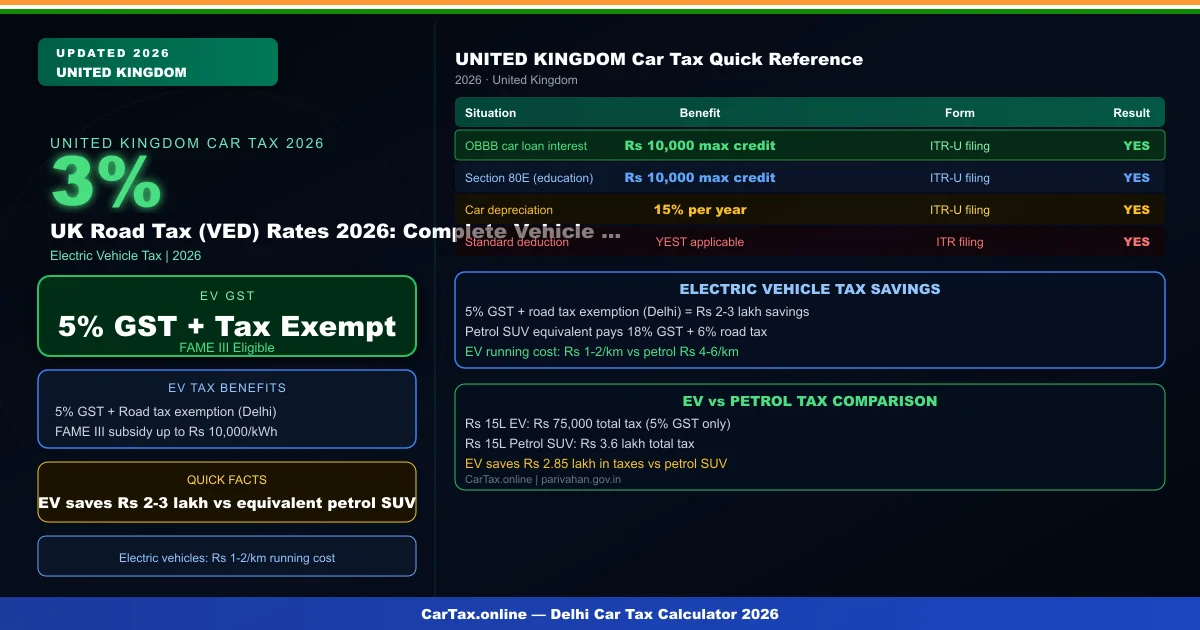
Vehicle Excise Duty, commonly known as UK road tax, is a mandatory annual charge that every vehicle owner must pay to legally drive on public roads. Whether you own a brand new petrol car, a diesel vehicle, or a fully electric model, understanding how road tax works in 2026 is essential for budgeting and compliance with DVLA requirements.
How UK Road Tax Works in 2026
UK road tax is calculated based on your vehicle's CO2 emissions and list price, with different rates applying during the first year and subsequent years of ownership. The DVLA uses a banding system that places vehicles into categories based on their environmental impact, making it crucial to understand which band your car falls into before purchasing or renewing your tax.
For vehicles registered after April 2017, the system operates differently than older vehicles. The first-year rate depends entirely on CO2 emissions, while standard annual rates are determined by fuel type and emission standards. Electric vehicles enjoy significant advantages, with zero-emission cars currently paying no road tax at all during their first year and subsequent years.
UK Road Tax 2026 First-Year Rates by CO2 Band
When you first register a new vehicle, the first-year road tax rate is determined by your car's CO2 emissions. The following table shows the complete banding structure for vehicles registered from April 2025 onwards:
VED First Year Rates 2026
| CO2 Emissions (g/km) | First Year Rate | Vehicle Type |
|---|---|---|
| 0 | £0 | Electric vehicles |
| 1 - 50 | £10 | Very low emission hybrids |
| 51 - 75 | £30 | Low emission hybrids |
| 76 - 94 | £130 | Low emission petrol/gas |
| 95 - 99 | £135 | Low emission vehicles |
| 100 - 109 | £155 | Moderate emission |
| 110 - 119 | £175 | Moderate emission |
| 120 - 129 | £195 | Average emission |
| 130 - 139 | £215 | Above average |
| 140 - 149 | £255 | Higher emission |
| 150 - 164 | £645 | High emission |
| 165 - 175 | £1,040 | Very high emission |
| 176 - 185 | £1,565 | Very high emission |
| 186 - 200 | £2,080 | Ultra high emission |
| 201 - 225 | £2,605 | Highest emission |
| 226 - 255 | £4,705 | Extremely high emission |
| Over 255 | £5,590 | Maximum rate |
Standard Annual Road Tax Rates 2026
After the first year, all vehicles pay a standard annual road tax rate. For 2026, the DVLA has confirmed the following standard rates that apply from the second year onwards:
- Zero emission vehicles (electric): £0 per year
- Alternative fuel vehicles (hybrid, bioethanol): £185 per year
- Petrol and diesel vehicles: £190 per year
These standard rates apply to all vehicles registered after April 2017, regardless of their original CO2 emissions. The only exceptions are vehicles with a list price exceeding £40,000, which incur an additional premium rate for five years.
Premium Rate for High-Value Vehicles
If your vehicle has a list price exceeding £40,000 when new, you will pay an additional premium on top of the standard road tax rate. This surcharge applies for five years from the second tax year and adds £325 per year to your annual road tax bill.
For example, a petrol car valued at £45,000 would pay £515 per year (£190 standard plus £325 premium) for years two through six of ownership. After this period, the premium drops off and you revert to paying only the standard rate.
Electric vehicles are exempt from this premium regardless of their purchase price, making them increasingly attractive from a tax perspective. This exemption applies to all zero-emission vehicles, including high-value electric models from manufacturers like Tesla, Porsche, and BMW.
Electric Vehicles and Zero VED
One of the most significant advantages of owning an electric vehicle in the UK is the complete exemption from road tax. Zero-emission vehicles pay nothing in annual road tax, representing substantial savings over the lifetime of ownership compared to traditional petrol or diesel cars.
This exemption has been extended multiple times by the government and currently applies to all fully electric vehicles with zero CO2 emissions. The benefit includes the first-year rate (which is £0) and all subsequent years, with no premium charge even for expensive electric models.
For businesses considering electric vehicle fleets, the combination of zero road tax, reduced benefit-in-kind rates for company cars, and enhanced capital allowances makes electric vehicles increasingly economical beyond their initial purchase price. Use our UK car tax calculator to compare the total cost of ownership between electric and petrol vehicles.
How to Calculate Your Road Tax
Calculating your annual road tax is straightforward if you know your vehicle's CO2 emissions and list price. The DVLA provides several tools and resources to help you determine the correct rate, or you can use our UK car tax calculator for instant results.
To calculate manually, follow these steps:
- Find your vehicle's CO2 emissions figure on the V5C registration document or log book
- Determine if your car was registered before or after April 2017
- For new vehicles, use the first-year rate table to find your CO2 band
- For subsequent years, add the premium if the list price exceeded £40,000
- Check if you qualify for any exemptions or reductions
For vehicles registered before April 2017, different rules apply based on engine size and emissions. Diesel vehicles that do not meet RDE2 standards may incur a supplement on their road tax rate.
Exemptions and Special Cases
Several categories of vehicles and owners are exempt from road tax requirements. Understanding these exemptions can save you money and ensure you remain compliant with DVLA regulations.
Road Tax Exempt Vehicles
- Electric vehicles with zero CO2 emissions
- Vehicles owned by disabled drivers (certain criteria apply)
- Historic vehicles over 40 years old (from January 2024)
- Trams and light rail vehicles
- Agricultural vehicles ( tractors, agricultural engines)
- Emergency service vehicles
- Vehicles registered as off-road (Naked V5C)
Historic Vehicle Exemption
Vehicles manufactured before 1 January 1985 were previously exempt from road tax. However, since January 2024, the exemption has been reformed. Now, vehicles over 40 years old are exempt from road tax, creating a rolling exemption that covers increasingly older vehicles each year.
Paying Your Road Tax
Road tax can be paid annually, biannually, or monthly through the DVLA's online portal, by phone, or at a Post Office branch. Paying annually typically offers the best value, while monthly direct debit payments include a small administrative charge.
To tax your vehicle, you will need your V5C registration certificate (log book), valid MOT certificate if applicable, and proof of insurance. The DVLA processes applications immediately for online and phone payments, with your tax disc (now digital) updated in their database.
Failure to tax your vehicle results in significant penalties, including a £80 fixed penalty notice, potential vehicle clamping, and prosecution in serious cases. The DVLA uses automatic number plate recognition cameras to identify untaxed vehicles, making evasion increasingly difficult.
Understanding Your V5C Document
The V5C registration certificate, commonly known as the log book, contains essential information for calculating your road tax. Key details include the CO2 emissions figure (found in section 1.1), the date of first registration, and the vehicle's list price.
If your V5C does not show a CO2 emissions figure, this typically means the vehicle was registered before the requirement was introduced or is exempt from the standard calculation. In such cases, the DVLA will assign your vehicle to the appropriate tax band based on other available information.
When buying a used vehicle, always check that the CO2 figure on the V5C matches the seller's documentation. Incorrect emissions data can result in overpayment or underpayment of road tax, potentially leading to penalties.
Road Tax When Selling or Buying a Used Car
Road tax does not transfer between owners when you sell a vehicle. The previous owner's tax becomes invalid the moment the vehicle is sold or transferred. As the new owner, you must tax the vehicle before driving it on public roads, even if only to move it from the seller's location.
However, if the vehicle already has 12 months or more of continuous tax remaining at the time of sale, you may be entitled to a refund for the unused portion. The DVLA processes these refunds automatically when ownership changes, though the process can take several weeks.
When selling your vehicle, always notify the DVLA of the change of ownership using the appropriate section of the V5C. This protects you from liability for road tax, parking penalties, or toll charges incurred by the new owner.
Impact of Road Tax on Vehicle Choice
Road tax considerations should factor into your vehicle purchasing decision, particularly for new cars where first-year rates can vary dramatically based on emissions. The difference between a low-emission hybrid and a high-performance petrol car can be over £5,000 in the first year alone.
Over a typical five-year ownership period, the total road tax burden for a high-emission vehicle can exceed £7,000 when including the premium rate for expensive cars. Conversely, an electric vehicle owner pays nothing in road tax during the same period, representing a £2,000 or more saving compared to a standard petrol car.
These calculations demonstrate why road tax should form part of your total cost of ownership assessment alongside fuel costs, insurance, maintenance, and depreciation. Our comprehensive UK car tax calculator can help you compare the lifetime road tax costs for different vehicles.
Frequently Asked Questions
How much is road tax for electric cars in the UK?
Electric vehicles pay zero road tax in the UK, both in the first year and for all subsequent years of ownership. This exemption applies regardless of the vehicle's value, making electric cars the most economical option from a road tax perspective.
What happens if I forget to tax my car?
Driving an untaxed vehicle is illegal and results in automatic penalties. The DVLA issues £80 fixed penalty notices to owners of untaxed vehicles, reduced to £40 if paid promptly. Persistent non-payment can lead to vehicle seizure, clamping, and potential prosecution.
Can I pay road tax monthly?
Yes, the DVLA offers monthly direct debit payments for road tax. However, a 5% surcharge applies to monthly payments compared to annual rates. Paying annually remains the most cost-effective option for most vehicle owners.
Do hybrid cars pay less road tax?
Hybrid vehicles that cannot travel more than a limited distance using electric power alone are classified as alternative fuel vehicles. They pay £185 annually from the second year onwards, which is £5 less than standard petrol or diesel vehicles.
How do I find my vehicle's CO2 emissions?
Your vehicle's CO2 emissions figure is shown on the V5C registration certificate (log book) in section 1.1. It is also listed on the vehicle's registration document, sales paperwork, and manufacturer specifications. You can check official DVLA vehicle registration records for verification.
Are classic cars exempt from road tax?
Vehicles over 40 years old are currently exempt from road tax. This exemption applies automatically and requires no application. However, you must still register the vehicle and maintain appropriate insurance.
What is the premium road tax rate?
Vehicles with a list price exceeding £40,000 pay an additional £325 per year for five years from the second tax year. This premium applies on top of the standard rate, making the total annual tax £515 for petrol cars in this price bracket.
Can I get a road tax refund?
You can receive a refund if you scrap your vehicle, export it permanently, make a SORN declaration, or have the vehicle stolen and not recovered. Refunds are calculated based on the unused portion of your tax period and are typically processed within four to six weeks.
Disclaimer: This article provides general information about UK road tax rates and regulations for 2026. Tax rates, emission bands, and exemption rules may change. Always verify current information on the official DVLA website or consult a qualified tax professional for personalised advice regarding your specific vehicle and circumstances.