Importing a vehicle into the United Kingdom involves navigating customs procedures, duty payments, and compliance requirements that vary significantly depending on the vehicle's country of origin, age, and intended use. Understanding the import process thoroughly before committing to a purchase can prevent costly surprises.
The United Kingdom operates one of the most comprehensive vehicle taxation systems in the world. From the moment a car is first registered to the day it reaches historic vehicle status, every stage of ownership carries distinct tax implications. Understanding these Importing a Car rules in 2026 enables drivers to budget accurately, identify legitimate savings opportunities, and maintain full legal compliance throughout their vehicle ownership journey.
## Understanding Importing a Car in the UK Context
Following Brexit, the United Kingdom is no longer part of the EU's customs union or single market, meaning EU-origin vehicles are now subject to import tariffs that did not apply during the UK's EU membership. This has significantly altered the economics of importing vehicles from mainland Europe, though certain trade agreements continue to provide preferential access for vehicles from specific countries.
## Current Importing a Car Rates and Regulations
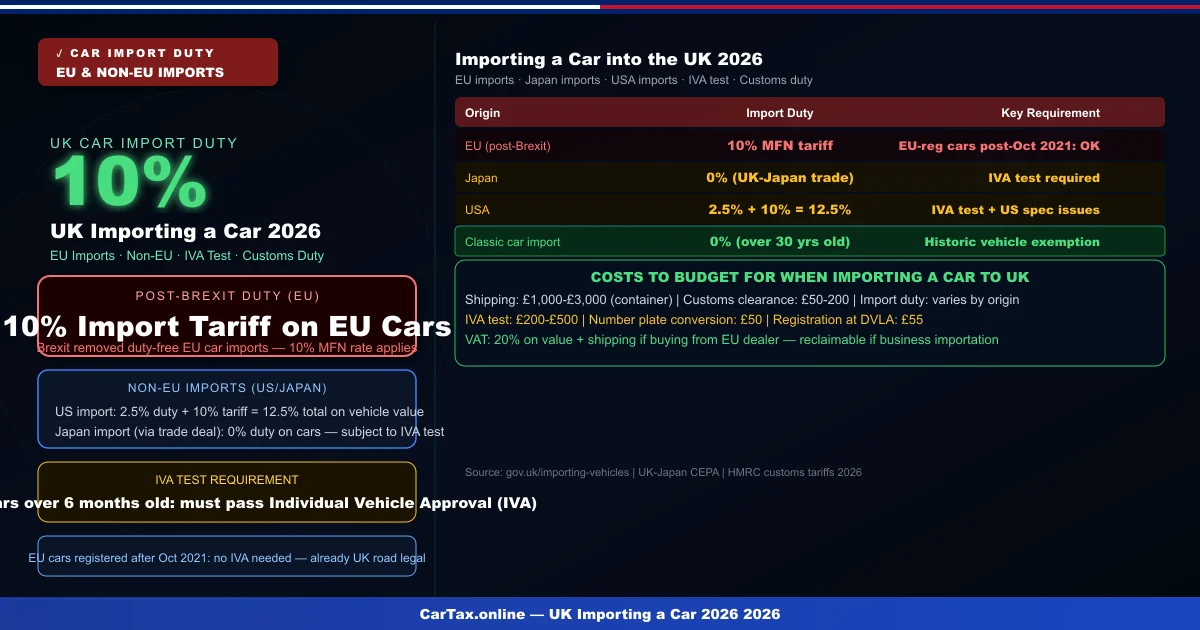
Vehicles imported from the EU attract a 10 percent Most Favoured Nation tariff under the UK Global Tariff schedule. Japanese vehicles benefit from zero tariffs under the UK-Japan Comprehensive Economic Partnership Agreement. US-origin vehicles face combined tariffs and duties totalling approximately 12.5 percent. Classic vehicles over 30 years old qualify for historic vehicle exemptions regardless of origin.
### The Individual Vehicle Approval Test
Non-EU vehicles over six months old at the time of importation must pass an Individual Vehicle Approval (IVA) test before they can be registered for use on UK roads. The IVA test verifies that the vehicle meets UK safety and environmental standards, which differ in some respects from standards applied in the EU, US, Japan, and other markets.
Common IVA failure points include headlamp beam patterns, which differ between US and European specifications, daytime running lights that may not meet UK requirements, and emissions equipment that may need to be updated to European standards. Vehicles sourced from Japan frequently require modifications to meet UK headlamp and indicator requirements.
The IVA test costs between £200 and £500 depending on the test centre and vehicle type, with appointments available at authorised testing stations across the United Kingdom. Failed items can be retested after modification, with each retest incurring an additional fee.
### Total Importation Costs
Beyond the purchase price and duty, importers should budget for shipping (approximately £1,000 to £3,000 depending on destination and shipping method), customs clearance (£50 to £200), VAT at 20 percent on the combined value of purchase price plus shipping and duty, IVA testing if applicable, DVLA first registration fee of £55, and number plate conversion costs of approximately £50.
For a £20,000 car imported from Japan, the total additional cost beyond the purchase price could reach £5,000 to £7,000 depending on vehicle specifics, making imports most economical for vehicles priced significantly below UK market equivalents after accounting for all costs.
## Frequently Asked Questions
**Can I import my EU-registered car to the UK after Brexit without paying duty?**
No. Post-Brexit, all EU-origin vehicles are subject to the standard 10 percent MFN tariff on importation. The UK's departure from the EU customs union means that preferential rates no longer apply to EU vehicle trade.
**How long does the import process take?**
The total process from purchase to UK registration typically takes 6 to 12 weeks, primarily depending on shipping times from the country of origin and the availability of IVA test appointments.
**Is it worth importing a car from Japan in 2026?**
Japanese-import vehicles remain popular for their high build quality and favourable depreciation. However, the 0 percent tariff benefit must be weighed against potential IVA modification costs for UK compliance. Vehicles with UK-compatible specifications from Japanese auction houses can offer good value after all costs.
**Do I need a UK bank account to import a car?**
Yes. Customs duty and VAT must typically be paid before the vehicle is released from port. UK-based importers usually arrange payment through a customs agent using a UK bank account.
Disclaimer: CarTax.online provides general information for guidance purposes only. Tax rules and rates are subject to change. Always verify current rates with gov.uk or HMRC before making financial decisions. This guide was last reviewed in 2026.
Frequently Asked Questions
Q: How much is car tax (VED) in the UK 2026?
Car tax rates in the UK depend on your vehicle's CO2 emissions and list price. Standard rates start from £190 per year for petrol and diesel cars, with zero-rated VED for EVs. First-year rates vary from £0 to £2,605 depending on emissions. Additional premiums apply for vehicles over £40,000.
Q: How do I check if my car is taxed online?
You can check your vehicle's tax status for free on the Gov.uk website at gov.uk/check-vehicle-tax. You'll need your vehicle's registration number (number plate). You can also check via the Motor Insurance Database to verify road tax and insurance status simultaneously.
Q: Can I get a refund on car tax if I sell my vehicle?
Yes — if you sell or scrap your vehicle, you can claim a refund on any full months of remaining road tax. Contact DVLA with the V11 reminder letter or apply online at gov.uk. Refunds are usually processed within 4-6 weeks. Related: Big Car Tax Changes Coming to UK 2026 | 5 Clever Ways to Tax My Car Online and Save Money | Check Car Tax and MOT Status UK | Car Tax Renewal UK 2026.
Q: Is road tax refund available when transferring ownership?
No — road tax does not transfer with the vehicle. When you sell your car, the tax is automatically cancelled and any remaining months are refunded to you by DVLA. The new owner must tax the vehicle immediately. As a buyer, always verify the vehicle's tax status before purchasing.
Q: What is the luxury car tax threshold in the UK 2026?
The additional rate for vehicles over £40,000 (list price) adds £410 per year to standard VED rates for years 2-6 of registration. This surcharge brings the annual cost for high-emission vehicles over £40,000 to around £600-690 per year. Pure EVs under £40,000 pay zero VED.
⚠ Financial & Legal Disclaimer
All information provided in this article is for educational and informational purposes only. The content is synthesized based on verbal communications, extensive internet research, and official government website data as of the date of publishing. Tax laws and insurance policies are subject to frequent changes by the authorities. We strive for accuracy, but we recommend that you consult a qualified professional (CA, CPA, or Tax Consultant) before making any financial decisions. For personalized assistance, you can also connect with our in-house experts through our Contact Us page.
Ready to calculate your car tax?
Use our free calculator to get an instant, accurate estimate for your country and state.
Open Car Tax Calculator →