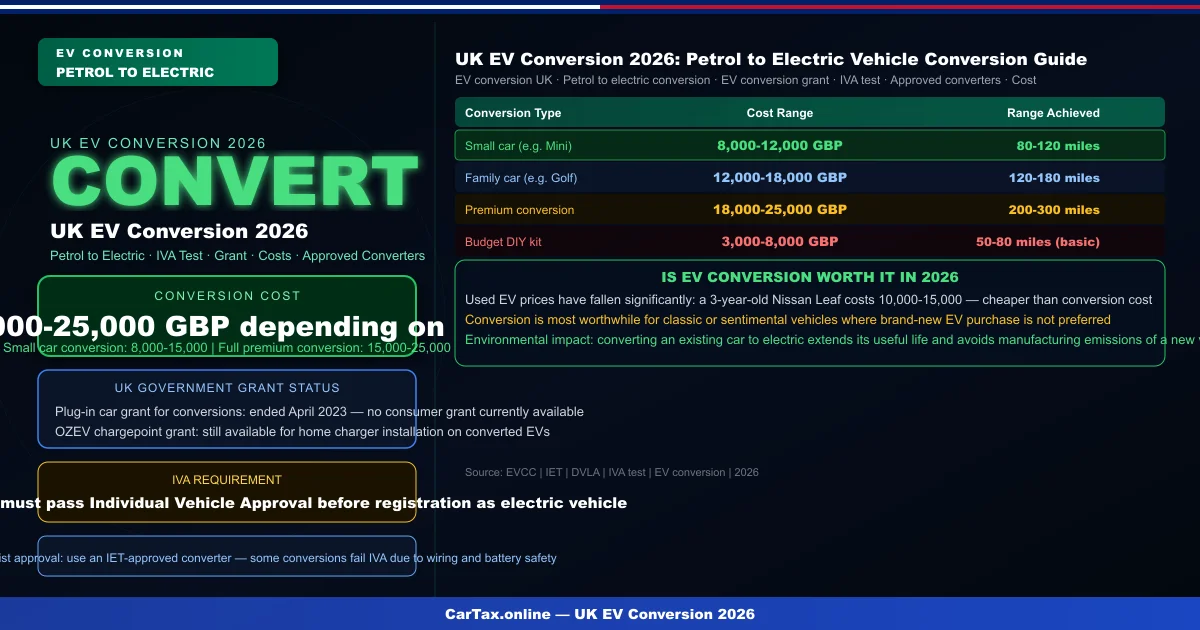
Electric vehicle conversion is the process of replacing a conventional internal combustion engine with an electric motor and battery pack, giving an existing car the running costs and environmental benefits of an EV. In 2026, with electric vehicle prices falling but used EV supply still limited, conversions offer an increasingly attractive alternative for specific use cases, particularly classic and performance car enthusiasts.
EV Conversion Options and Approaches
There are three main approaches to EV conversion in the UK. A full professional conversion by a specialist company using new or refurbished components costs 10,000 to 30,000 GBP depending on the donor vehicle and battery size. A DIY conversion using a conversion kit costs 5,000 to 15,000 GBP but requires significant mechanical and electrical expertise. A plug-in hybrid conversion adds an electric motor to an existing combustion car without removing the engine, costing 5,000 to 12,000 GBP.
Professional conversions from established companies such as Electric Classic Cars, Lunaz Design and Morgan Motor Company offer turnkey solutions with full warranties and MOT certification. DIY conversions using popular AC or DC motor kits from suppliers such as EVBMW and NetGain are viable for skilled mechanics but require extensive planning and UK road legality certification.
Best Donor Vehicles for Conversion
Lightweight, rear-wheel-drive cars with simple mechanical layouts are the best donor vehicles for EV conversion. The classic Mini is a perennial favourite, converting to approximately 100 miles of range with a 20 kWh battery for around 15,000 GBP total cost. The Mazda MX-5 (Miata) is another popular donor due to its lightweight chassis and rear-wheel-drive layout. The Ford Capri and Jaguar E-Type have been converted by specialist companies to values exceeding 100,000 GBP with large battery packs and luxury interiors. Related: Andhra Pradesh Road Tax Calculator 2026 — AP Vehicle Rates | ATO Tax Deduction Car Australia 2026 | Luxury Car Tax Threshold Australia 2026 | Bangalore Road Tax Calculator 2026 — Karnataka Vehicle Guide.
Converting heavy cars, four-wheel-drive vehicles or those with complex transmissions is significantly more expensive and may not be cost-effective compared to buying a purpose-built EV.
DVLA Requirements and Legal Compliance
All EV conversions require notification to DVLA of the change of fuel type, which will reclassify the vehicle and update the V5C registration document. The vehicle must pass an Individual Vehicle Approval (IVA) test or MOT to certify roadworthiness and compliance with relevant regulations. The conversion must not compromise the vehicle's original safety standards, including braking, steering and structural integrity.
Road Tax and Insurance After Conversion
A converted EV is exempt from Vehicle Exercise Duty (VED), saving 190 GBP per year. Insurance for converted EVs can be more expensive than for purpose-built EVs due to the non-standard nature of the installation, though specialist insurers are available. A full professional conversion with documentation may qualify for lower insurance premiums than a DIY conversion.
Frequently Asked Questions
How much does a professional EV conversion cost in 2026? Professional conversions typically cost 10,000 to 30,000 GBP depending on the donor car, battery size and specification. DIY conversions using conversion kits cost 5,000 to 15,000 GBP but require significant expertise.
Is it worth converting a classic car to electric? For high-value classic cars, yes. Converting a Morgan or E-Type to EV can enhance usability (no range anxiety for short trips, reliable starting) while preserving the car's character. For everyday use, buying a purpose-built EV is more cost-effective.
Do converted EVs qualify for the London ULEZ exemption? Yes, fully electric converted vehicles are exempt from the London ULEZ charge regardless of the donor vehicle's original Euro standard, as they produce zero tailpipe emissions.
Official Resources: GOV.UK Check Vehicle Tax | GOV.UK Vehicle Tax | DVLA Online | MOT Check
Frequently Asked Questions
Q: How much is car tax (VED) in the UK 2026?
Car tax rates in the UK depend on your vehicle's CO2 emissions and list price. Standard rates start from £190 per year for petrol and diesel cars, with zero-rated VED for EVs. First-year rates vary from £0 to £2,605 depending on emissions. Additional premiums apply for vehicles over £40,000.
Q: How do I check if my car is taxed online?
You can check your vehicle's tax status for free on the Gov.uk website at gov.uk/check-vehicle-tax. You'll need your vehicle's registration number (number plate). You can also check via the Motor Insurance Database to verify road tax and insurance status simultaneously.
Q: Can I get a refund on car tax if I sell my vehicle?
Yes — if you sell or scrap your vehicle, you can claim a refund on any full months of remaining road tax. Contact DVLA with the V11 reminder letter or apply online at gov.uk. Refunds are usually processed within 4-6 weeks.
Q: Is road tax refund available when transferring ownership?
No — road tax does not transfer with the vehicle. When you sell your car, the tax is automatically cancelled and any remaining months are refunded to you by DVLA. The new owner must tax the vehicle immediately. As a buyer, always verify the vehicle's tax status before purchasing.
Q: What is the luxury car tax threshold in the UK 2026?
The additional rate for vehicles over £40,000 (list price) adds £410 per year to standard VED rates for years 2-6 of registration. This surcharge brings the annual cost for high-emission vehicles over £40,000 to around £600-690 per year. Pure EVs under £40,000 pay zero VED.