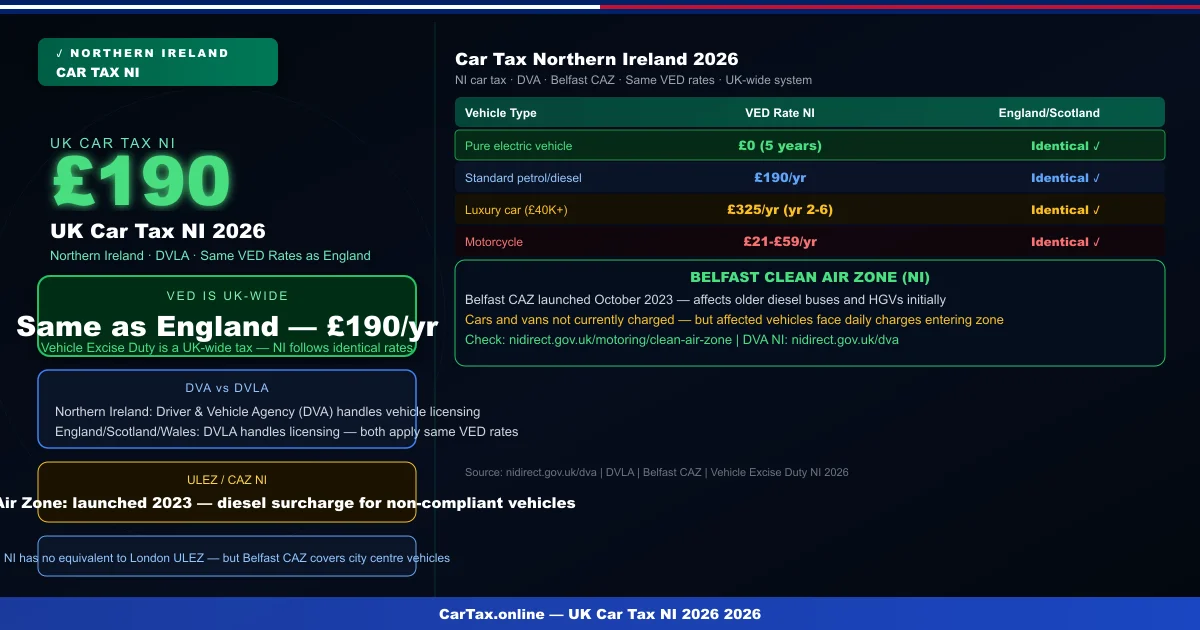
Northern Ireland's Vehicle Excise Duty is a reserved matter for the UK Parliament, ensuring that the same annual rates, CO2 band structures, and exemptions apply uniformly across all four nations. The DVA in Northern Ireland performs equivalent functions to DVLA for vehicle licensing matters in the region.
## Car Tax NI Rates and Regulations
VED rates in Northern Ireland are identical to those in England and Wales: £190 per year standard, £325 premium for vehicles over £40,000 list price, £0 for electric vehicles for five years, £0 for vehicles over 40 years old. The same CO2 band first-year rates apply to new registrations in Northern Ireland as elsewhere in the UK.
### DVA Versus DVLA: What NI Drivers Need to Know
The Driver and Vehicle Agency operates vehicle licensing services in Northern Ireland through its offices in Coleraine and through the nidirect government information service. NI residents registering a new vehicle, transferring ownership, or taxing a vehicle use the DVA's online services rather than DVLA's, though the underlying VED rates and rules are identical.
Vehicle registration in Northern Ireland can be completed through DVA-licensed dealers, who handle the registration process on behalf of buyers. For private registrations, DVA form V55/5 and accompanying documentation must be submitted directly to the DVA office.
### The Belfast Clean Air Zone
Belfast launched its Clean Air Zone in October 2023 as part of the city's air quality improvement strategy. The initial implementation targets older, more polluting buses and coaches, with private cars currently exempt from charges. The zone operates within Belfast city centre and is enforced through automatic number plate recognition.
The Belfast CAZ is designed to achieve nitrogen dioxide compliance under the UK's air quality obligations, with the initial focus on the highest-emitting fleet vehicles rather than private passenger cars. Vehicle operators of non-compliant buses and coaches face daily charges of up to £100 for the most polluting vehicles.
### Road Tax Costs Specific to Northern Ireland
All standard VED rates apply uniformly in Northern Ireland. Electric vehicle owners in NI qualify for the same five-year £0 VED exemption as EV owners elsewhere in the UK. Motorcycle VED rates, van rates, and all other vehicle taxation provisions apply identically across Northern Ireland.
## Frequently Asked Questions
**Are NI VED rates different from England and Wales?**
No. Vehicle Excise Duty rates are set by the UK government and apply equally across all four nations of the United Kingdom, including Northern Ireland.
**How do I contact DVA Northern Ireland about vehicle tax?**
DVA Northern Ireland can be contacted through nidirect.gov.uk or by telephone through the DVA contact centre. Online vehicle licensing services for NI residents are available through the nidirect website.
**Does the London ULEZ apply to Northern Ireland drivers?**
No. The ULEZ applies only within Greater London and has no effect on Northern Ireland-registered vehicles unless they are driven into Greater London, at which point they are subject to the same rules as any other vehicle.
**Is Belfast considering extending the Clean Air Zone to private cars?**
As of 2026, Belfast's Clean Air Zone targets buses and coaches rather than private cars. Any future expansion to include private vehicles would require public consultation and government approval, and Northern Ireland drivers should monitor nidirect for updates on clean air zone development.
Disclaimer: CarTax.online provides general information for guidance purposes only. Tax rules and rates are subject to change. Always verify current rates with gov.uk or HMRC before making financial decisions. This guide was last reviewed in 2026.
Frequently Asked Questions
Q: How much is car tax (VED) in the UK 2026?
Car tax rates in the UK depend on your vehicle's CO2 emissions and list price. Standard rates start from £190 per year for petrol and diesel cars, with zero-rated VED for EVs. First-year rates vary from £0 to £2,605 depending on emissions. Additional premiums apply for vehicles over £40,000.
Q: How do I check if my car is taxed online?
You can check your vehicle's tax status for free on the Gov.uk website at gov.uk/check-vehicle-tax. You'll need your vehicle's registration number (number plate). You can also check via the Motor Insurance Database to verify road tax and insurance status simultaneously.
Q: Can I get a refund on car tax if I sell my vehicle?
Yes — if you sell or scrap your vehicle, you can claim a refund on any full months of remaining road tax. Contact DVLA with the V11 reminder letter or apply online at gov.uk. Refunds are usually processed within 4-6 weeks. Related: Big Car Tax Changes Coming to UK 2026 | 5 Clever Ways to Tax My Car Online and Save Money | Check Car Tax and MOT Status UK | Car Tax Renewal UK 2026.
Q: Is road tax refund available when transferring ownership?
No — road tax does not transfer with the vehicle. When you sell your car, the tax is automatically cancelled and any remaining months are refunded to you by DVLA. The new owner must tax the vehicle immediately. As a buyer, always verify the vehicle's tax status before purchasing.
Q: What is the luxury car tax threshold in the UK 2026?
The additional rate for vehicles over £40,000 (list price) adds £410 per year to standard VED rates for years 2-6 of registration. This surcharge brings the annual cost for high-emission vehicles over £40,000 to around £600-690 per year. Pure EVs under £40,000 pay zero VED.
⚠ Financial & Legal Disclaimer
All information provided in this article is for educational and informational purposes only. The content is synthesized based on verbal communications, extensive internet research, and official government website data as of the date of publishing. Tax laws and insurance policies are subject to frequent changes by the authorities. We strive for accuracy, but we recommend that you consult a qualified professional (CA, CPA, or Tax Consultant) before making any financial decisions. For personalized assistance, you can also connect with our in-house experts through our Contact Us page.
Ready to calculate your car tax?
Use our free calculator to get an instant, accurate estimate for your country and state.
Open Car Tax Calculator →