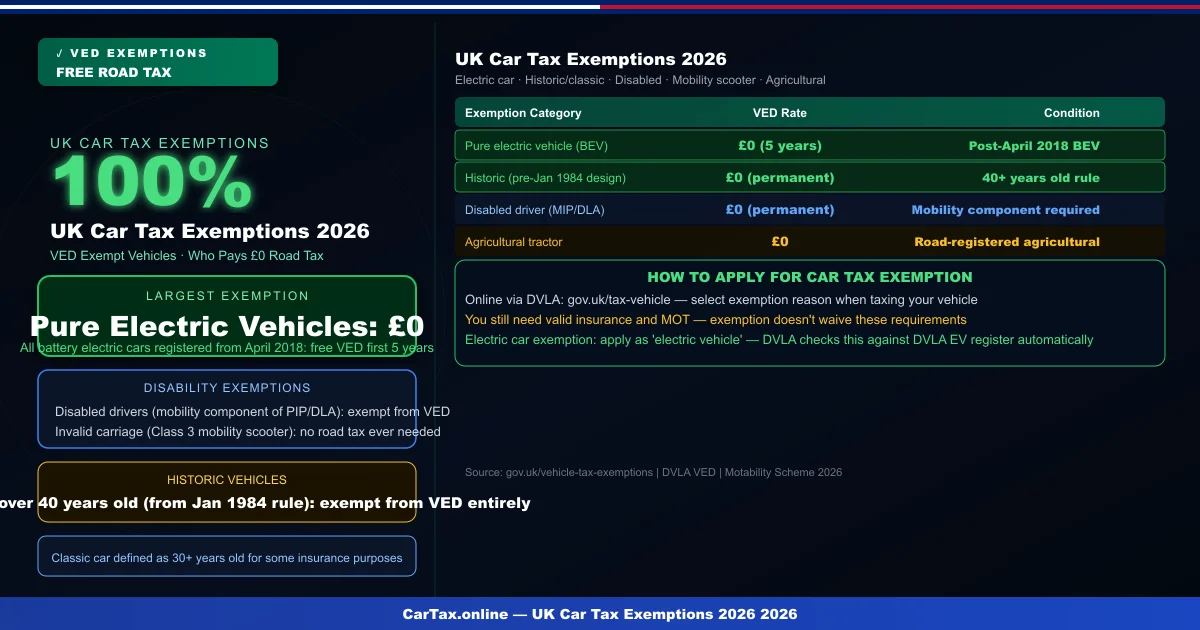
UK vehicle tax law provides a range of exemptions designed to incentivise low-emission transport, protect historic vehicle culture, and support disabled drivers. Understanding which exemptions apply and how to claim them can save vehicle owners hundreds or even thousands of pounds in annual taxation costs.
## Car Tax Exemptions Rates and Regulations
Exempt vehicles pay £0 annual VED. Pure electric vehicles enjoy a five-year exemption from first registration. Historic vehicles over 40 years old receive permanent exemption. Disabled drivers receiving the mobility component of Personal Independence Payment or Disability Living Allowance are permanently exempt regardless of vehicle age.
### Pure Electric Vehicle Exemption
The electric vehicle VED exemption applies to all new battery electric vehicles registered from April 2018 onwards. This five-year exemption represents a saving of £950 compared to the standard £190 annual rate over the exemption period. The exemption is applied automatically at the point of vehicle taxation when the DVLA's records confirm the vehicle's zero-emission status.
Plug-in hybrid vehicles with CO2 emissions between 1 and 50 grams per kilometre do not qualify for the five-year zero-rate exemption but are assessed at reduced first-year rates based on their emissions performance. A plug-in hybrid emitting 49g/km CO2 would pay only £130 in first-year VED compared to £1,000 or more for a comparable conventional diesel.
### Historic Vehicle Exemption Criteria
The historic vehicle exemption applies to vehicles whose first registration date was 40 or more years before 1 January of the current year. This means that in 2026, any vehicle first registered in 1985 or earlier qualifies for permanent road tax exemption regardless of its value, condition, or market price.
The exemption applies automatically and requires no formal application. Vehicle owners should note that the exemption is based on the original date of first registration, which for imported vehicles may differ from the registration date in the country of import. DVLA records should be checked to confirm the correct registration date is held.
### Agricultural and Specialist Vehicles
Agricultural machines, horticultural vehicles, and special types of vehicle used for agricultural purposes qualify for VED exemption or treatment under reduced-rate agricultural vehicle schedules. This includes tractors, agricultural trailers, and specialist off-road vehicles used primarily for farming operations.
## Frequently Asked Questions
**Do I need to apply for the electric car VED exemption?**
No. The exemption is applied automatically based on DVLA's electric vehicle register. You simply select the electric vehicle exemption option when taxing the vehicle online.
**If I restore a classic car, does the 40-year rule still apply?**
Yes. The exemption is based on the original date of first registration, not the date of restoration or reconstruction. A vehicle retains its original registration date and age for VED purposes regardless of restoration work.
**Are mobility scooters exempt from road tax?**
Yes. Class 3 invalid carriages (mobility scooters capable of road use up to 8mph) do not require vehicle excise duty. They must be registered with DVLA but are exempt from the annual charge.
**Can a company owning an electric car claim the exemption?**
Yes. The VED exemption applies regardless of whether the vehicle is owned personally or by a business. Company electric cars qualify for the five-year exemption in the same way as privately owned vehicles.
Disclaimer: CarTax.online provides general information for guidance purposes only. Tax rules and rates are subject to change. Always verify current rates with gov.uk or HMRC before making financial decisions. This guide was last reviewed in 2026.
Frequently Asked Questions
Q: How much is car tax (VED) in the UK 2026?
Car tax rates in the UK depend on your vehicle's CO2 emissions and list price. Standard rates start from £190 per year for petrol and diesel cars, with zero-rated VED for EVs. First-year rates vary from £0 to £2,605 depending on emissions. Additional premiums apply for vehicles over £40,000.
Q: How do I check if my car is taxed online?
You can check your vehicle's tax status for free on the Gov.uk website at gov.uk/check-vehicle-tax. You'll need your vehicle's registration number (number plate). You can also check via the Motor Insurance Database to verify road tax and insurance status simultaneously.
Q: Can I get a refund on car tax if I sell my vehicle?
Yes — if you sell or scrap your vehicle, you can claim a refund on any full months of remaining road tax. Contact DVLA with the V11 reminder letter or apply online at gov.uk. Refunds are usually processed within 4-6 weeks. Related: UK Car VED Exemptions 2026 | Big Car Tax Changes Coming to UK 2026 | 5 Clever Ways to Tax My Car Online and Save Money | Check Car Tax and MOT Status UK.
Q: Is road tax refund available when transferring ownership?
No — road tax does not transfer with the vehicle. When you sell your car, the tax is automatically cancelled and any remaining months are refunded to you by DVLA. The new owner must tax the vehicle immediately. As a buyer, always verify the vehicle's tax status before purchasing.
Q: What is the luxury car tax threshold in the UK 2026?
The additional rate for vehicles over £40,000 (list price) adds £410 per year to standard VED rates for years 2-6 of registration. This surcharge brings the annual cost for high-emission vehicles over £40,000 to around £600-690 per year. Pure EVs under £40,000 pay zero VED.
⚠ Financial & Legal Disclaimer
All information provided in this article is for educational and informational purposes only. The content is synthesized based on verbal communications, extensive internet research, and official government website data as of the date of publishing. Tax laws and insurance policies are subject to frequent changes by the authorities. We strive for accuracy, but we recommend that you consult a qualified professional (CA, CPA, or Tax Consultant) before making any financial decisions. For personalized assistance, you can also connect with our in-house experts through our Contact Us page.
Ready to calculate your car tax?
Use our free calculator to get an instant, accurate estimate for your country and state.
Open Car Tax Calculator →