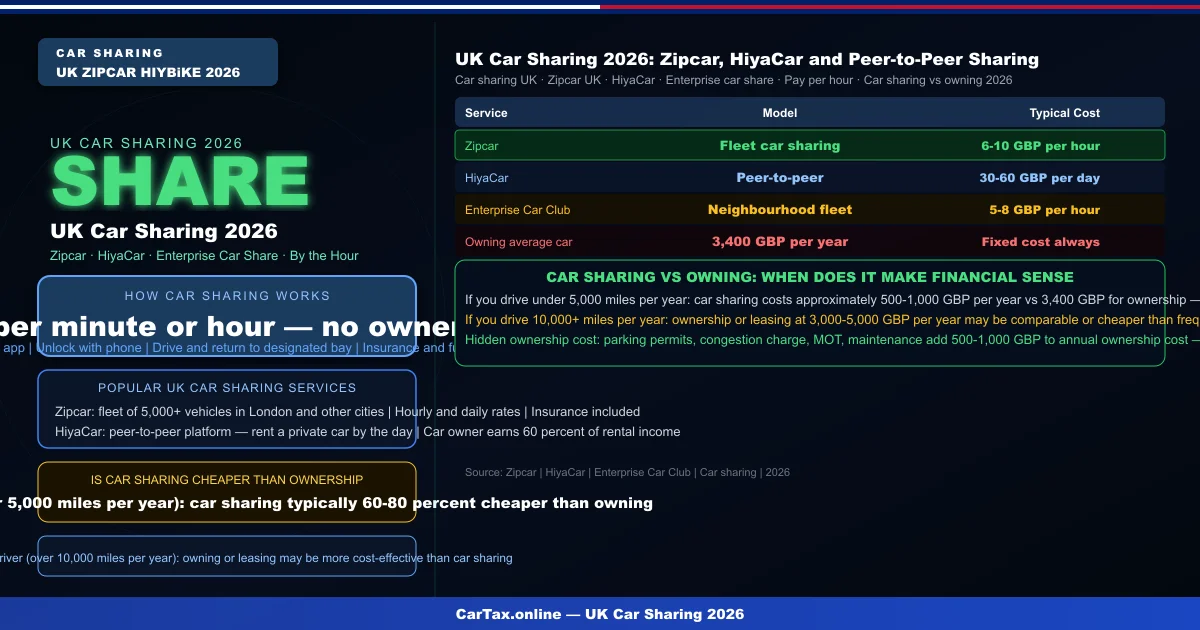
Car sharing in the UK has grown significantly as an alternative to ownership, offering pay-per-use access to vehicles without the costs and responsibilities of ownership. Understanding the different models, costs and limitations helps determine whether car sharing suits your usage pattern.
Types of Car Sharing in the UK
Fleet car sharing involves operators such as Zipcar maintaining a fleet of vehicles in urban areas, available to members via app for hourly or daily rental. Vehicles are collected from and returned to designated bays. Zipcar has over 5,000 vehicles across London and other major cities, with typical rates of 6 to 10 GBP per hour or 60 to 90 GBP per day including fuel and insurance.
Peer-to-peer car sharing platforms including HiyaCar allow private car owners to rent their vehicles to other drivers. Owners earn approximately 60 percent of the rental income while HiyaCar handles insurance, verification and payment processing. Daily rates of 30 to 60 GBP are typical, with the car owner responsible for maintaining the vehicle.
Neighbourhood car clubs such as Enterprise Car Club operate similar to fleet sharing but with a local focus. These typically cost 5 to 8 GBP per hour and are available for one-way trips in some schemes. Related: Andhra Pradesh Road Tax Calculator 2026 — AP Vehicle Rates | ATO Tax Deduction Car Australia 2026 | Luxury Car Tax Threshold Australia 2026 | Bangalore Road Tax Calculator 2026 — Karnataka Vehicle Guide.
Car Sharing vs Ownership Costs
For drivers covering under 5,000 miles per year, car sharing typically costs 500 to 1,000 GBP annually, compared to approximately 3,400 GBP per year for average car ownership (fuel, insurance, tax, maintenance) before accounting for depreciation or finance. This represents a potential saving of 2,400 GBP per year for low-mileage drivers.
However, for drivers covering over 10,000 miles per year, car sharing costs of 1,500 to 3,000 GBP annually may approach or exceed the cost of ownership or leasing, particularly when accounting for the convenience advantage of always having a vehicle available.
Hidden Costs of Car Ownership
Full car ownership costs often exceed the headline figures, including parking permits in urban areas (up to 300 GBP per year in London), the Congestion Charge if applicable (up to 6,050 GBP per year for daily commuters), MOT and repair costs beyond routine servicing, and the opportunity cost of capital tied up in the vehicle. Car sharing avoids all of these costs.
Frequently Asked Questions
How much does Zipcar cost in the UK? Zipcar costs 6-10 GBP per hour or 60-90 GBP per day, with all fuel, insurance and parking in designated bays included in the rate.
Is car sharing cheaper than owning a car? For drivers under 5,000 miles per year, yes — car sharing at 500-1,000 GBP per year versus 3,400 GBP for ownership saves 2,400 GBP annually. For higher-mileage drivers, the economics are closer and personal preference matters more.
Official Resources: GOV.UK Check Vehicle Tax | GOV.UK Vehicle Tax | DVLA Online | MOT Check
Frequently Asked Questions
Q: How much is car tax (VED) in the UK 2026?
Car tax rates in the UK depend on your vehicle's CO2 emissions and list price. Standard rates start from £190 per year for petrol and diesel cars, with zero-rated VED for EVs. First-year rates vary from £0 to £2,605 depending on emissions. Additional premiums apply for vehicles over £40,000.
Q: How do I check if my car is taxed online?
You can check your vehicle's tax status for free on the Gov.uk website at gov.uk/check-vehicle-tax. You'll need your vehicle's registration number (number plate). You can also check via the Motor Insurance Database to verify road tax and insurance status simultaneously.
Q: Can I get a refund on car tax if I sell my vehicle?
Yes — if you sell or scrap your vehicle, you can claim a refund on any full months of remaining road tax. Contact DVLA with the V11 reminder letter or apply online at gov.uk. Refunds are usually processed within 4-6 weeks.
Q: Is road tax refund available when transferring ownership?
No — road tax does not transfer with the vehicle. When you sell your car, the tax is automatically cancelled and any remaining months are refunded to you by DVLA. The new owner must tax the vehicle immediately. As a buyer, always verify the vehicle's tax status before purchasing.
Q: What is the luxury car tax threshold in the UK 2026?
The additional rate for vehicles over £40,000 (list price) adds £410 per year to standard VED rates for years 2-6 of registration. This surcharge brings the annual cost for high-emission vehicles over £40,000 to around £600-690 per year. Pure EVs under £40,000 pay zero VED.