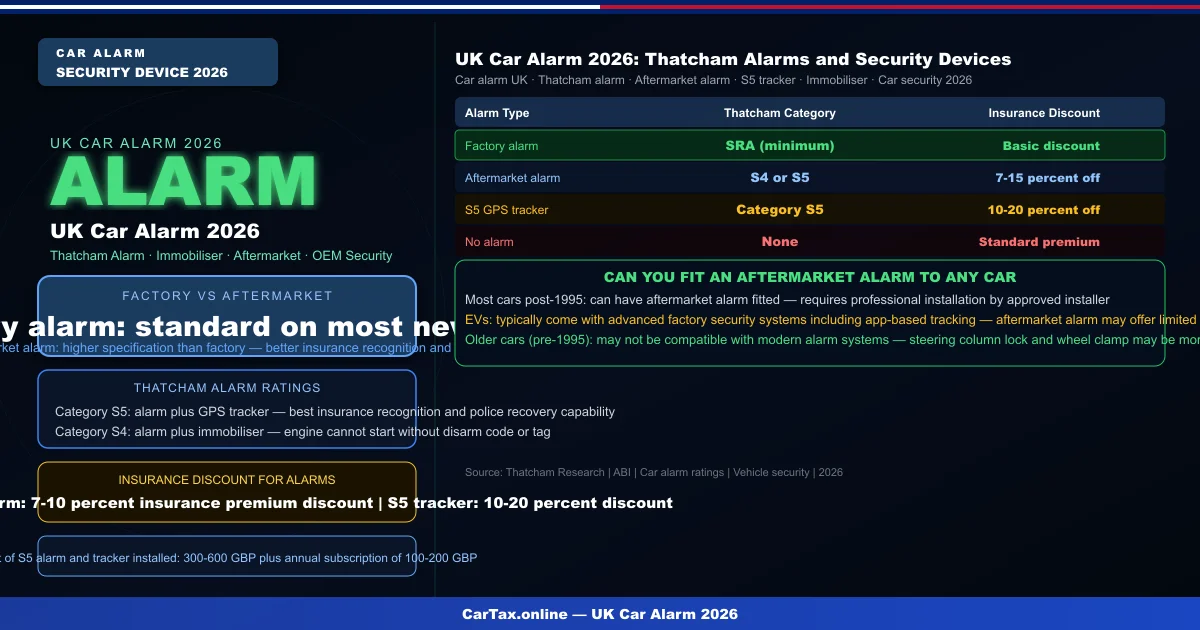
Car alarms and security devices range from basic factory-fitted immobilisers to sophisticated Thatcham-rated S5 GPS tracking systems. Understanding the different security categories, what they protect against and how they affect insurance premiums helps vehicle owners choose appropriate protection.
Factory vs Aftermarket Alarms
Factory-fitted alarms are standard on most new cars sold in the UK and meet the minimum SRA (Security Registered Assembler) standard required by insurers. While effective against opportunistic theft, factory alarms typically offer less sophisticated protection than professional aftermarket systems. Aftermarket alarms can offer higher specification protection, more configurable features and greater insurer recognition.
Thatcham Security Ratings Explained
Thatcham Research rates vehicle security products on a category basis for insurer recognition. Category S5 is the highest standard, requiring a GPS-connected tracker with 24-hour monitoring, automatic theft detection and location, driver recognition tags (preventing relay attacks) and police partnership for recovery. Category S4 adds automatic engine immobilisation to a high-specification alarm system.
Category S5 trackers including Scorpion Track, SmarTag, Trackstar and Vodafone Automotive provide the most comprehensive protection and qualify for the highest insurance discounts of 10 to 20 percent on comprehensive premiums. Related: Car Security Uk | Car Alarm Systems UK 2026 | Andhra Pradesh Road Tax Calculator 2026 — AP Vehicle Rates | ATO Tax Deduction Car Australia 2026.
Insurance Discounts for Security Devices
Installing a Thatcham S4 or S5-rated alarm system qualifies for insurance premium discounts of 7 to 20 percent on comprehensive cover. For a vehicle with a 1,000 GBP annual premium, a 15 percent discount represents a 150 GBP annual saving. S5 GPS trackers cost 300 to 600 GBP for installation plus 100 to 200 GBP annual monitoring, but the combined insurance saving and theft risk reduction often make them cost-effective for vehicles valued over 20,000 GBP.
Frequently Asked Questions
What is the difference between a car alarm and an immobiliser? A car alarm sounds a siren and flashes lights when triggered by sensors detecting break-in attempts. An immobiliser prevents the engine from starting without the correct key or disarm code. Many modern systems combine both functions.
How much does a Thatcham S5 tracker cost? S5 GPS trackers cost 300-600 GBP for initial installation plus 100-200 GBP annual monitoring subscription. They qualify for 10-20 percent insurance discounts on comprehensive cover.
Official Resources: GOV.UK Check Vehicle Tax | GOV.UK Vehicle Tax | DVLA Online | MOT Check
Frequently Asked Questions
Q: How much is car tax (VED) in the UK 2026?
Car tax rates in the UK depend on your vehicle's CO2 emissions and list price. Standard rates start from £190 per year for petrol and diesel cars, with zero-rated VED for EVs. First-year rates vary from £0 to £2,605 depending on emissions. Additional premiums apply for vehicles over £40,000.
Q: How do I check if my car is taxed online?
You can check your vehicle's tax status for free on the Gov.uk website at gov.uk/check-vehicle-tax. You'll need your vehicle's registration number (number plate). You can also check via the Motor Insurance Database to verify road tax and insurance status simultaneously.
Q: Can I get a refund on car tax if I sell my vehicle?
Yes — if you sell or scrap your vehicle, you can claim a refund on any full months of remaining road tax. Contact DVLA with the V11 reminder letter or apply online at gov.uk. Refunds are usually processed within 4-6 weeks.
Q: Is road tax refund available when transferring ownership?
No — road tax does not transfer with the vehicle. When you sell your car, the tax is automatically cancelled and any remaining months are refunded to you by DVLA. The new owner must tax the vehicle immediately. As a buyer, always verify the vehicle's tax status before purchasing.
Q: What is the luxury car tax threshold in the UK 2026?
The additional rate for vehicles over £40,000 (list price) adds £410 per year to standard VED rates for years 2-6 of registration. This surcharge brings the annual cost for high-emission vehicles over £40,000 to around £600-690 per year. Pure EVs under £40,000 pay zero VED.