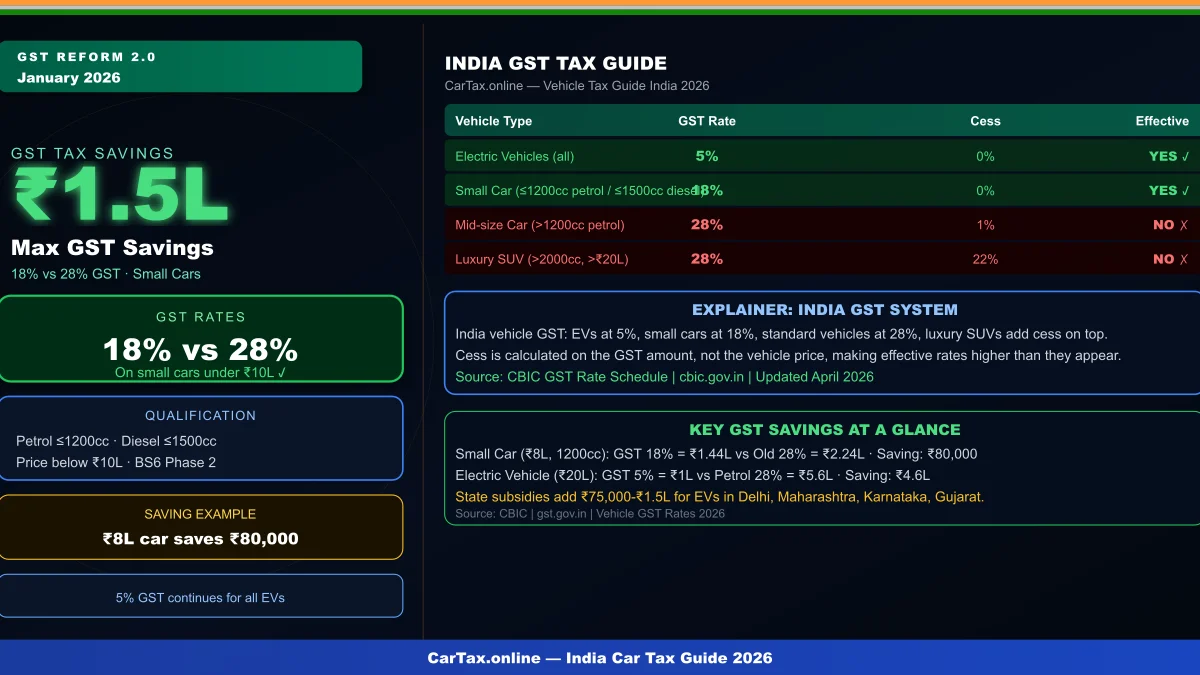
The reality of SUV taxation in India means buyers face tax burdens reaching 40% or higher on luxury models. Navigating this complex structure requires understanding how GST, cess, and road taxes combine to inflate prices dramatically.
Breaking Down the 40% Tax Structure
Luxury SUVs in India face a tax structure that can exceed 40% when combining GST, goods compensation cess, and other applicable levies. The base GST of 28% applies to vehicles exceeding 4 meters in length with engine sizes over 1500cc petrol or 1750cc diesel, classifying most mid-size and full-size SUVs in the highest bracket. Additional compensation cess ranging from 1% to 15% gets layered on top depending on vehicle type, engine displacement, and length specifications. For a ₹50 lakh luxury SUV, this translates to ₹15-20 lakhs in tax alone before accounting for state registration fees and road taxes.
Why SUVs Face Higher Taxation
The Indian government classifies SUVs differently from traditional passenger cars for taxation purposes due to their larger engine sizes, higher fuel consumption, and perceived luxury positioning. This classification places SUVs in the 28-43% tax bracket compared to 18-28% for smaller, more fuel-efficient vehicles. Environmental concerns around higher emissions from larger engines and the import content of many luxury SUV models contribute to the protective taxation structure. Domestic manufacturers producing SUVs also receive differential treatment compared to fully imported models, creating price tiers within the same vehicle category.
True Cost of Owning a Luxury SUV
The sticker price represents only a fraction of the true ownership cost for luxury SUVs in India. Beyond the 40%+ taxation embedded in the purchase price, owners face higher insurance premiums, increased fuel costs given lower fuel efficiency, premium service and maintenance costs, and elevated spare parts pricing. A ₹1 crore luxury SUV that appears expensive at purchase may cost ₹3-5 lakhs annually in fuel alone, plus ₹50,000-1,50,000 in insurance premiums. Calculating total cost of ownership reveals that SUVs often cost 2-3x more per kilometer driven compared to efficient small cars. Related: Car Insurance Tax India 2026 — GST & Income Tax Benefits | Car Tax Changes India 2026 — Latest Updates & New Rules | GST on Cars India 2026 | GST Reform on Cars India 2026.
Strategies to Minimize SUV Taxation
Several legitimate strategies exist for reducing the tax burden on SUV purchases within the current regulatory framework. Purchasing locally manufactured SUVs attracts lower GST than fully imported vehicles, with differences reaching ₹5-20 lakhs on comparable models. Timing purchases around policy changes, utilizing lease structures for business use, and exploring corporate purchase schemes can optimize the tax efficiency of high-value acquisitions. Some buyers also benefit from registering vehicles in low-tax states, though this requires careful consideration of usage patterns and registration validity requirements.
Future Tax Trajectory for SUVs
Policy discussions around vehicle taxation continue to evolve, with proposals to shift from engine-displacement-based taxation toward vehicle-size and emission-based frameworks. The transition toward electric and hybrid SUVs creates additional complexity, as lower-emission vehicles may receive preferential treatment in future tax structures. Buyers considering luxury SUV purchases in the next 2-3 years should monitor GST council deliberations closely, as tax changes could significantly impact the economics of their purchase decisions.
Frequently Asked Questions
Why do SUVs in India have such high tax rates?
SUVs face higher taxation due to their larger engine sizes, higher fuel consumption, and classification as luxury vehicles. GST of 28% plus compensation cess ranging from 1-15% can combine to exceed 40% on some models.
What is the total tax on a ₹50 lakh luxury SUV in India?
A ₹50 lakh luxury SUV can carry ₹15-20 lakhs in embedded GST and cess alone, before state registration fees and road taxes, meaning taxes can represent 30-40% of the final price.
Are imported SUVs taxed higher than domestic models?
Yes, fully imported SUVs face higher effective taxation than domestically manufactured equivalents, with price differences of ₹5-20 lakhs possible for comparable specifications.
Can businesses reduce SUV purchase taxes through leasing?
Vehicle leasing structures often provide tax advantages for businesses, as lease payments can potentially be claimed as business expenses, though specific benefits depend on company structure and usage patterns.
Will SUV tax rates change in the near future?
Policy discussions suggest potential shifts toward emission and size-based taxation, which could benefit smaller, more efficient SUVs while maintaining or increasing burdens on large luxury models.
Official Resources: Parivahan Portal | Vahan Road Tax | India GST Portal | FAME-III Scheme
Frequently Asked Questions
Q: What is the current road tax rate for cars in India 2026?
Road tax rates in India vary by state and vehicle category. For new cars, GST is charged at 5% for EVs, 18% for hybrids under 1,200cc, and up to 28% for petrol/diesel SUVs. State road tax is charged separately and varies from Rs3,000-15,000 annually depending on the state's slab system. Check your specific state's RTO website for current rates.
Q: How do I calculate my car road tax online in India?
You can calculate your car road tax using online calculators available on state RTO portals and CarTax.online. The calculation considers your vehicle's ex-showroom price, fuel type, engine capacity, and state of registration. Road tax is payable annually or for the vehicle's lifetime depending on your state's rules.
Q: Is GST included in the road tax for new cars in India?
No — GST and road tax are separate charges. GST is a central tax charged by the vehicle manufacturer at the time of purchase. State road tax is a separate annual or one-time charge levied by your state's transport department. Both apply at the time of first registration, and annual road tax continues for subsequent years.
Q: Do electric vehicles get tax benefits in India 2026?
Yes — electric vehicles in India qualify for a reduced GST rate of 5% (down from 28% for petrol cars). Under FAME-III subsidies, EVs may also qualify for additional state-level incentives, reduced road tax, and free registration in many states. The exact benefits vary by state.
Q: What happens if I don't pay my car road tax on time?
If you don't pay road tax, your vehicle's registration can be flagged in the Vahan database, preventing renewal of fitness certificates and creating legal liability during police checks. Penalties range from Rs200-500 per day of default in most states. Road tax is a legal requirement under the Motor Vehicles Act.