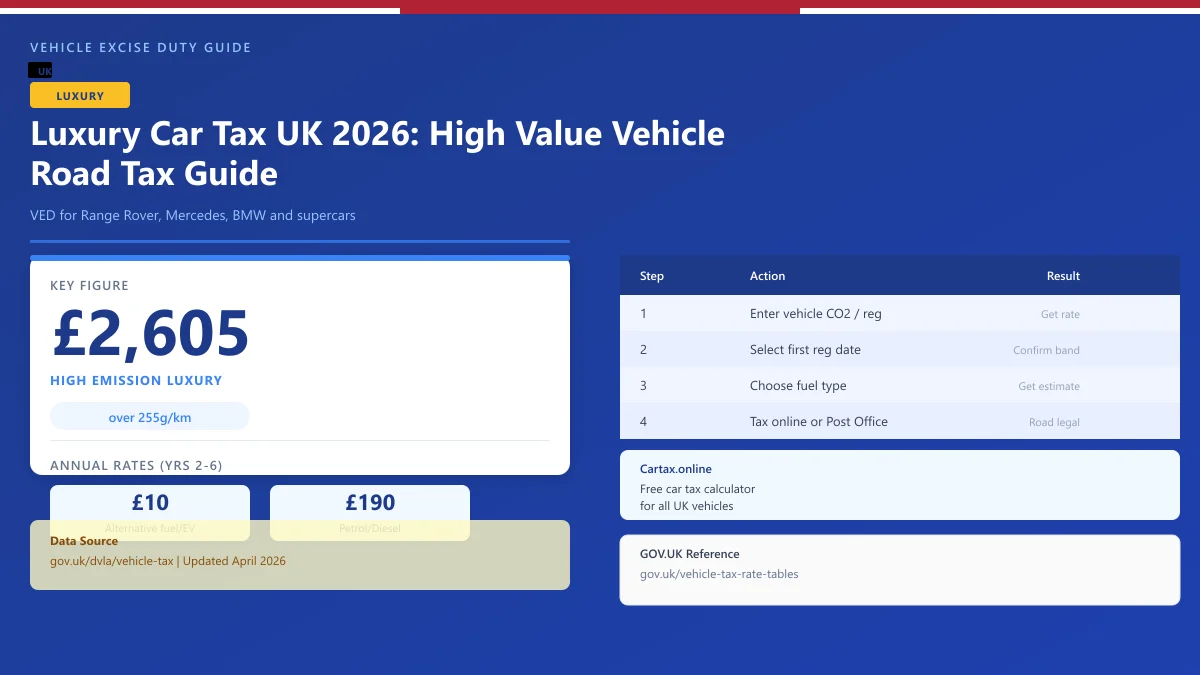
April 13, 2026 in United Kingdom — Luxury car tax in the UK is among the highest in the world for high-emission vehicles. If you are considering a high-value car in 2026, understanding the road tax implications is essential. This luxury car tax guide covers Range Rovers, Mercedes S-Class, BMW 7 Series, and supercars that can cost thousands in annual VED.
How Much Road Tax Does a Luxury Car Pay?
Luxury car tax in the UK is determined by CO2 emissions, not purchase price. A £200,000 supercar and a £50,000 family SUV pay the same VED if they emit the same CO2. The most expensive luxury cars to tax are those with high-emission engines — typically large SUVs and performance cars.
- Range Rover Autobiography (249g/km): £2,605 first year — then £190/year
- Mercedes S580 (244g/km): £2,100 first year — then £190/year
- BMW M5 CS (245g/km): £2,100 first year — then £190/year
- Lamborghini Urus (325g/km): £2,605 first year — then £190/year
- Bentley Continental GT (246g/km): £2,100 first year — then £190/year
The Luxury Car Tax Surcharge
The previous "expensive car supplement" — a £320 annual surcharge for cars over £40,000 — was abolished in April 2025. This means luxury car tax in the UK no longer includes a price-based element. The £320 supplement that applied to years 2-6 for all cars over £40,000 is gone, providing significant relief for luxury car owners.
Company Car BIK for Luxury Vehicles
For company car drivers, Benefit-in-Kkind tax on luxury vehicles is calculated as a percentage of the P11D value. For a Mercedes S-Class with a £120,000 P11D value and 200g/km CO2 (37% BIK rate), the annual BIK tax at 40% is £17,760 per year. This makes high-emission luxury company cars extremely expensive for employees. Related: Luxury Car Tax UK 2026 | Luxury Car Tax UK 2026 | UK Luxury Car Tax 2026 | Luxury Car Tax UK 2026.
Reducing Luxury Car Tax Legally
The most effective way to reduce luxury car tax is to choose a lower-emission alternative. A plug-in hybrid version of the same luxury SUV may emit 30g/km, reducing first-year VED from £2,605 to £10 — a saving of £2,595 in the first year alone. Many luxury manufacturers now offer PHEV variants of their flagship models.
Conclusion
Luxury car tax in the UK is driven by CO2 emissions, not sticker price. High-emission luxury SUVs and supercars pay up to £2,605 first-year VED. The abolition of the £40,000 price surcharge in 2025 provides welcome relief. Use our car tax calculator to estimate luxury car tax costs before purchase.
Official Resources: GOV.UK Check Vehicle Tax | GOV.UK Vehicle Tax | DVLA Online | MOT Check
Frequently Asked Questions
Q: How much is car tax (VED) in the UK 2026?
Car tax rates in the UK depend on your vehicle's CO2 emissions and list price. Standard rates start from £190 per year for petrol and diesel cars, with zero-rated VED for EVs. First-year rates vary from £0 to £2,605 depending on emissions. Additional premiums apply for vehicles over £40,000.
Q: How do I check if my car is taxed online?
You can check your vehicle's tax status for free on the Gov.uk website at gov.uk/check-vehicle-tax. You'll need your vehicle's registration number (number plate). You can also check via the Motor Insurance Database to verify road tax and insurance status simultaneously.
Q: Can I get a refund on car tax if I sell my vehicle?
Yes — if you sell or scrap your vehicle, you can claim a refund on any full months of remaining road tax. Contact DVLA with the V11 reminder letter or apply online at gov.uk. Refunds are usually processed within 4-6 weeks.
Q: Is road tax refund available when transferring ownership?
No — road tax does not transfer with the vehicle. When you sell your car, the tax is automatically cancelled and any remaining months are refunded to you by DVLA. The new owner must tax the vehicle immediately. As a buyer, always verify the vehicle's tax status before purchasing.
Q: What is the luxury car tax threshold in the UK 2026?
The additional rate for vehicles over £40,000 (list price) adds £410 per year to standard VED rates for years 2-6 of registration. This surcharge brings the annual cost for high-emission vehicles over £40,000 to around £600-690 per year. Pure EVs under £40,000 pay zero VED.