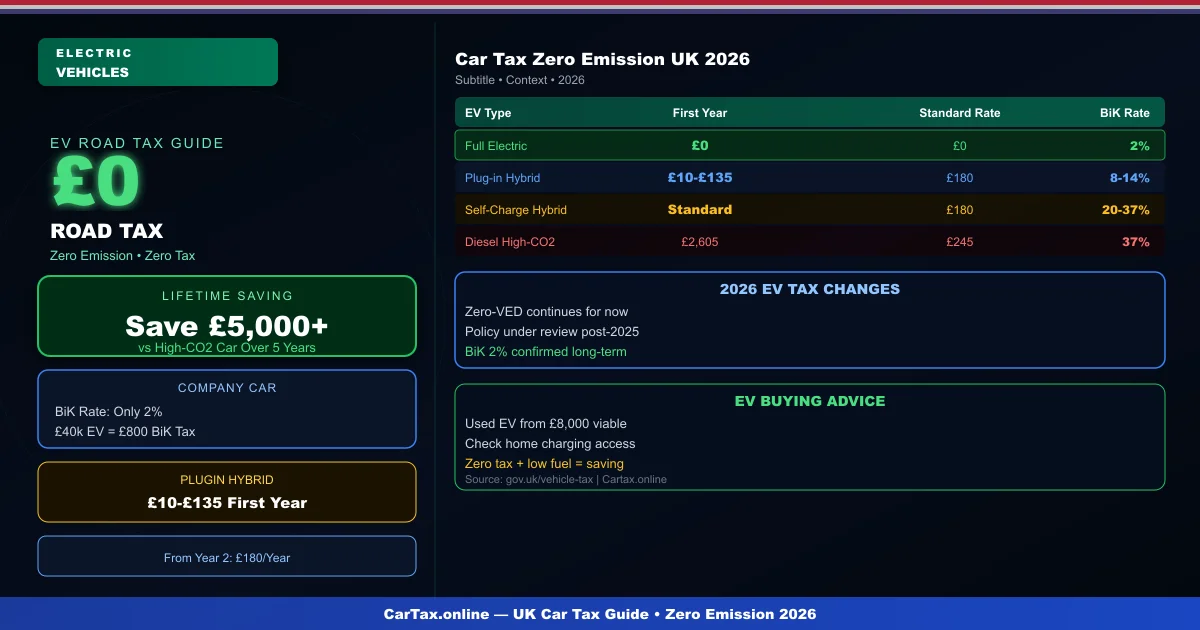
Electric vehicles occupy a privileged position in the UK road tax system. As the government pushes towards net zero, zero-emission vehicles receive significant VED advantages that make them the cheapest vehicles to tax — effectively paying nothing in road tax over their lifetime.
Current EV Road Tax Rates
Fully electric vehicles with zero CO2 emissions pay £0 in Vehicle Excise Duty. This applies from the first year of registration and continues throughout the vehicle's life. There is no upper time limit on this exemption — an EV registered today will continue to pay £0 road tax for as long as it remains on the road, provided it remains a zero-emission vehicle. The exemption is automatic — you simply register the vehicle and pay no road tax.
First Registration After April 2017
The zero-emission VED exemption applies specifically to vehicles registered from April 2017 onwards that have official CO2 emissions of 0g/km. Vehicles registered before April 2017 with zero emissions may fall under different rules — some qualify for a lower rate, while others are treated as standard vehicles. Always check the first registration date on the V5C and the official CO2 figure when assessing road tax for used electric vehicles.
Plug-In Hybrids and Low-Emission Vehicles
Plug-in hybrid vehicles with emissions between 1-50g/km pay a reduced first-year rate — currently between £10 and £135 depending on the exact emissions figure. From year two onwards, these vehicles pay the standard rate of £180 per year. The plug-in vehicle must be charged regularly to achieve its low emissions figure — if driven primarily on the engine alone, CO2 emissions will be higher in practice than the official figure suggests. Related: Car Tax and Zero Emission Vehicles UK 2026 | Zero Emission Car Tax UK 2026 | Zero Emission Car Tax UK 2026 | Electric Vehicle Car Tax UK 2026.
Electric Vans and Commercial Vehicles
Zero-emission vans pay £0 road tax under the same rules as electric cars. This applies to all categories N1 vehicles (vans up to 3.5 tonnes). Electric vans are becoming increasingly popular for urban deliveries and small businesses. The zero tax advantage, combined with lower fuel costs and reduced maintenance, makes electric vans financially attractive for businesses running urban delivery routes.
Future EV Tax Policy
The current zero-VED rate for EVs is scheduled to end from April 2025 for new vehicles purchased after that date, with a new rate structure to be introduced. However, the exact rates have been subject to consultation and change. From 2025, EVs may pay a first-year rate and standard rate similar to other vehicles, though likely at a reduced level. EV buyers should monitor the latest government announcements to understand what rates will apply to their vehicle.
Company Car Tax and EVs
For company car drivers, electric vehicles offer exceptional Benefit-in-Kind (BiK) advantages. EVs have a BiK rate of just 2% of the P11D value — compared to 37% for high-emission diesel company cars. This means a £40,000 electric company car costs the driver as little as £800 per year in BiK tax at the 20% rate. The combination of zero road tax and 2% BiK makes electric company cars the most tax-efficient option available — far outweighing any other incentive.
Official Resources: GOV.UK Check Vehicle Tax | GOV.UK Vehicle Tax | DVLA Online | MOT Check
Frequently Asked Questions
Q: How much is car tax (VED) in the UK 2025?
Car tax rates in the UK depend on your vehicle's CO2 emissions and list price. Standard rates start from £190 per year for petrol and diesel cars, with zero-rated VED for EVs. First-year rates vary from £0 to £2,605 depending on emissions. Additional premiums apply for vehicles over £40,000.
Q: How do I check if my car is taxed online?
You can check your vehicle's tax status for free on the Gov.uk website at gov.uk/check-vehicle-tax. You'll need your vehicle's registration number (number plate). You can also check via the Motor Insurance Database to verify road tax and insurance status simultaneously.
Q: Can I get a refund on car tax if I sell my vehicle?
Yes — if you sell or scrap your vehicle, you can claim a refund on any full months of remaining road tax. Contact DVLA with the V11 reminder letter or apply online at gov.uk. Refunds are usually processed within 4-6 weeks.
Q: Is road tax refund available when transferring ownership?
No — road tax does not transfer with the vehicle. When you sell your car, the tax is automatically cancelled and any remaining months are refunded to you by DVLA. The new owner must tax the vehicle immediately. As a buyer, always verify the vehicle's tax status before purchasing.
Q: What is the luxury car tax threshold in the UK 2025?
The additional rate for vehicles over £40,000 (list price) adds £410 per year to standard VED rates for years 2-6 of registration. This surcharge brings the annual cost for high-emission vehicles over £40,000 to around £600-690 per year. Pure EVs under £40,000 pay zero VED.