Zero-emission cars represent the most favourable road tax category in the UK. With the government's ongoing push towards electric vehicle adoption, VED rules for zero-emission vehicles are some of the most generous available. Here is everything you need to know about zero-emission car tax in 2026.
What Qualifies as a Zero-Emission Vehicle
For VED purposes, a zero-emission vehicle must have official CO2 tailpipe emissions of 0g/km. This includes all fully electric cars, hydrogen fuel cell vehicles and some hydrogen-hybrid vehicles — though the latter are extremely rare. Plug-in hybrids with any CO2 emissions above 0g/km do not qualify as zero-emission for VED purposes, even if they can travel short distances on electric power alone.
First-Year VED for Zero-Emission Cars
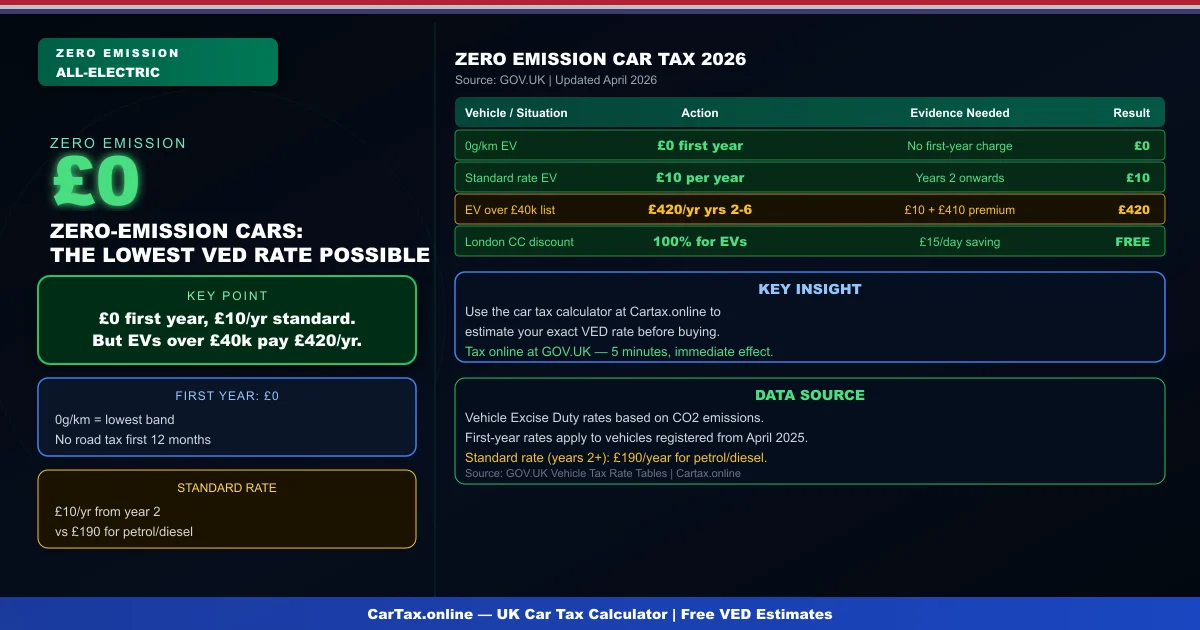
Zero-emission vehicles registered from April 2025 pay £0 for the first-year rate. This is the lowest possible VED band. In practical terms, this means no road tax is payable for the first 12 months of the vehicle's life. This applies whether you buy new or import a zero-emission vehicle — the first-year rate is always £0 for 0g/km vehicles. This saves new EV buyers up to £2,605 compared to the highest first-year VED band.
Standard Annual Rate from Year Two
From year two onwards, zero-emission vehicles pay a reduced standard rate of £10 per year. This compares to £190 per year for petrol and diesel cars. The £10 rate is the lowest available for any fuel type. Over a 10-year ownership period, a zero-emission car costs £100 in road tax — compared to £1,900 for an equivalent petrol car. The cumulative saving is substantial. Related: Zero Emission Car Tax UK 2026 | Electric Vehicle Car Tax UK 2026 | Zero Emission Car Tax UK 2026 | Electric Vehicle Tax Explained UK 2026.
The Premium Rate Exception for Expensive EVs
There is one significant exception: if your zero-emission vehicle has a list price over £40,000, you pay the premium supplement of £410 per year in addition to the £10 standard rate. This means years two through six cost £420 per year, not £10. The premium rate applies to any vehicle — EV or otherwise — with a list price above the threshold. Check the P11D value before buying a premium EV to factor this into your annual cost.
Company Car BIK for Zero-Emission Vehicles
The Benefit in Kind rate for zero-emission company cars is just 2% in 2026-27. This is the lowest BIK rate available and applies to all fully electric company cars regardless of list price. On a £70,000 electric company car, the 2% BIK generates a taxable benefit of £1,400 — compared to £25,900 for a high-emission diesel at 37%. HMRC's advisory fuel rates also make EVs attractive for company car fleets.
London Congestion Charge and Clean Air Zones
Fully zero-emission vehicles qualify for 100% discount on the London Congestion Charge, saving £15 per day. They also receive reduced or free entry to most UK clean air zones, including Birmingham's CAZ and Bristol's CAZ. As local authorities expand their clean air zones, zero-emission vehicles increasingly benefit from reduced or waived charges — another financial advantage over petrol and diesel equivalents.
Frequently Asked Questions
Q: How much is car tax (VED) in the UK 2026?
Car tax rates in the UK depend on your vehicle's CO2 emissions and list price. Standard rates start from £190 per year for petrol and diesel cars, with zero-rated VED for EVs. First-year rates vary from £0 to £2,605 depending on emissions. Additional premiums apply for vehicles over £40,000.
Q: How do I check if my car is taxed online?
You can check your vehicle's tax status for free on the Gov.uk website at gov.uk/check-vehicle-tax. You'll need your vehicle's registration number (number plate). You can also check via the Motor Insurance Database to verify road tax and insurance status simultaneously.
Q: Can I get a refund on car tax if I sell my vehicle?
Yes — if you sell or scrap your vehicle, you can claim a refund on any full months of remaining road tax. Contact DVLA with the V11 reminder letter or apply online at gov.uk. Refunds are usually processed within 4-6 weeks.
Q: Is road tax refund available when transferring ownership?
No — road tax does not transfer with the vehicle. When you sell your car, the tax is automatically cancelled and any remaining months are refunded to you by DVLA. The new owner must tax the vehicle immediately. As a buyer, always verify the vehicle's tax status before purchasing.
Q: What is the luxury car tax threshold in the UK 2026?
The additional rate for vehicles over £40,000 (list price) adds £410 per year to standard VED rates for years 2-6 of registration. This surcharge brings the annual cost for high-emission vehicles over £40,000 to around £600-690 per year. Pure EVs under £40,000 pay zero VED.