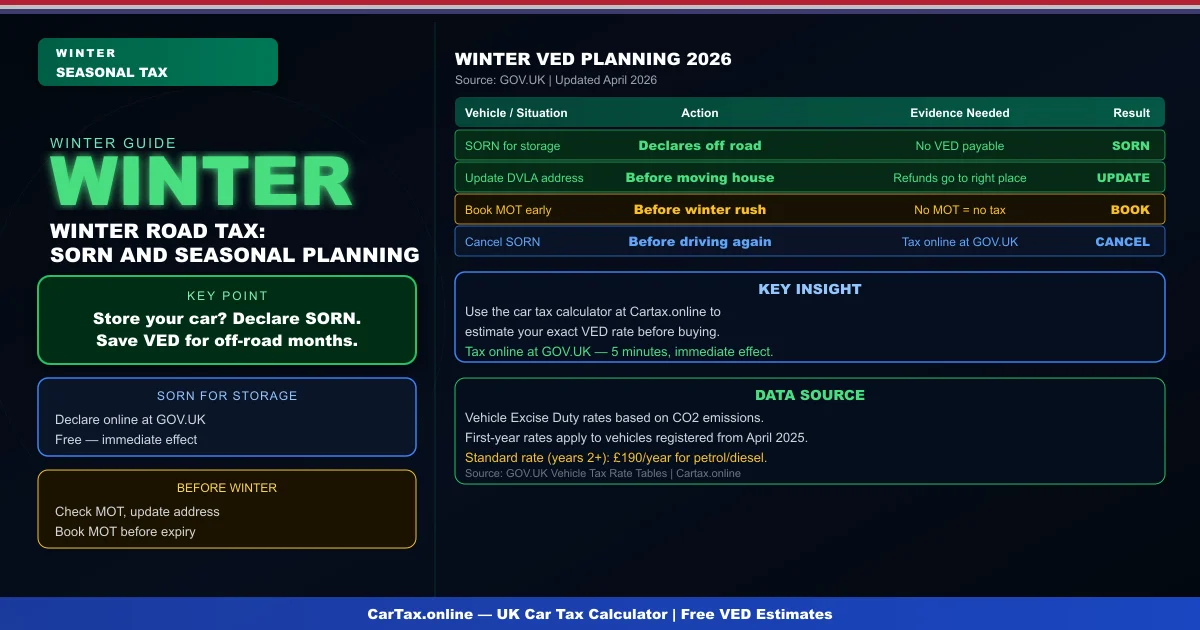
Winter brings specific road tax considerations for UK drivers. Whether you are storing a classic car, running a secondary vehicle, or simply planning for the colder months, understanding how VED interacts with seasonal vehicle use helps you avoid unnecessary costs.
SORN for Vehicles in Winter Storage
If you have a vehicle that you only drive during summer months — a classic car, a convertible, or a motorcycle — declaring a SORN over winter saves you from paying VED for months when the vehicle is not on the road. A SORN means the vehicle is formally declared off the road and exempt from road tax. You can declare and cancel a SORN at any time via GOV.UK. The SORN takes effect immediately and refunds unused VED proportionally for full months remaining.
DVLA Address Updates Before Winter
If you are moving house before winter, update your address with DVLA promptly. Tax refunds, reminders and penalty notices are all sent to the registered address. A missed tax reminder in November can mean your vehicle is untaxed through the winter without you realising — resulting in fines if caught driving. Update your address online at GOV.UK and allow time for the new V5C to arrive before the cold season.
Insurance and Tax Alignment
Road tax and insurance should be kept aligned. If you reduce your insurance to third-party only over winter — or cancel a seasonal vehicle's policy — remember that you still need to declare a SORN to avoid paying road tax on an off-road vehicle. Insurers sometimes cancel policies and automatically notify DVLA, which can create complications. Keep DVLA informed of any changes to your vehicle's use status. Related: Car Tax and Winter Driving UK 2026 | Car Tax Winter UK 2026 | Car Tax Winter UK 2026 | Car Tax and Seasonal Vehicles UK 2026.
Winter Tyres and Vehicle Modifications
Winter tyres do not affect road tax — they are a road safety upgrade with no VED implications. However, if you fit snow chains or winter tyres that alter the vehicle's type-approved specifications in a way that affects its emissions reading, you should check whether a notification to DVLA is required. For most standard winter tyre sizes approved for your vehicle, no notification is needed.
Check Your Tax Before the MOT Rush
Winter is when many vehicles face their MOT renewal, particularly those registered in October or November. If your MOT expires in winter, book early — test centres get busy around November. An expired MOT blocks road tax renewal. The vehicle cannot be driven to the test if the MOT has already expired — you need to arrange collection or a pre-MOT collection service. Use the car tax calculator at Cartax.online to verify your expected VED cost when you renew your tax.
Official Resources: GOV.UK Check Vehicle Tax | GOV.UK Vehicle Tax | DVLA Online | MOT Check
Frequently Asked Questions
Q: How much is car tax (VED) in the UK 2026?
Car tax rates in the UK depend on your vehicle's CO2 emissions and list price. Standard rates start from £190 per year for petrol and diesel cars, with zero-rated VED for EVs. First-year rates vary from £0 to £2,605 depending on emissions. Additional premiums apply for vehicles over £40,000.
Q: How do I check if my car is taxed online?
You can check your vehicle's tax status for free on the Gov.uk website at gov.uk/check-vehicle-tax. You'll need your vehicle's registration number (number plate). You can also check via the Motor Insurance Database to verify road tax and insurance status simultaneously.
Q: Can I get a refund on car tax if I sell my vehicle?
Yes — if you sell or scrap your vehicle, you can claim a refund on any full months of remaining road tax. Contact DVLA with the V11 reminder letter or apply online at gov.uk. Refunds are usually processed within 4-6 weeks.
Q: Is road tax refund available when transferring ownership?
No — road tax does not transfer with the vehicle. When you sell your car, the tax is automatically cancelled and any remaining months are refunded to you by DVLA. The new owner must tax the vehicle immediately. As a buyer, always verify the vehicle's tax status before purchasing.
Q: What is the luxury car tax threshold in the UK 2026?
The additional rate for vehicles over £40,000 (list price) adds £410 per year to standard VED rates for years 2-6 of registration. This surcharge brings the annual cost for high-emission vehicles over £40,000 to around £600-690 per year. Pure EVs under £40,000 pay zero VED.