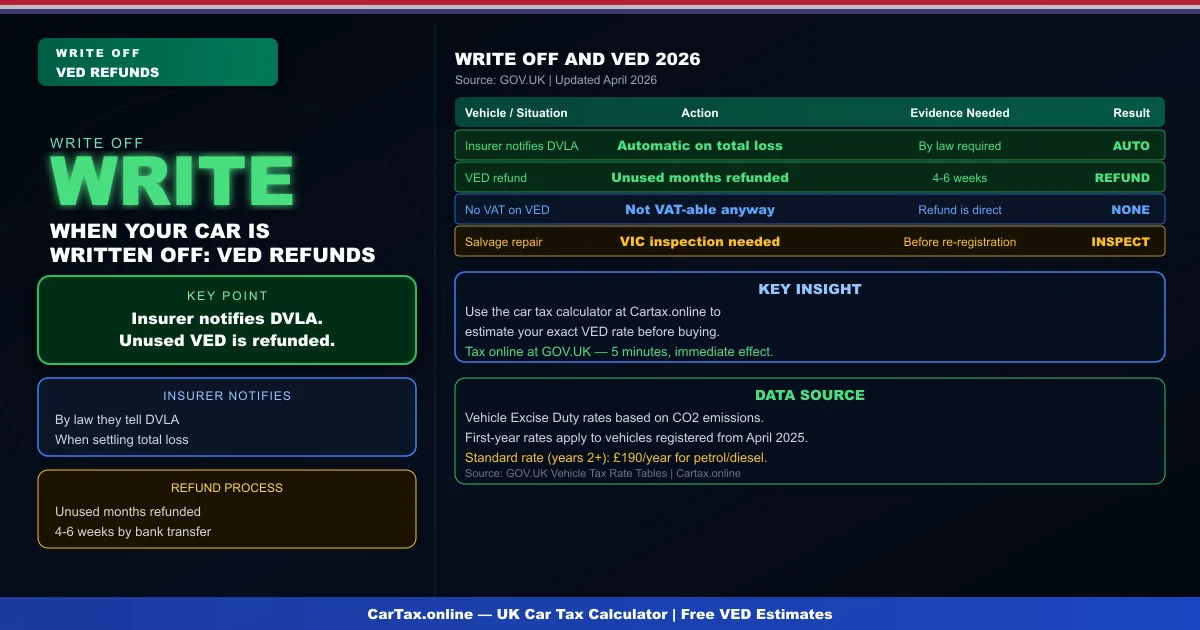
When your vehicle is written off by your insurer, road tax needs to be cancelled and refunded. Understanding the process ensures you do not overpay and that the write-off is properly recorded with DVLA.
Insurer Responsibility to Notify DVLA
By law, insurance companies must notify DVLA when they settle a total loss claim on a vehicle. The insurer sends the relevant information to DVLA, which then cancels the vehicle's registration and road tax. This process should happen automatically — you do not need to separately notify DVLA if your insurer has handled the write-off. However, it is worth following up to confirm the notification has been processed.
VAT Refund on Written-Off Vehicle
Road tax (VED) is not subject to VAT — it is a direct tax. So there is no VAT element to reclaim when a vehicle is written off. However, if you paid road tax by Direct Debit and the vehicle is written off mid-period, the unused months of tax should be refunded. The refund is calculated from the date DVLA processes the write-off notification, not from the date of the incident. Contact DVLA if you have not received a refund within six weeks of your insurer settling the claim.
V5C and Write-Off Documentation
When a vehicle is written off, the V5C registration certificate should be sent to the insurer or the Motor Insurers' Information Centre (MIIC). The insurer or salvager handles the deregistration with DVLA. If you have a replacement vehicle, you will need to tax it in your name using the new V5C. Your previous vehicle's road tax is non-transferable — it cannot be transferred to a new vehicle. Related: Car Tax When Vehicle Written Off UK 2026 | Car Tax Refund UK 2026 | Cancel Car Tax UK 2026 | Car Tax Refund When Selling Your Car UK 2026.
Salvage and Road Tax
If you retain the salvage of a written-off vehicle, it cannot be re-registered and taxed without passing a Vehicle Identity Check (VIC) by the VCA. Vehicles that have been substantially damaged may require individual vehicle approval before they can be returned to the road. Road tax for a salvaged and repaired vehicle is calculated based on its current specification — which may differ from the original pre-accident specification if parts have been replaced with non-original components.
Write-Off Categories and Road Tax
Insurance write-offs are categorised as A (scrapped), B (scrapped but can be used for parts), C (repairable but written off by insurer), and S (structural damage but repairable). Categories A and B are permanently deregistered and cannot be re-registered. Categories C and S can potentially be repaired and re-registered — but must pass a VIC inspection first. A repaired Category C or S vehicle's VED is based on its original specification, not on any post-repair modifications.
Official Resources: GOV.UK Check Vehicle Tax | GOV.UK Vehicle Tax | DVLA Online | MOT Check
Frequently Asked Questions
Q: How much is car tax (VED) in the UK 2026?
Car tax rates in the UK depend on your vehicle's CO2 emissions and list price. Standard rates start from £190 per year for petrol and diesel cars, with zero-rated VED for EVs. First-year rates vary from £0 to £2,605 depending on emissions. Additional premiums apply for vehicles over £40,000.
Q: How do I check if my car is taxed online?
You can check your vehicle's tax status for free on the Gov.uk website at gov.uk/check-vehicle-tax. You'll need your vehicle's registration number (number plate). You can also check via the Motor Insurance Database to verify road tax and insurance status simultaneously.
Q: Can I get a refund on car tax if I sell my vehicle?
Yes — if you sell or scrap your vehicle, you can claim a refund on any full months of remaining road tax. Contact DVLA with the V11 reminder letter or apply online at gov.uk. Refunds are usually processed within 4-6 weeks.
Q: Is road tax refund available when transferring ownership?
No — road tax does not transfer with the vehicle. When you sell your car, the tax is automatically cancelled and any remaining months are refunded to you by DVLA. The new owner must tax the vehicle immediately. As a buyer, always verify the vehicle's tax status before purchasing.
Q: What is the luxury car tax threshold in the UK 2026?
The additional rate for vehicles over £40,000 (list price) adds £410 per year to standard VED rates for years 2-6 of registration. This surcharge brings the annual cost for high-emission vehicles over £40,000 to around £600-690 per year. Pure EVs under £40,000 pay zero VED.