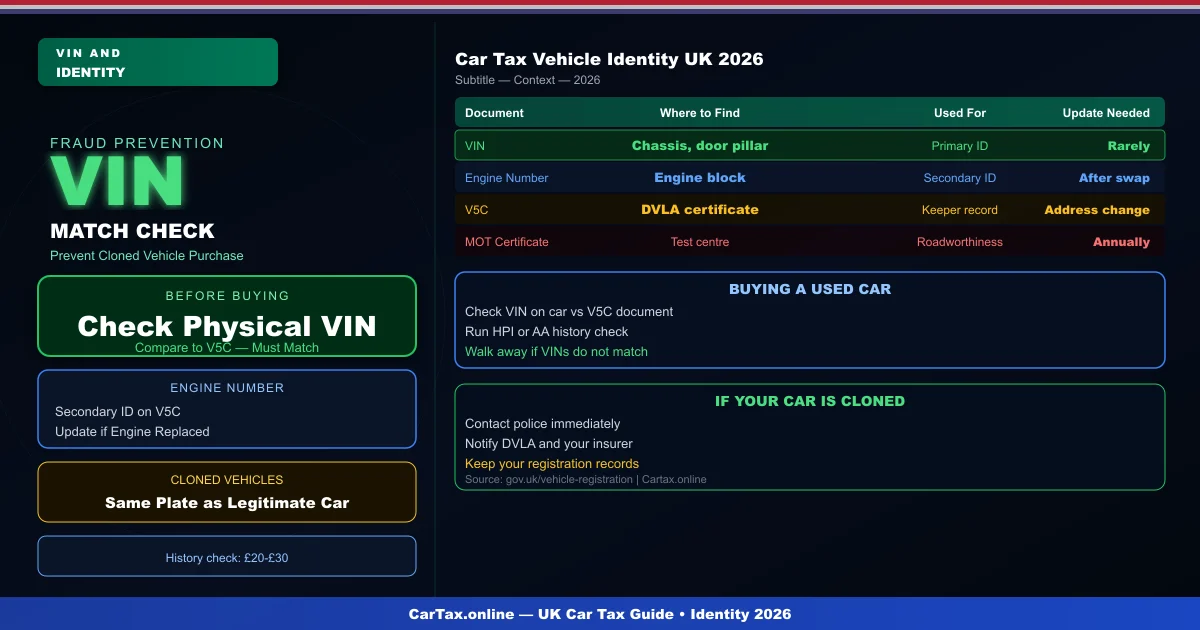
Your vehicle's identity — its VIN, engine number, and registration — forms a chain of identifiers that link to your road tax record. Understanding this chain helps you spot identity fraud, avoid cloned vehicles, and maintain clean ownership records.
Vehicle Identification Numbers and VED
The Vehicle Identification Number (VIN) is a unique 17-character code assigned to every vehicle at the factory. The VIN is permanently stamped into the chassis and cannot be legally changed. When you register a vehicle with DVLA, the VIN is recorded alongside the road tax record. Any discrepancy between the VIN on the V5C and the physical VIN on the vehicle is a major red flag — suggesting the vehicle has been cloned, stolen, or the records have been tampered with.
Engine Numbers and Tax Records
The engine number is also recorded on your V5C and linked to your road tax record. Like the VIN, the engine number is used as a secondary identifier to confirm the vehicle's identity. If an engine is replaced, you must notify DVLA of the new engine number — and the change should be noted on the V5C. Failing to update these details means your vehicle's records are inaccurate, which can cause problems when selling or transferring the vehicle.
Preventing Vehicle Identity Fraud
Vehicle cloning — where a thief copies a legitimate vehicle's registration plate and VIN — is one of the most common forms of vehicle fraud. A cloned vehicle may appear to be legally taxed, but the tax belongs to the legitimate vehicle, not the clone. Cloned vehicles often have fake or borrowed identities. Always check the VIN physically before buying a used car, and compare it against the V5C. If they do not match, walk away. Related: Car Tax and Vehicle Identity UK 2026 | Car Tax Vehicle Identity UK 2026 | Car Tax Vehicle Identity UK 2026 | Car Tax Fraud Prevention UK 2026.
What Happens to Tax When Identity Is Disputed?
If DVLA discovers a discrepancy between the vehicle's physical identity and its registration records, it will freeze the road tax — the vehicle cannot be taxed or transferred until the discrepancy is resolved. If you have purchased a cloned vehicle unknowingly, you will lose both the vehicle and any money paid. The legitimate registered keeper retains the right to the vehicle's identity, and the cloned copy is seized.
Checking Before Purchase
Before buying any vehicle — new or used — check the VIN against the V5C and any service records. You can also run a history check using services like HPI, RAC, or the AA to confirm the vehicle's identity, mileage, and ownership history. These checks cost around £20-£30 but can save thousands by identifying cloned, stolen, or finance-disputed vehicles before you buy.
Reporting Identity Concerns
If you suspect vehicle identity fraud — either that your vehicle has been cloned or that you have encountered a cloned vehicle — report it to the police immediately. DVLA also has a dedicated team for vehicle identity concerns. Do not attempt to resolve the issue yourself or confront suspected fraudsters directly. For your own road tax record, if your vehicle has been cloned, contact DVLA and your insurer as well as the police.
Official Resources: GOV.UK Check Vehicle Tax | GOV.UK Vehicle Tax | DVLA Online | MOT Check
Frequently Asked Questions
Q: How much is car tax (VED) in the UK 2026?
Car tax rates in the UK depend on your vehicle's CO2 emissions and list price. Standard rates start from £190 per year for petrol and diesel cars, with zero-rated VED for EVs. First-year rates vary from £0 to £2,605 depending on emissions. Additional premiums apply for vehicles over £40,000.
Q: How do I check if my car is taxed online?
You can check your vehicle's tax status for free on the Gov.uk website at gov.uk/check-vehicle-tax. You'll need your vehicle's registration number (number plate). You can also check via the Motor Insurance Database to verify road tax and insurance status simultaneously.
Q: Can I get a refund on car tax if I sell my vehicle?
Yes — if you sell or scrap your vehicle, you can claim a refund on any full months of remaining road tax. Contact DVLA with the V11 reminder letter or apply online at gov.uk. Refunds are usually processed within 4-6 weeks.
Q: Is road tax refund available when transferring ownership?
No — road tax does not transfer with the vehicle. When you sell your car, the tax is automatically cancelled and any remaining months are refunded to you by DVLA. The new owner must tax the vehicle immediately. As a buyer, always verify the vehicle's tax status before purchasing.
Q: What is the luxury car tax threshold in the UK 2026?
The additional rate for vehicles over £40,000 (list price) adds £410 per year to standard VED rates for years 2-6 of registration. This surcharge brings the annual cost for high-emission vehicles over £40,000 to around £600-690 per year. Pure EVs under £40,000 pay zero VED.