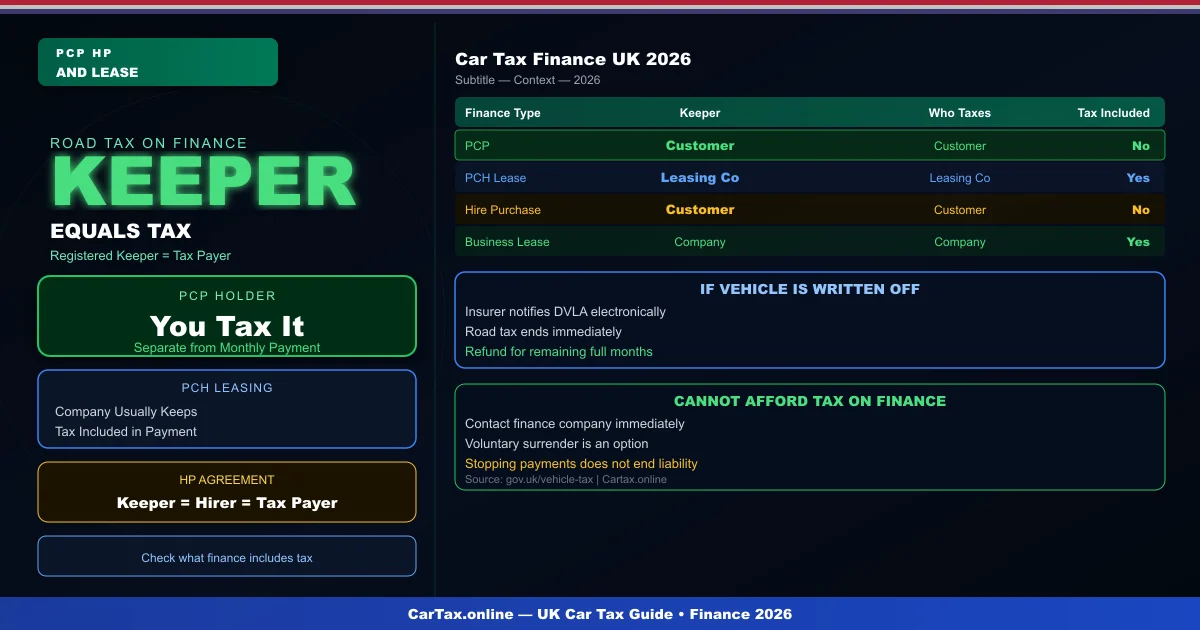
Vehicle finance agreements — PCP, Hire Purchase, and leasing — each have different implications for road tax. The key question is always the same: who is the registered keeper on the V5C?
PCP Agreements
Under a Personal Contract Purchase agreement, you are the registered keeper of the vehicle during the agreement period. This means you are responsible for taxing the vehicle. Road tax is a separate payment from your monthly PCP instalments — it is not included in the finance payment. You must tax the vehicle yourself each year. At the end of the PCP, if you hand the car back, you do not need to do anything about tax — the finance company handles the deregistration.
Hire Purchase Agreements
Hire Purchase agreements work similarly to PCP — the hirer is typically the registered keeper and responsible for road tax. The vehicle is yours once all payments are made, but until then, you are the keeper for DVLA purposes. Road tax is paid separately by you as the keeper, not rolled into the finance payments. At the end of the HP agreement, ownership transfers to you — and the tax responsibility remains the same.
PCH and Leasing
Personal Contract Hire and operating lease agreements are different. The leasing company is usually the registered keeper and responsible for road tax — the monthly payment typically includes road tax as part of the rental fee. This makes PCH simpler for the lessee — no separate tax payment is required. However, confirm with your lease company exactly what is included in the monthly payment. Related: Car Finance Uk | Car Tax and Vehicle Finance UK 2026 | Car Tax and Leased Vehicles UK 2026 | Car Tax and Leased Vehicles UK 2026.
Gap Insurance and Vehicle Write-Off
If your financed vehicle is written off — totaled by the insurer — the gap between the insurance payout and the finance settlement can be significant. Gap insurance covers this difference. In terms of road tax, when a vehicle is declared a write-off, the insurance company notifies DVLA. Your road tax for that vehicle ends immediately, and you may receive a refund for any full remaining months. However, you remain liable for the finance agreement payments unless the policy covers this.
Tax When You Cannot Afford the Vehicle
If you cannot afford road tax on a financed vehicle — or cannot pass the MOT — you should contact the finance company immediately. Surrendering the vehicle voluntarily is an option, though you may owe early settlement fees on the finance agreement. Simply stopping paying for the vehicle or letting the tax and MOT lapse does not end your finance obligations — and creates legal liability for driving offences.
Selling a Financed Vehicle
Selling a vehicle with outstanding finance is legally complex. The finance company holds a legal interest in the vehicle until the agreement is settled. If you sell a vehicle with finance outstanding without settling the agreement, you are committing fraud — you do not have clear title to sell the vehicle. Any sale proceeds must go towards settling the finance. Road tax is automatically cancelled when the vehicle is formally surrendered or when the finance company takes possession.
Official Resources: GOV.UK Check Vehicle Tax | GOV.UK Vehicle Tax | DVLA Online | MOT Check
Frequently Asked Questions
Q: How much is car tax (VED) in the UK 2026?
Car tax rates in the UK depend on your vehicle's CO2 emissions and list price. Standard rates start from £190 per year for petrol and diesel cars, with zero-rated VED for EVs. First-year rates vary from £0 to £2,605 depending on emissions. Additional premiums apply for vehicles over £40,000.
Q: How do I check if my car is taxed online?
You can check your vehicle's tax status for free on the Gov.uk website at gov.uk/check-vehicle-tax. You'll need your vehicle's registration number (number plate). You can also check via the Motor Insurance Database to verify road tax and insurance status simultaneously.
Q: Can I get a refund on car tax if I sell my vehicle?
Yes — if you sell or scrap your vehicle, you can claim a refund on any full months of remaining road tax. Contact DVLA with the V11 reminder letter or apply online at gov.uk. Refunds are usually processed within 4-6 weeks.
Q: Is road tax refund available when transferring ownership?
No — road tax does not transfer with the vehicle. When you sell your car, the tax is automatically cancelled and any remaining months are refunded to you by DVLA. The new owner must tax the vehicle immediately. As a buyer, always verify the vehicle's tax status before purchasing.
Q: What is the luxury car tax threshold in the UK 2026?
The additional rate for vehicles over £40,000 (list price) adds £410 per year to standard VED rates for years 2-6 of registration. This surcharge brings the annual cost for high-emission vehicles over £40,000 to around £600-690 per year. Pure EVs under £40,000 pay zero VED.