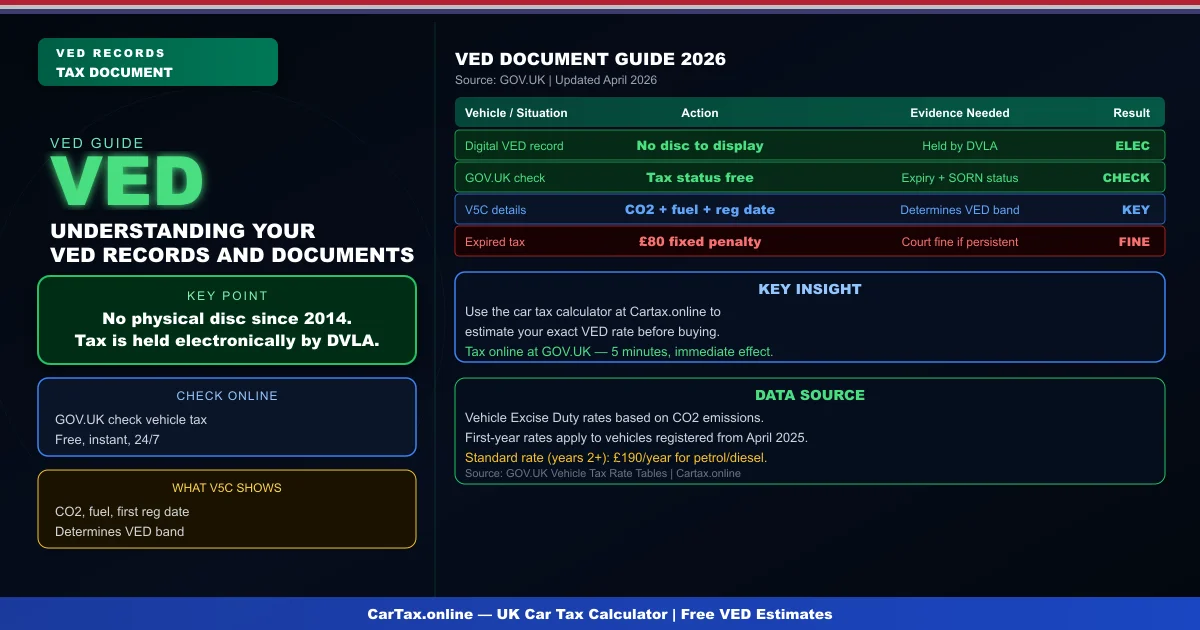
Since 2014, the physical tax disc was abolished in favour of a digital system. While you no longer display a paper disc on your windscreen, DVLA still issues a VED reminder document and your vehicle's tax status is recorded electronically. Understanding what information these records contain helps you spot errors and stay compliant.
Digital VED Records: No Disc but Full Information
Since October 2014, there is no requirement to display a physical tax disc. Your road tax status is held electronically by DVLA and can be checked via the free vehicle tax check service on GOV.UK. This check confirms whether the vehicle is taxed, when the current tax period expires, and whether a SORN is in place. Insurance companies and the police have direct access to this database.
What Your V5C Shows About Road Tax
Your V5C registration certificate contains the key details that determine your VED rate. The CO2 emissions figure (in g/km), fuel type and first registration date are all printed on the V5C. These three pieces of information — CO2, fuel type and first reg date — determine which VED band your vehicle falls into and what you pay annually. Check your V5C against what you expect to be paying.
The V11 Form: Your Annual Tax Reminder
If you pay annually by Direct Debit, DVLA sends a V11 form as your annual reminder before your tax expires. The V11 shows your vehicle details, current VED rate and renewal date. You can use the V11 to renew at the Post Office or online. If you have switched to monthly Direct Debit, you receive a monthly reminder instead. If your V11 shows a different VED rate than expected, contact DVLA before paying. Related: Understanding Your Tax Disc UK 2026 | Car Tax History UK 2026 | Car Tax History UK 2026 | Car Tax Disc Changes UK 2026.
Checking Tax Status Before Buying a Used Car
Before purchasing a used vehicle, always check its tax status online using the free GOV.UK service. This tells you whether the vehicle is currently taxed and when the tax expires. It does not tell you who the registered keeper is — that is on the V5C. An untaxed used car means you will need to tax it immediately on purchase. Remember: road tax does not transfer, so the seller's tax ending is not your concern — only the V5C transfer matters.
What Happens When Your Tax Expires
If your VED expires and you have not renewed, DVLA automatically applies a SORN after two weeks of non-renewal — but this does not excuse the penalty. Driving without valid tax is an offence carrying a fixed penalty of £80, reduced to £40 if paid within 30 days. Persistent non-payment can lead to court prosecution and fines of up to £1,000. The vehicle can also be clamped or seized. Renew online at GOV.UK before the expiry date to avoid any lapse in cover.
Refunds When You Sell or Scrap a Vehicle
When you notify DVLA of a vehicle sale, write-off or export, any unused VED is refunded automatically. The refund is calculated from the date DVLA processes the notification, not the date of the event. Keep your bank details updated with DVLA to receive refunds by bank transfer rather than cheque. Uncashed cheques expire after a set period — contact DVLA promptly if you have not received a refund within six weeks.
Frequently Asked Questions
Q: How much is car tax (VED) in the UK 2026?
Car tax rates in the UK depend on your vehicle's CO2 emissions and list price. Standard rates start from £190 per year for petrol and diesel cars, with zero-rated VED for EVs. First-year rates vary from £0 to £2,605 depending on emissions. Additional premiums apply for vehicles over £40,000.
Q: How do I check if my car is taxed online?
You can check your vehicle's tax status for free on the Gov.uk website at gov.uk/check-vehicle-tax. You'll need your vehicle's registration number (number plate). You can also check via the Motor Insurance Database to verify road tax and insurance status simultaneously.
Q: Can I get a refund on car tax if I sell my vehicle?
Yes — if you sell or scrap your vehicle, you can claim a refund on any full months of remaining road tax. Contact DVLA with the V11 reminder letter or apply online at gov.uk. Refunds are usually processed within 4-6 weeks.
Q: Is road tax refund available when transferring ownership?
No — road tax does not transfer with the vehicle. When you sell your car, the tax is automatically cancelled and any remaining months are refunded to you by DVLA. The new owner must tax the vehicle immediately. As a buyer, always verify the vehicle's tax status before purchasing.
Q: What is the luxury car tax threshold in the UK 2026?
The additional rate for vehicles over £40,000 (list price) adds £410 per year to standard VED rates for years 2-6 of registration. This surcharge brings the annual cost for high-emission vehicles over £40,000 to around £600-690 per year. Pure EVs under £40,000 pay zero VED.