April 13, 2026 in United Kingdom — Ultra Low Emission Vehicles (ULEVs) represent a significant tax-advantaged category of cars that emit very low levels of CO2. Understanding what qualifies as a ULEV, how road tax works for these vehicles, and what additional benefits are available can help you make the most of the tax advantages on offer in 2026.
What Is a ULEV?
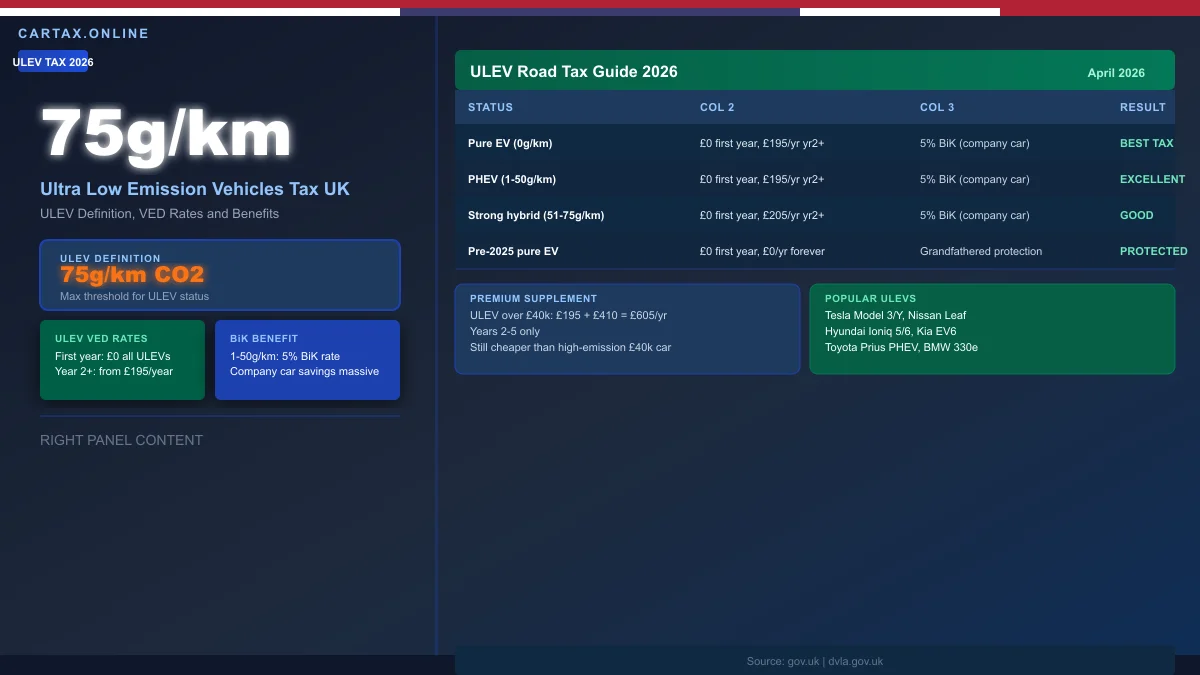
Ultra Low Emission Vehicle (ULEV) is a classification for vehicles that emit 75g/km of CO2 or less. This covers pure electric vehicles, plug-in hybrids, and some strong hybrids. The 75g/km threshold is the key defining feature — vehicles above this level do not qualify as ULEVs and lose access to certain incentives.
ULEV VED Rates 2026
| Vehicle Type | CO2 | First-Year VED | Annual VED (Year 2+) |
|---|---|---|---|
| Pure EV (post-April 2025) | 0 g/km | £0 | £195 |
| Plug-in hybrid (1-50g/km) | 1-50 g/km | £0 | £195 |
| Strong hybrid (51-75g/km) | 51-75 g/km | £0 | £205 |
Pre-April 2025 ULEVs: The Grandfather Advantage
For ULEVs registered before April 1, 2025, the grandfather protection is significant. Pure electric ULEVs registered before that date pay £0 road tax indefinitely — they are completely exempt from annual VED for as long as they remain registered. This is the single most significant tax advantage available to ULEV owners in 2026.
Plug-In Grant and Tax Interaction
The Plug-in Car Grant (PiCG) of up to £2,500 (for vehicles under £28,000) was withdrawn for most vehicles in June 2023, but some commercial and larger vehicle grants continue. The Plug-in Van Grant of up to £5,000 also continues. These grants are separate from road tax benefits — you can receive a grant and still benefit from zero or low road tax rates. The government has confirmed the Plug-in Car Grant is not returning to its previous levels, so the road tax advantage is now the primary financial incentive for ULEV buyers. Related: Ultra Low Emission Vehicles and Road Tax UK 2026 | Car Tax Savings with Low Emission Cars UK 2026 | Car Tax Renewal UK 2026 | How Much Is Car Tax UK 2026? The Honest Answer.
Company Car BiK for ULEVs
For company car drivers, ULEVs in the 1-50g/km band benefit from a 5% BiK rate (2026/27), making them extremely tax-efficient compared to high-emission vehicles. A £35,000 plug-in hybrid at 5% BiK costs just £1,750/year in BiK value, with a 40% taxpayer paying £700/year in personal tax. Compare this to a £35,000 petrol car at 20% BiK costing £7,000/year in BiK value, with the same taxpayer paying £2,800/year.
Which ULEVs Qualify for the Best Tax Rates?
Popular ULEVs in 2026 include:
- Pure electric: Tesla Model 3/Y, Nissan Leaf, Hyundai Ioniq 5/6, Kia EV6/EV9, Volkswagen ID.3/ID.4, Renault Zoe, BMW i3, Mini Electric
- Plug-in hybrids (1-50g/km): Toyota Prius PHEV, Hyundai Ioniq PHEV, Kia Niro PHEV, Volkswagen Golf GTE, BMW 330e, Mercedes A250e
- Strong hybrids (51-75g/km): Toyota Yaris Hybrid, Honda Jazz Hybrid, Toyota Corolla Hybrid
ULEVs vs Full EVs: Which Saves More Tax?
Full electric vehicles (0g/km) and ULEVs (up to 75g/km) are both very tax-efficient compared to conventional vehicles. The key difference:
- Pre-April 2025 pure EV: £0 road tax forever, 5% BiK for company car — best overall tax position
- Post-April 2025 pure EV: £0 first year, then £195/year, 5% BiK — excellent but no indefinite exemption
- Post-April 2025 PHEV (1-50g/km): £0 first year, then £195/year, 5% BiK — same road tax as EV from year 2
- Strong hybrid (51-75g/km): £0 first year, then £205/year, 5% BiK — marginally more road tax but often more affordable purchase price
Premium Supplement and ULEVs
ULEVs priced over £40,000 and registered from April 2017 onwards pay the £410/year additional rate in years 2-5. For a post-April 2025 pure EV over £40,000, annual road tax from year 2 is £195 + £410 = £605/year. This is still significantly lower than a high-emission vehicle over £40,000 (£755 + £410 = £1,165/year), but the premium supplement partially offsets the ULEV tax advantage.
ULEVs and Vehicle Excise Duty First-Year Rates
All ULEVs (0-75g/km) pay £0 first-year road tax. This is the same rate as zero-emission vehicles and provides the same first-year benefit. The key is ensuring any potential purchase falls within the 75g/km threshold — vehicles above this do not qualify for the first-year £0 rate.
Conclusion
ULEVs (vehicles up to 75g/km CO2) pay £0 first-year VED and from £195/year from year 2 (1-50g/km) or £205/year (51-75g/km). Pre-April 2025 pure EVs remain at £0 indefinitely. The 5% BiK rate for 1-50g/km vehicles makes ULEVs extremely attractive as company cars. Use GOV.UK VED rate tables to confirm any vehicle's exact classification.
Frequently Asked Questions
Q: How much is car tax (VED) in the UK 2026?
Car tax rates in the UK depend on your vehicle's CO2 emissions and list price. Standard rates start from £190 per year for petrol and diesel cars, with zero-rated VED for EVs. First-year rates vary from £0 to £2,605 depending on emissions. Additional premiums apply for vehicles over £40,000.
Q: How do I check if my car is taxed online?
You can check your vehicle's tax status for free on the Gov.uk website at gov.uk/check-vehicle-tax. You'll need your vehicle's registration number (number plate). You can also check via the Motor Insurance Database to verify road tax and insurance status simultaneously.
Q: Can I get a refund on car tax if I sell my vehicle?
Yes — if you sell or scrap your vehicle, you can claim a refund on any full months of remaining road tax. Contact DVLA with the V11 reminder letter or apply online at gov.uk. Refunds are usually processed within 4-6 weeks.
Q: Is road tax refund available when transferring ownership?
No — road tax does not transfer with the vehicle. When you sell your car, the tax is automatically cancelled and any remaining months are refunded to you by DVLA. The new owner must tax the vehicle immediately. As a buyer, always verify the vehicle's tax status before purchasing.
Q: What is the luxury car tax threshold in the UK 2026?
The additional rate for vehicles over £40,000 (list price) adds £410 per year to standard VED rates for years 2-6 of registration. This surcharge brings the annual cost for high-emission vehicles over £40,000 to around £600-690 per year. Pure EVs under £40,000 pay zero VED.