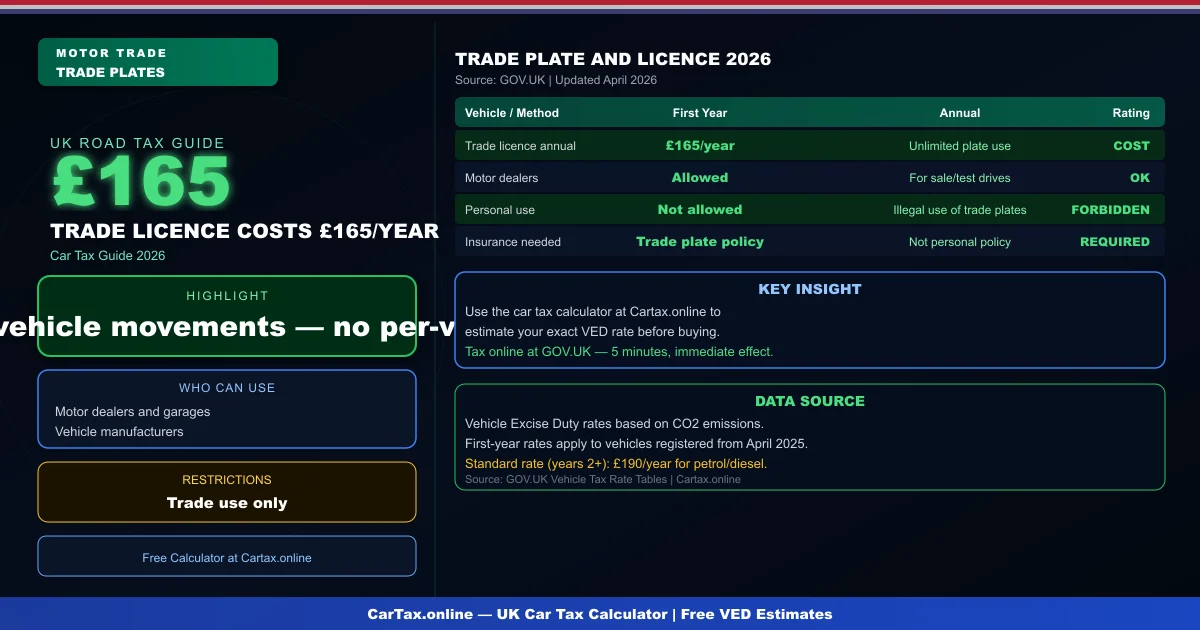
Car tax trade plates UK — motor traders use trade plates to move vehicles without individual road tax. Here is how trade licences and trade plates work in 2026.
What Are Trade Plates?
Trade plates are number plates issued to motor traders, garage owners, and vehicle manufacturers that allow them to drive vehicles on public roads without each vehicle having its own road tax. The trade plate is attached to the vehicle, and the trade licence covers the road tax for that movement.
Trade Licence Cost and Duration
A trade licence costs £165 for a 12-month period. This covers unlimited use of the trade plates on any vehicle during that period — each vehicle does not need individual road tax as long as it is displaying a valid trade plate. Trade licences can also be purchased for shorter periods at a pro-rata cost.
Who Can Use Trade Plates?
- Motor dealers: Moving vehicles for sale, test drives, and auctions
- Vehicle mechanics: Road testing after repairs
- Vehicle manufacturers: Pre-delivery testing and transport
- Auction houses: Moving vehicles before and after sale
Restrictions on Trade Plate Use
Trade plates cannot be used for general everyday driving by members of the public. They are strictly for motor trade purposes — moving vehicles for commercial reasons. Using a trade plate on your personal car to avoid road tax is illegal and constitutes a serious offence. The trade licence holder is responsible for ensuring correct use. Related: Car Tax and Trade Plates UK 2026 | Car Tax Trade Plates UK 2026 | Car Tax and Trade Plates UK 2026 | Car Tax and Trade Plates UK 2026.
Insurance for Trade Plate Vehicles
Trade plate users must have appropriate insurance coverage. Motor traders typically have trade plate insurance that covers vehicles displaying the trade plates. This is a separate insurance product from standard vehicle insurance. Personal use of a trade-plated vehicle is typically not covered by trade insurance policies.
Conclusion
Car tax trade plates UK: trade licence at £165/year covers road tax for trade plate use. For motor traders only — not personal use. GOV.UK trade licence details available online.
Frequently Asked Questions
Q: How much is car tax (VED) in the UK 2026?
Car tax rates in the UK depend on your vehicle's CO2 emissions and list price. Standard rates start from £190 per year for petrol and diesel cars, with zero-rated VED for EVs. First-year rates vary from £0 to £2,605 depending on emissions. Additional premiums apply for vehicles over £40,000.
Q: How do I check if my car is taxed online?
You can check your vehicle's tax status for free on the Gov.uk website at gov.uk/check-vehicle-tax. You'll need your vehicle's registration number (number plate). You can also check via the Motor Insurance Database to verify road tax and insurance status simultaneously.
Q: Can I get a refund on car tax if I sell my vehicle?
Yes — if you sell or scrap your vehicle, you can claim a refund on any full months of remaining road tax. Contact DVLA with the V11 reminder letter or apply online at gov.uk. Refunds are usually processed within 4-6 weeks.
Q: Is road tax refund available when transferring ownership?
No — road tax does not transfer with the vehicle. When you sell your car, the tax is automatically cancelled and any remaining months are refunded to you by DVLA. The new owner must tax the vehicle immediately. As a buyer, always verify the vehicle's tax status before purchasing.
Q: What is the luxury car tax threshold in the UK 2026?
The additional rate for vehicles over £40,000 (list price) adds £410 per year to standard VED rates for years 2-6 of registration. This surcharge brings the annual cost for high-emission vehicles over £40,000 to around £600-690 per year. Pure EVs under £40,000 pay zero VED.