April 13, 2026 in United Kingdom — With road tax ranging from £0 to over £2,600 per year depending on CO2 emissions, choosing a low-emission vehicle is one of the most effective ways to save money on car ownership. This guide covers the best strategies for reducing your VED bill in 2026.
Understanding the VED CO2 Bands
UK road tax (VED) is calculated entirely on CO2 emissions. Lower emissions mean dramatically lower annual costs. Here is how the bands translate to real annual costs for post-April 2017 vehicles:
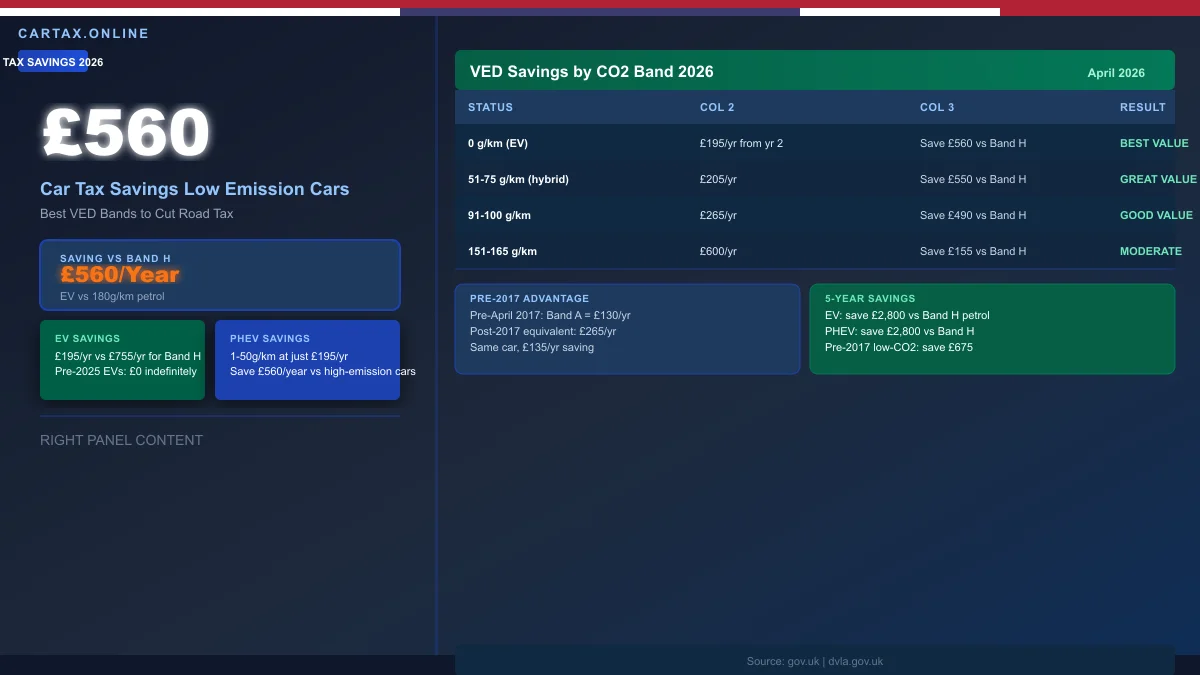
| CO2 Band | Annual VED (Year 2+) | Annual Cost for Band E Car | Savings vs Band H |
|---|---|---|---|
| 0 g/km (EV, post-2025) | £195/year from yr 2 | £195 | Save £560/year |
| 1-50 g/km (PHEV) | £195/year | £195 | Save £560/year |
| 51-75 g/km (hybrid) | £205/year | £205 | Save £550/year |
| 76-90 g/km | £235/year | £235 | Save £520/year |
| 91-100 g/km | £265/year | £265 | Save £490/year |
| 101-110 g/km | £285/year | £285 | Save £470/year |
| 111-130 g/km | £345/year | £345 | Save £410/year |
| 131-150 g/km | £445/year | £445 | Save £310/year |
| 151-165 g/km | £600/year | £600 | Save £155/year |
| 181-200 g/km | £755/year | £755 | — |
| 201-225 g/km | £1,280/year | £1,280 | — |
| 226-255 g/km | £1,870/year | £1,870 | — |
| Over 255 g/km | £2,605/year | £2,605 | — |
Biggest Tax Savings: Electric and Hybrid Vehicles
The single biggest road tax saving is moving from a high-emission petrol or diesel car to a zero or low-emission alternative. For a driver currently paying Band H (£755/year), switching to a pure electric vehicle saves £560/year in road tax alone — and that is before fuel savings. Pre-April 2025 EVs on the £0 annual rate save the full £755/year.
Plug-in Hybrid Tax Savings
Plug-in hybrids (PHEVs) in the 1-50g/km band pay just £195/year from year 2 onwards. This band includes many popular PHEVs like the Toyota Prius PHEV, Mitsubishi Outlander PHEV, and BMW 330e. Compared to a 180g/km petrol car, the annual saving is £560/year. Over a 5-year ownership period, that is £2,800 saved. Related: Car Tax Savings with Low Emission Cars UK 2026 | Ultra Low Emission Vehicles and Road Tax UK 2026 | UK Road Tax Bands 2026 | Ultra Low Emission Vehicles and Road Tax UK 2026.
Pre-2017: The Lower Annual Rate Advantage
Vehicles registered before April 1, 2017 have different annual VED rates. For cars in the 100g/km or less band, the annual rate is just £130/year rather than the post-2017 rate of £265/year. That is a £135/year saving for identical-emission vehicles — simply based on the registration date. When buying a used car, choosing a pre-April 2017 model with low CO2 emissions can save you £135/year compared to a post-2017 equivalent.
Reducing Road Tax on Your Current Car
Unfortunately, you cannot reduce road tax on an existing vehicle — it is tied to the CO2 emissions recorded at manufacture. There is no way to lower the VED band without changing the vehicle. However, you can:
- Switch to Direct Debit: Saves nothing on cost but spreads payment
- Sell and replace: Buying a lower-emission car reduces future road tax
- Keep the car off-road with SORN: Stops road tax liability but you cannot drive
Low CO2 Cars for Different Budgets
Best low-tax used cars under £10,000
- Toyota Prius (pre-2017, 70-92g/km): £130/year road tax, excellent reliability
- Honda Insight (pre-2017, 96g/km): £130/year, very cheap to run
- Lexus CT 200h (pre-2017, 94g/km): £130/year, premium interior
Best low-tax used cars £10,000-£20,000
- Toyota Prius PHEV (1-50g/km): £195/year, ability to do short trips on electric
- Mitsubishi Outlander PHEV (44g/km): £195/year, SUV with boot space
- BMW 330e (44g/km): £195/year, premium driving experience
Best low-tax new cars
- Pure EV (0g/km): £195/year from year 2 (post-April 2025)
- Hyundai Kona Electric: £0 first year, then £195/year
- Volkswagen ID.3: £0 first year, then £195/year
Long-Term VED Cost Comparison
Over a 5-year ownership period, the cumulative VED savings from choosing a low-emission vehicle are significant. A driver who buys a Toyota Prius PHEV (£195/year) instead of a Ford Mondeo 2.0 petrol (£445/year) saves £1,250 in road tax alone over 5 years — and likely £2,000+ in fuel costs.
Conclusion
Road tax savings from low-emission vehicles are real and substantial — up to £560/year by moving from Band H to an EV. Pre-April 2017 cars in Band A (under 100g/km) pay just £130/year. Plug-in hybrids in Band B-C pay £195-£205/year. Use the GOV.UK VED rate tables to compare bands before buying your next car.
Frequently Asked Questions
Q: How much is car tax (VED) in the UK 2026?
Car tax rates in the UK depend on your vehicle's CO2 emissions and list price. Standard rates start from £190 per year for petrol and diesel cars, with zero-rated VED for EVs. First-year rates vary from £0 to £2,605 depending on emissions. Additional premiums apply for vehicles over £40,000.
Q: How do I check if my car is taxed online?
You can check your vehicle's tax status for free on the Gov.uk website at gov.uk/check-vehicle-tax. You'll need your vehicle's registration number (number plate). You can also check via the Motor Insurance Database to verify road tax and insurance status simultaneously.
Q: Can I get a refund on car tax if I sell my vehicle?
Yes — if you sell or scrap your vehicle, you can claim a refund on any full months of remaining road tax. Contact DVLA with the V11 reminder letter or apply online at gov.uk. Refunds are usually processed within 4-6 weeks.
Q: Is road tax refund available when transferring ownership?
No — road tax does not transfer with the vehicle. When you sell your car, the tax is automatically cancelled and any remaining months are refunded to you by DVLA. The new owner must tax the vehicle immediately. As a buyer, always verify the vehicle's tax status before purchasing.
Q: What is the luxury car tax threshold in the UK 2026?
The additional rate for vehicles over £40,000 (list price) adds £410 per year to standard VED rates for years 2-6 of registration. This surcharge brings the annual cost for high-emission vehicles over £40,000 to around £600-690 per year. Pure EVs under £40,000 pay zero VED.