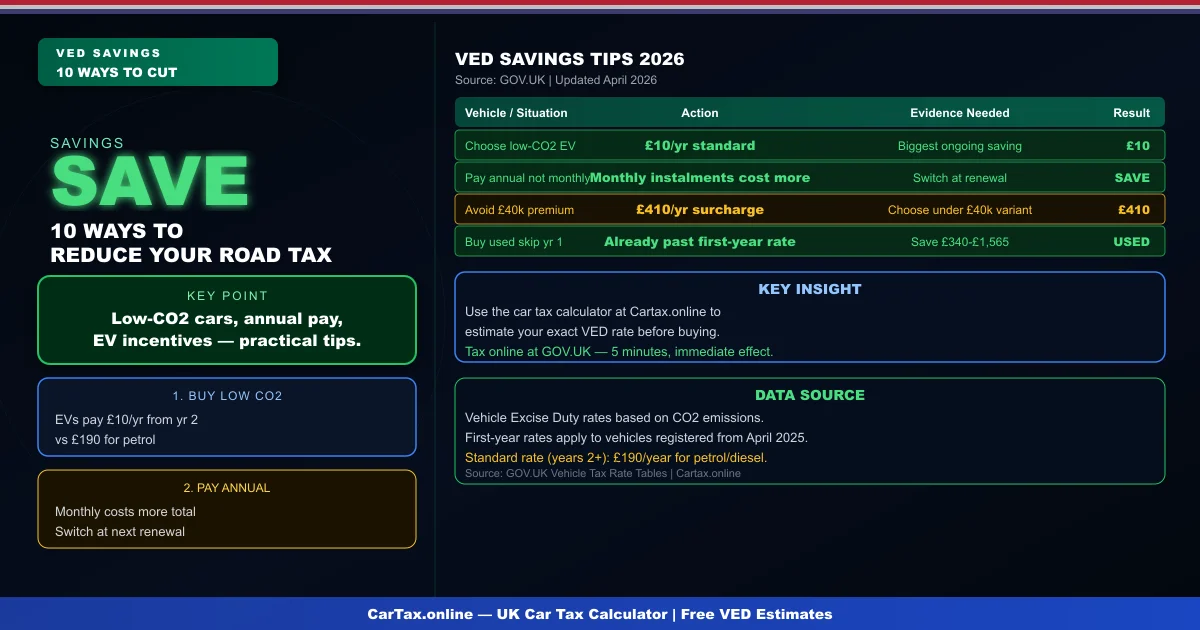
Road tax is a fixed annual cost that many car owners simply accept. But with a few strategic choices, you can significantly reduce what you pay. Here are 10 practical ways to cut your VED costs.
1. Choose a Low-CO2 or Electric Vehicle
The single biggest way to reduce road tax is to choose a vehicle with lower CO2 emissions. A zero-emission EV pays just £10 per year from year two — saving £180 annually compared to a standard petrol car. Even a low-CO2 petrol car emitting 120g/km pays £165 first year and £190 standard, versus £540+ for a 180g/km family SUV. The purchase premium for a low-CO2 vehicle is often offset by lower VED over ownership.
2. Pay Annual Instead of Monthly
Monthly Direct Debit road tax costs more in total than annual payment. There is no discount for paying annually, but there is a spread fee for monthly instalments. Switching from monthly to annual payment at your next renewal saves money. If you currently pay monthly, budget to save for the annual payment to avoid the instalment fee.
3. Avoid the Premium Rate Threshold
If your target vehicle has a list price just above £40,000, the £410 annual premium surcharge adds £2,050 over five years. Choosing a version of the same model just under the £40,000 threshold saves £410 per year from year two. Many premium brands offer well-equipped variants below £40,000 — look for the P11D value specifically. Related: Car Tax Savings UK 2026 | Car Tax Savings UK 2026 | Car Tax Savings Tips UK 2026 | Hybrid Car Tax Savings UK 2026.
4. Buy Used to Skip the First-Year Rate
A three-year-old car has already paid its first-year VED and is in the standard rate period — £190 per year for petrol. Buying used means you never pay the first-year rate, which can be hundreds of pounds for mid-to-high CO2 vehicles. Over a five-year ownership, buying a three-year-old used car instead of new saves approximately £500-£1,000 in VED.
5. Declare SORN for Seasonal Vehicles
If you have a second car, classic car or motorcycle that you only use during summer months, declaring a SORN over winter saves six months of VED. A classic car on SORN from November to April saves £95 in road tax. The SORN is free to declare and cancel — do it online at GOV.UK before the winter season starts.
6. Challenge Incorrect VED Rates
If your V5C shows the wrong CO2 or fuel type, you are probably paying too much road tax. A wrong CO2 entry that places you in a higher band costs money every year. Write to DVLA with a Certificate of Conformity or photographic evidence to correct the record — the refund of overpaid VED can be significant over multiple years.
7. Consider Alternative Fuel Hybrids
Plug-in hybrid vehicles (PHEVs) with a genuine electric-only range of more than 70 miles qualify for the lowest PHEV bands: £10 first year, £50 standard rate. Compared to a petrol car at £190 standard, the saving is £140 per year from year two. If you can regularly charge and use the electric range, a PHEV is worth considering purely for the VED savings.
8. Use a Motorcycle for Short Journeys
Motorcycles pay just £22 to £61 per year in road tax — compared to £190 for any petrol car. If your lifestyle allows, a motorcycle for commuting and local trips saves the full VED cost. Zero-emission electric motorcycles are fully exempt from VED. The saving is real but must be balanced against safety, weather protection and insurance costs.
9. Time Your Purchase Strategically
If you are buying a new car, consider whether the current first-year VED rates are favourable. For high-CO2 vehicles, the first-year rate can be very high — consider whether a nearly-new car (past year one) at standard rate is better value than a new car paying the high first-year band. Use the car tax calculator at Cartax.online to compare.
10. Review VED at Every Renewal
Road tax rates are fixed — but your circumstances may change. If you have replaced your vehicle, switched fuel type or moved address, check that your VED rate matches your current vehicle. Set a calendar reminder at each annual renewal to review and confirm the rate. Small savings compound over years.
Official Resources: GOV.UK Check Vehicle Tax | GOV.UK Vehicle Tax | DVLA Online | MOT Check
Frequently Asked Questions
Q: How much is car tax (VED) in the UK 2026?
Car tax rates in the UK depend on your vehicle's CO2 emissions and list price. Standard rates start from £190 per year for petrol and diesel cars, with zero-rated VED for EVs. First-year rates vary from £0 to £2,605 depending on emissions. Additional premiums apply for vehicles over £40,000.
Q: How do I check if my car is taxed online?
You can check your vehicle's tax status for free on the Gov.uk website at gov.uk/check-vehicle-tax. You'll need your vehicle's registration number (number plate). You can also check via the Motor Insurance Database to verify road tax and insurance status simultaneously.
Q: Can I get a refund on car tax if I sell my vehicle?
Yes — if you sell or scrap your vehicle, you can claim a refund on any full months of remaining road tax. Contact DVLA with the V11 reminder letter or apply online at gov.uk. Refunds are usually processed within 4-6 weeks.
Q: Is road tax refund available when transferring ownership?
No — road tax does not transfer with the vehicle. When you sell your car, the tax is automatically cancelled and any remaining months are refunded to you by DVLA. The new owner must tax the vehicle immediately. As a buyer, always verify the vehicle's tax status before purchasing.
Q: What is the luxury car tax threshold in the UK 2026?
The additional rate for vehicles over £40,000 (list price) adds £410 per year to standard VED rates for years 2-6 of registration. This surcharge brings the annual cost for high-emission vehicles over £40,000 to around £600-690 per year. Pure EVs under £40,000 pay zero VED.