April 13, 2026 in United Kingdom — Salary sacrifice car schemes are one of the most effective ways for UK employees to reduce their tax bill while getting behind the wheel of a new car. Understanding how a car salary sacrifice scheme works in the UK can save you hundreds of pounds every month in 2026.
How Car Salary Sacrifice Schemes Work
A salary sacrifice car scheme allows employees to exchange a portion of their salary for a company car benefit. The sacrificed salary is deducted from gross pay before tax and National Insurance contributions are calculated, reducing the employee's tax and NI liability. The employer also saves NI contributions on the sacrificed amount.
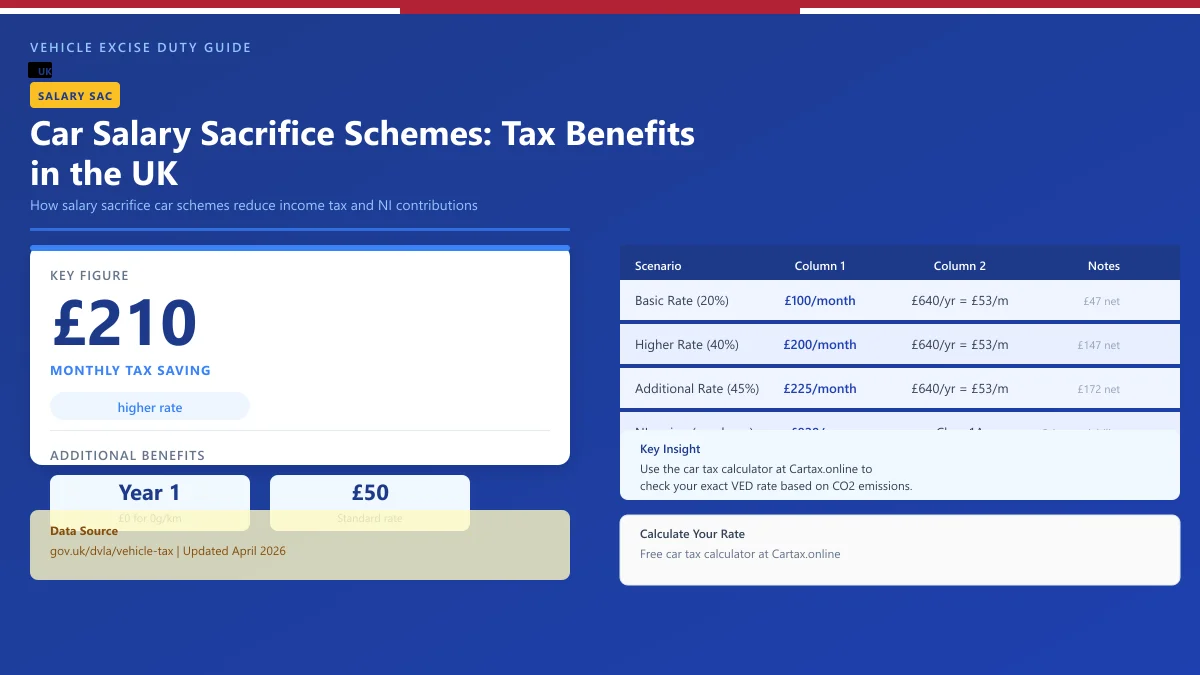
The scheme is particularly attractive for higher-rate taxpayers, where a £500 monthly salary sacrifice saves 40% income tax plus 2% NI on the sacrificed amount — approximately £210 per month in tax savings on a £500 sacrifice.
Car Salary Sacrifice UK: Tax Savings by Rate
- Basic Rate (20%): £500 sacrifice saves £100/month in tax — BIK on £40k EV at 2% = £53/month — net benefit £47/month
- Higher Rate (40%): £500 sacrifice saves £200/month in tax — BIK on £40k EV at 2% = £53/month — net benefit £147/month
- Additional Rate (45%): £500 sacrifice saves £225/month in tax — BIK on £40k EV at 2% = £53/month — net benefit £172/month
- NI saving (employee): 2% on sacrificed amount — approximately £10/month on £500 sacrifice
- NI saving (employer): 13.8% Class 1A — approximately £828/year on £500/month sacrifice
Benefit-in-Kind Tax on Salary Sacrifice Cars
Despite the income tax savings, salary sacrifice cars still attract Benefit-in-Kind (BIK) tax. The BIK value is based on the vehicle's P11D list price and its CO2 emissions band. For zero-emission vehicles, the BIK rate is just 2%, meaning a £40,000 EV costs £800 per year in BIK tax — which at 40% tax rate amounts to £320 per year. Related: Car Salary Sacrifice Scheme UK 2026 | UK Company Car Benefit 2026 | Mileage Tracking and Car Tax UK 2026 | Company Car Tax UK 2026.
For vehicles emitting over 160g/km, BIK rates can reach 37%, making high-emission salary sacrifice cars expensive. The financial advantage of salary sacrifice is maximised with low-emission vehicles where the BIK charge is lowest.
Employer National Insurance Savings
Employers save 13.8% in Class 1A National Insurance contributions on the salary sacrificed amount. For a £500 monthly sacrifice, the employer saves £828 per year in NI contributions — money that can be reinvested into the scheme or used to offer more competitive terms.
These employer savings are why many companies actively promote salary sacrifice car schemes, using the freed NI budget to subsidise the scheme and offer lower monthly rentals than the market rate.
Is Salary Sacrifice Right for Your Tax Situation?
Salary sacrifice car schemes work best for higher-rate taxpayers (40% or 45%) in stable employment. If you are considering leaving your employer within the contract period (typically 2-3 years), you may face early termination charges that outweigh the tax savings.
Also, the sacrifice reduces your pension contributions, which can affect retirement savings. Basic-rate taxpayers (20%) still benefit but less dramatically — a £500 sacrifice saves around £120 per month.
Conclusion
Car salary sacrifice schemes in the UK can save higher-rate taxpayers £147-£172 per month on a £500 monthly contribution. Maximise savings by choosing zero-emission vehicles with the lowest BIK rates. Check with your employer whether a salary sacrifice car scheme is available, and read the full guidance at GOV.UK company vehicle expenses.
Frequently Asked Questions
Q: How much is car tax (VED) in the UK 2026?
Car tax rates in the UK depend on your vehicle's CO2 emissions and list price. Standard rates start from £190 per year for petrol and diesel cars, with zero-rated VED for EVs. First-year rates vary from £0 to £2,605 depending on emissions. Additional premiums apply for vehicles over £40,000.
Q: How do I check if my car is taxed online?
You can check your vehicle's tax status for free on the Gov.uk website at gov.uk/check-vehicle-tax. You'll need your vehicle's registration number (number plate). You can also check via the Motor Insurance Database to verify road tax and insurance status simultaneously.
Q: Can I get a refund on car tax if I sell my vehicle?
Yes — if you sell or scrap your vehicle, you can claim a refund on any full months of remaining road tax. Contact DVLA with the V11 reminder letter or apply online at gov.uk. Refunds are usually processed within 4-6 weeks.
Q: Is road tax refund available when transferring ownership?
No — road tax does not transfer with the vehicle. When you sell your car, the tax is automatically cancelled and any remaining months are refunded to you by DVLA. The new owner must tax the vehicle immediately. As a buyer, always verify the vehicle's tax status before purchasing.
Q: What is the luxury car tax threshold in the UK 2026?
The additional rate for vehicles over £40,000 (list price) adds £410 per year to standard VED rates for years 2-6 of registration. This surcharge brings the annual cost for high-emission vehicles over £40,000 to around £600-690 per year. Pure EVs under £40,000 pay zero VED.