Vehicle Excise Duty — commonly known as road tax — is one of the most significant costs of car ownership in the UK. This complete guide covers everything you need to know about VED in 2026.
What Is Vehicle Excise Duty?
Vehicle Excise Duty (VED) is a annual tax charged on vehicles registered in the UK. It is charged on the right to use a vehicle on public roads. VED is not linked to road usage — you pay the same regardless of how many miles you drive. The revenue goes to the Treasury's general fund, not directly to road maintenance. VED has been in place since 1888 in various forms, making it one of the oldest UK taxes still in operation.
VED Rates and CO2 Bands
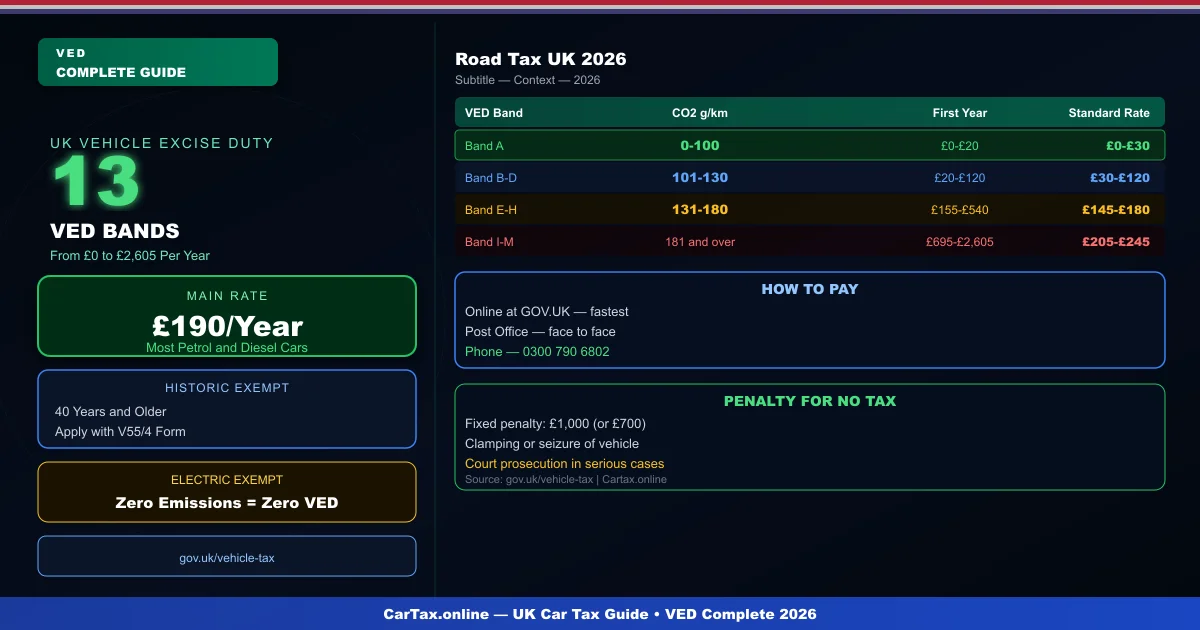
Vehicles are placed into VED bands based on their CO2 emissions in grams per kilometre. Band A (0-100g/km) pays £0-£20 first year and £0-£30 standard rate. Band B (101-110g/km) pays £20-£30 first year, £30 standard. Band C through to Band M represent progressively higher emissions, with Band M (over 255g/km) paying £2,605 first year and £245 standard rate. Standard rate for most cars is £190 per year from year two.
First-Year Rate vs Standard Rate
New vehicles registered for the first time pay a first-year rate based on their CO2 band. This is a higher rate designed to reflect environmental impact in the year of first registration. From year two onwards, all vehicles pay the standard rate — regardless of age, for non-historic vehicles. The standard rate is £190 for most cars, with the additional rate of £245 for vehicles with a list price over £40,000. Related: Road Tax UK 2026 | UK Road Tax | UK Road Tax Bands 2026 | Car Tax Rates UK 2026.
Who Pays VED
VED is paid by the vehicle's registered keeper. The keeper is the person or business recorded on the V5C registration certificate as the person responsible for the vehicle. This is not necessarily the owner — it is the legal keeper. If you borrow a vehicle, the keeper remains responsible for road tax. If you sell a vehicle and do not notify DVLA, you remain the registered keeper and remain liable for VED.
Exemptions and Reduced Rates
Several categories are exempt or pay reduced VED: zero-emission vehicles (EVs) pay £0, vehicles over 40 years old qualify for historic exemption, drivers registered as disabled can claim nil rate, medical exemption for certain conditions, and agricultural vehicles. Additional exemptions exist for mobility scooters, invalid carriages, and emergency service vehicles.
How to Pay VED
Road tax can be paid online at GOV.UK, by phone, or at any Post Office branch offering the vehicle tax service. You need the V5C reference number and a valid MOT certificate if the vehicle is over three years old. Payment can be annual or six-monthly — six-monthly costs slightly more in total. Direct debit annual renewal is available for automatic renewal each year.
Penalties for Non-Payment
Driving without valid road tax is an offence. The fixed penalty is £1,000 — reduced to £700 if paid within 28 days. Vehicles without tax found on public roads can be clamped, fined, or seized. The registered keeper is liable regardless of who was driving. There is no ignorance defence — it is the keeper's responsibility to ensure the vehicle is taxed, even if someone else is using it without permission.
Official Resources: GOV.UK Check Vehicle Tax | GOV.UK Vehicle Tax | DVLA Online | MOT Check
Frequently Asked Questions
Q: How much is car tax (VED) in the UK 2026?
Car tax rates in the UK depend on your vehicle's CO2 emissions and list price. Standard rates start from £190 per year for petrol and diesel cars, with zero-rated VED for EVs. First-year rates vary from £0 to £2,605 depending on emissions. Additional premiums apply for vehicles over £40,000.
Q: How do I check if my car is taxed online?
You can check your vehicle's tax status for free on the Gov.uk website at gov.uk/check-vehicle-tax. You'll need your vehicle's registration number (number plate). You can also check via the Motor Insurance Database to verify road tax and insurance status simultaneously.
Q: Can I get a refund on car tax if I sell my vehicle?
Yes — if you sell or scrap your vehicle, you can claim a refund on any full months of remaining road tax. Contact DVLA with the V11 reminder letter or apply online at gov.uk. Refunds are usually processed within 4-6 weeks.
Q: Is road tax refund available when transferring ownership?
No — road tax does not transfer with the vehicle. When you sell your car, the tax is automatically cancelled and any remaining months are refunded to you by DVLA. The new owner must tax the vehicle immediately. As a buyer, always verify the vehicle's tax status before purchasing.
Q: What is the luxury car tax threshold in the UK 2026?
The additional rate for vehicles over £40,000 (list price) adds £410 per year to standard VED rates for years 2-6 of registration. This surcharge brings the annual cost for high-emission vehicles over £40,000 to around £600-690 per year. Pure EVs under £40,000 pay zero VED.