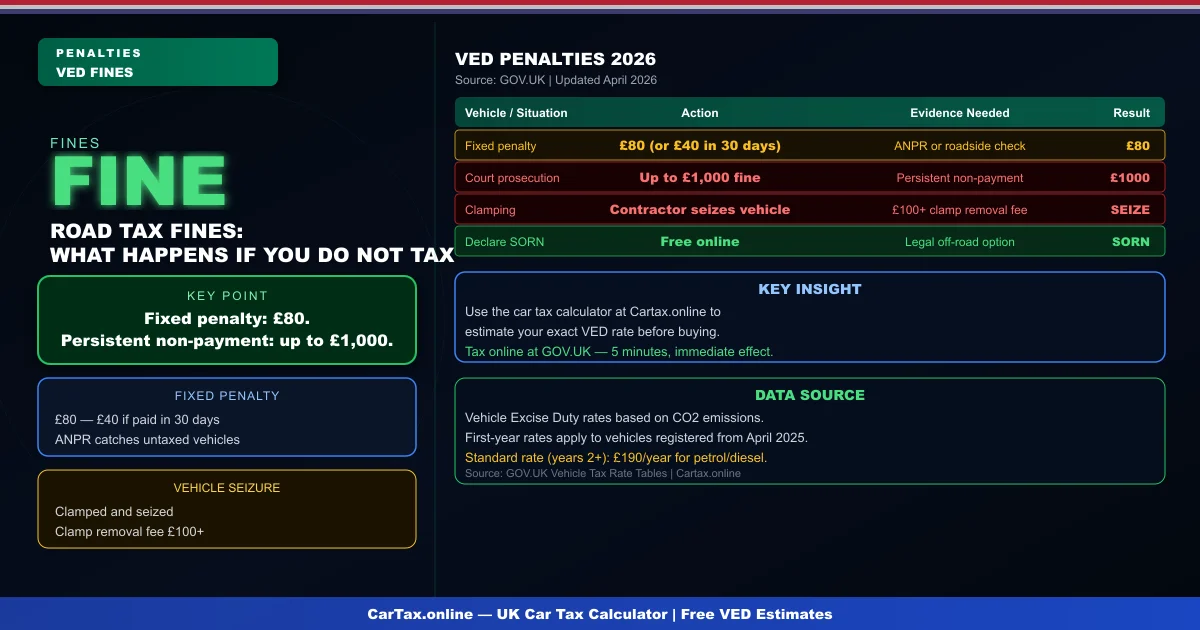
Failing to tax your vehicle has serious consequences. Understanding the penalty structure helps you take road tax seriously and avoid costly mistakes.
Fixed Penalty Notice: £80
The standard fixed penalty for driving without valid road tax is £80. If paid within 30 days, the penalty is reduced to £40. The notice is issued by DVLA or the police, typically following an ANPR check or roadside stop. You do not need to have driven the vehicle — the offence of keeping an untaxed vehicle on a public road is sufficient. Even if the vehicle is parked and not moving, if it is on a public road and untaxed, you can receive a penalty.
Court Prosecution for Persistent Non-Payment
If you fail to pay the fixed penalty or continue to keep an untaxed vehicle on the road, DVLA can refer the case for court prosecution. The maximum fine for the offence of using or keeping a vehicle without road tax is £1,000 — though magistrates typically impose lower fines. Persistent offenders may also face additional penalties for obstructing enforcement officers.
Vehicle Clamping and Seizure
DVLA employs vehicle clamping contractors who can clamp or seize vehicles without valid road tax found on public roads. The clamp removal fee is substantial — typically £100 or more — on top of the cost of taxing the vehicle and the original penalty. If you do not pay the clamp fee, the vehicle can be sold at auction. The cost of recovering an unclamped vehicle is always higher than simply paying your road tax on time. Related: Road Tax Fines and Penalties UK 2026 | Truth About Car Tax Fines in UK | Car Tax Penalty UK 2026 | Car Tax Penalty Charges UK 2026.
SORN: The Legal Off-Road Alternative
If you want to keep your vehicle off the road without paying road tax, you must declare a Statutory Off Road Notification (SORN). A SORN means the vehicle is declared off the road and exempt from VED. You can declare a SORN for free at GOV.UK. Without a SORN, the vehicle is considered kept on the road and road tax is due — even if it has not moved for months. SORN is the only legal way to avoid road tax without selling or scrapping the vehicle.
Appealing a VED Penalty
If you believe you received a penalty unfairly — for example because you had taxed the vehicle but the system had not updated, or because the vehicle was on private land — you can appeal to DVLA. Provide evidence such as a tax confirmation email, a screenshot of the online tax record, or photographs showing the vehicle on private land rather than a public road. Check the DVLA penalty appeals process for full details. Appeals must be submitted within the 30-day reduction window to qualify for the reduced penalty.
Frequently Asked Questions
Q: How much is car tax (VED) in the UK 2026?
Car tax rates in the UK depend on your vehicle's CO2 emissions and list price. Standard rates start from £190 per year for petrol and diesel cars, with zero-rated VED for EVs. First-year rates vary from £0 to £2,605 depending on emissions. Additional premiums apply for vehicles over £40,000.
Q: How do I check if my car is taxed online?
You can check your vehicle's tax status for free on the Gov.uk website at gov.uk/check-vehicle-tax. You'll need your vehicle's registration number (number plate). You can also check via the Motor Insurance Database to verify road tax and insurance status simultaneously.
Q: Can I get a refund on car tax if I sell my vehicle?
Yes — if you sell or scrap your vehicle, you can claim a refund on any full months of remaining road tax. Contact DVLA with the V11 reminder letter or apply online at gov.uk. Refunds are usually processed within 4-6 weeks.
Q: Is road tax refund available when transferring ownership?
No — road tax does not transfer with the vehicle. When you sell your car, the tax is automatically cancelled and any remaining months are refunded to you by DVLA. The new owner must tax the vehicle immediately. As a buyer, always verify the vehicle's tax status before purchasing.
Q: What is the luxury car tax threshold in the UK 2026?
The additional rate for vehicles over £40,000 (list price) adds £410 per year to standard VED rates for years 2-6 of registration. This surcharge brings the annual cost for high-emission vehicles over £40,000 to around £600-690 per year. Pure EVs under £40,000 pay zero VED.