Personalised number plates — private or cherished registrations — are a popular way to add a personal touch to a vehicle. Understanding how private plates interact with road tax and registration is important when buying, selling, or transferring a personalised plate.
Private Plates and VED
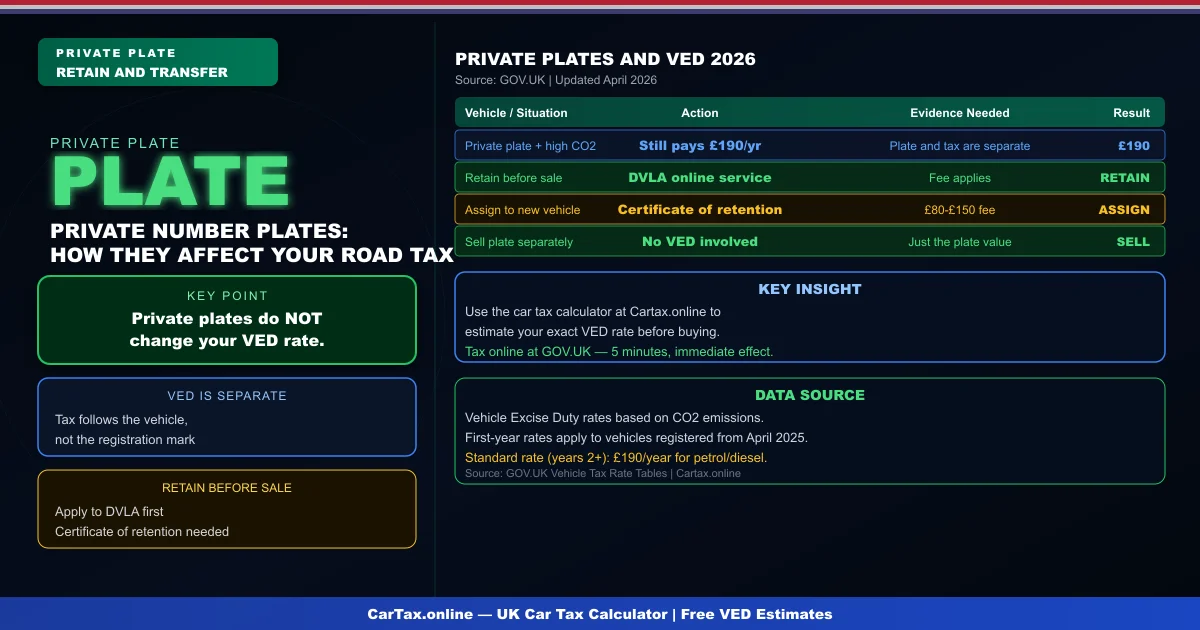
A personalised number plate has no effect on road tax. VED is calculated based on the vehicle's CO2 emissions, list price, and fuel type — not the number plate. Whether you have a private plate like "ABC 1" or a standard registration, your road tax rate is identical. The number plate is a personalisation item; the VED rate is determined by the vehicle's specifications.
Buying a Private Plate from DVLA
DVLA sells private registrations directly through its website and at auctions. Prices range from around £250 for simple registrations to thousands or millions for highly desirable plates. When you buy a plate from DVLA, you receive a V750 certificate of entitlement (retention) confirming you own the right to assign it to a vehicle. You can hold this right indefinitely — the retention certificate means you do not need to immediately assign the plate to a vehicle.
Assigning a Private Plate to a Vehicle
To assign a private plate to a vehicle, you must complete the V317 form and send it to DVLA with the appropriate fee. The vehicle must be registered in your name, have a current MOT, and be road tax current. DVLA processes assignment applications within a few weeks. Once assigned, the new plate appears on your V5C and is the vehicle's legal registration. The road tax is unaffected by the plate change — the vehicle retains its original VED record. Related: Car Tax and Private Plates UK 2026 | Car Tax and Private Registration Plates UK 2026 | DVLA Vehicle Registration UK 2026 | Car Tax and Private Registration Plates UK 2026.
Transferring a Plate When Selling a Car
If you sell a vehicle with a private plate, you should ideally transfer the plate off before selling, or agree with the buyer whether they want the plate included. To transfer a plate to another vehicle you own, use the V317 form. To sell the plate separately, the buyer applies with the V750 certificate. If you sell the car with the plate and do not handle the paperwork, the new keeper may drive with your registration — which creates problems for both parties. Always handle plate transfer at the point of sale.
Keeping a Plate Off a Vehicle
You can keep a private plate off any vehicle by applying for a retention certificate (V750). This costs a small fee and allows you to hold the registration rights without assigning it to a car. The plate can remain in your name indefinitely until you decide to assign it. This is useful if you want to sell the registration separately from any vehicle. Road tax on any vehicle you subsequently assign the plate to is unaffected by the personal nature of the registration.
Official Resources: GOV.UK Check Vehicle Tax | GOV.UK Vehicle Tax | DVLA Online | MOT Check
Frequently Asked Questions
Q: How much is car tax (VED) in the UK 2026?
Car tax rates in the UK depend on your vehicle's CO2 emissions and list price. Standard rates start from £190 per year for petrol and diesel cars, with zero-rated VED for EVs. First-year rates vary from £0 to £2,605 depending on emissions. Additional premiums apply for vehicles over £40,000.
Q: How do I check if my car is taxed online?
You can check your vehicle's tax status for free on the Gov.uk website at gov.uk/check-vehicle-tax. You'll need your vehicle's registration number (number plate). You can also check via the Motor Insurance Database to verify road tax and insurance status simultaneously.
Q: Can I get a refund on car tax if I sell my vehicle?
Yes — if you sell or scrap your vehicle, you can claim a refund on any full months of remaining road tax. Contact DVLA with the V11 reminder letter or apply online at gov.uk. Refunds are usually processed within 4-6 weeks.
Q: Is road tax refund available when transferring ownership?
No — road tax does not transfer with the vehicle. When you sell your car, the tax is automatically cancelled and any remaining months are refunded to you by DVLA. The new owner must tax the vehicle immediately. As a buyer, always verify the vehicle's tax status before purchasing.
Q: What is the luxury car tax threshold in the UK 2026?
The additional rate for vehicles over £40,000 (list price) adds £410 per year to standard VED rates for years 2-6 of registration. This surcharge brings the annual cost for high-emission vehicles over £40,000 to around £600-690 per year. Pure EVs under £40,000 pay zero VED.