April 13, 2026 in United Kingdom — If you own a classic car built before 2001, understanding the historic vehicle tax rules can save you hundreds of pounds in annual road tax. The UK's VED system offers significant exemptions for older vehicles, and in 2026, pre-2001 classic car tax rules remain some of the most generous in the world.
VED Exemption for Vehicles Over 40 Years Old
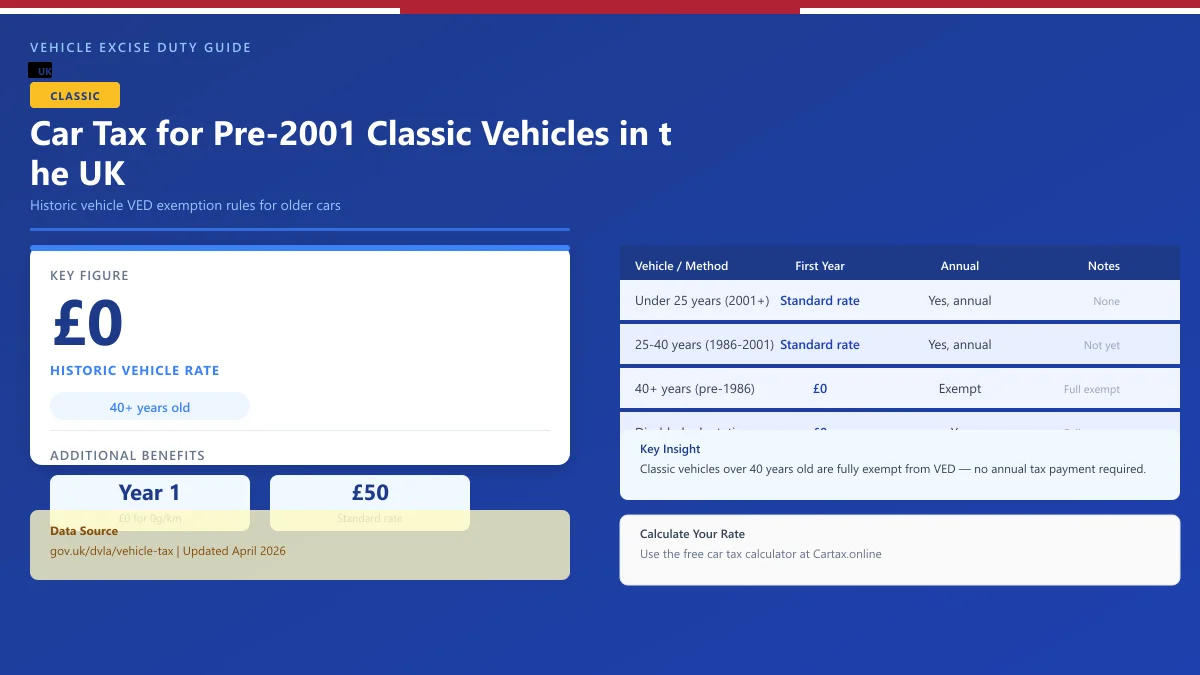
In the UK, vehicles manufactured more than 40 years ago are exempt from Vehicle Excise Duty. This historic vehicle exemption applies to any vehicle built before 1 January 1986, regardless of its current condition or mileage.
This exemption applies to the majority of pre-2001 classic vehicles. If your car was registered before 1 January 1986, you pay £0 road tax for as long as you own it, provided you maintain continuous road tax coverage — or SORN during off-road periods.
Pre-2001 Classic Car Tax: Age Brackets
- Under 25 years (2001+): Standard VED rate applies — no exemptions for personal use
- 25-40 years (1986-2001): Standard VED rate — historic exemption not yet applicable
- 40+ years (pre-1986): £0 historic rate — full VED exemption applies automatically
- Electric 0g/km: £0 first year regardless of age
- Disabled adaptation: £0 road tax regardless of age — full exemption available
The 40-Year Rule: Calculating Classic Car Tax Eligibility
The 40-year rule uses the year of first registration, not the year of manufacture. This creates an important distinction: a vehicle may have been manufactured in 1985 but first registered in 1987 — in that case, it becomes exempt in 2027. Conversely, a 1986 model registered in 1985 is exempt from 2025. Related: Car Tax for Pre-2001 Classic Vehicles UK 2026 | Car Tax and MOT Exempt Vehicles UK 2026 | Car Tax for Older Vehicles UK 2026 | Car Tax and MOT Exempt Vehicles UK 2026.
To check eligibility for a specific vehicle, subtract 40 from the current year. In 2026, vehicles first registered in 1985 or earlier qualify for historic vehicle car tax in the UK. The DVLA's vehicle enquiry system will confirm whether a specific registration mark attracts the historic rate.
What Happens When a Vehicle Turns 40
When a vehicle becomes eligible for the historic rate, you do not receive an automatic notification. You must apply for the historic rate when you next tax the vehicle. Until then, the vehicle continues to be taxed at its existing rate — typically the standard rate of £190 per year for most petrol and diesel vehicles.
At the point of renewal, you can select the historic vehicle rate, which is currently £0. No additional inspection is required beyond confirming the vehicle's age. However, if the vehicle has been substantially modified, DVLA may require reclassification.
Substantial Modification Rules
The historic vehicle exemption has an important caveat: it does not apply if the vehicle has been substantially modified after manufacture. Modifications that would disqualify a vehicle include swapping to a different engine type, converting from petrol to electric, or changing the vehicle's fundamental construction.
Standard maintenance and repair work does not trigger the substantial modification rule. If in doubt, DVLA can advise before you apply for the historic rate.
MOT Requirements for Pre-2001 Vehicles
Pre-2001 vehicles over 40 years old are exempt from requiring an MOT test. However, road tax exemption does not mean reduced safety standards — the driver is responsible for ensuring the vehicle is roadworthy.
For vehicles between 25 and 40 years old (1986-2001 models), an MOT is still required. The exemption from MOT only applies to vehicles over 40 years old.
Conclusion
Pre-2001 classic vehicle car tax in the UK is simple: if your car was first registered in 1985 or earlier, you pay £0 road tax. Use the GOV.UK vehicle tax check to verify your vehicle's rate. The 40-year rule for historic vehicle road tax UK is one of the most generous exemptions available to UK drivers.
Frequently Asked Questions
Q: How much is car tax (VED) in the UK 2026?
Car tax rates in the UK depend on your vehicle's CO2 emissions and list price. Standard rates start from £190 per year for petrol and diesel cars, with zero-rated VED for EVs. First-year rates vary from £0 to £2,605 depending on emissions. Additional premiums apply for vehicles over £40,000.
Q: How do I check if my car is taxed online?
You can check your vehicle's tax status for free on the Gov.uk website at gov.uk/check-vehicle-tax. You'll need your vehicle's registration number (number plate). You can also check via the Motor Insurance Database to verify road tax and insurance status simultaneously.
Q: Can I get a refund on car tax if I sell my vehicle?
Yes — if you sell or scrap your vehicle, you can claim a refund on any full months of remaining road tax. Contact DVLA with the V11 reminder letter or apply online at gov.uk. Refunds are usually processed within 4-6 weeks.
Q: Is road tax refund available when transferring ownership?
No — road tax does not transfer with the vehicle. When you sell your car, the tax is automatically cancelled and any remaining months are refunded to you by DVLA. The new owner must tax the vehicle immediately. As a buyer, always verify the vehicle's tax status before purchasing.
Q: What is the luxury car tax threshold in the UK 2026?
The additional rate for vehicles over £40,000 (list price) adds £410 per year to standard VED rates for years 2-6 of registration. This surcharge brings the annual cost for high-emission vehicles over £40,000 to around £600-690 per year. Pure EVs under £40,000 pay zero VED.