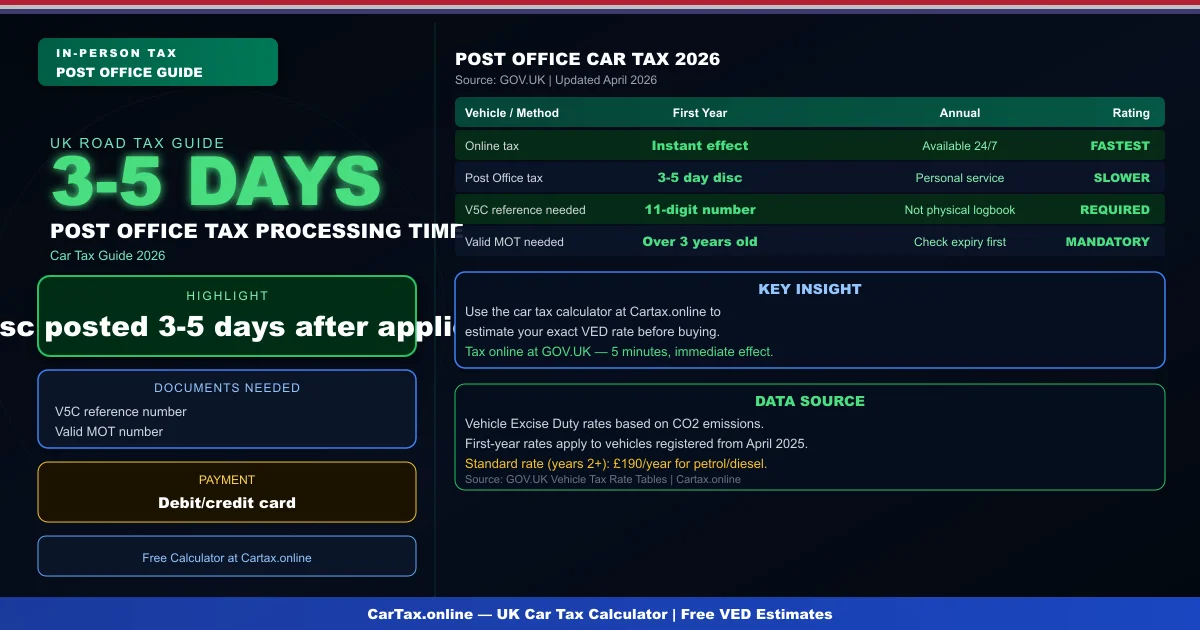
While online is the most common way to tax a vehicle, the Post Office remains an option for those who prefer in-person service. Here is how to tax your car at the Post Office and when it makes sense to use this method.
What You Need at the Post Office
To tax your vehicle at the Post Office, you need a V11 reminder form or your V5C registration certificate, proof of insurance (the Post Office checks this via MID — the Motor Insurance Database), and a valid MOT certificate if your vehicle is over three years old. You can pay by cash, debit card or credit card. The Post Office staff will process the tax and give you a receipt — there may be a small service fee for card payments.
When to Use the Post Office Instead of Online
The Post Office is useful if you do not have access to a computer or smartphone, if you need to tax a vehicle immediately without waiting for online processing, or if you want to pay in cash. Some people prefer the in-person verification that the Post Office provides. However, for most people, taxing online at GOV.UK is faster, cheaper (no service fee) and available 24/7.
Post Office and Direct Debit Setup
You can set up a Direct Debit for ongoing road tax payments at the Post Office. The Post Office will help you configure 12 monthly instalments or annual payments. However, the Direct Debit runs through DVLA's system — you can manage it online at GOV.UK as well. Monthly Direct Debit costs more in total than annual payment. Setting up the Direct Debit in person does not save you money — you still pay the same instalment amount with the same spread fee. Related: Car Tax at the Post Office UK 2026 | Car Tax at the Post Office UK 2026 | Car Tax at the Post Office UK 2026 | Car Tax at the Post Office UK 2026.
What the Post Office Checks
When you tax at the Post Office, the staff verify your insurance and MOT status via the Motor Insurance Database and DVLA's MOT records. This means you cannot accidentally tax a vehicle without insurance or a valid MOT — the system blocks it. The Post Office will also confirm the VED rate for your vehicle and accept payment. You will receive a tax confirmation and can check the vehicle's updated status online afterward.
Fees for Post Office Taxing
There is no government fee for road tax itself whether you pay online or at the Post Office — the amount is the same VED rate. However, the Post Office may charge a service fee for card payments. This fee is typically small — a few pounds — but it makes online payment the cheaper option. Some Post Office branches offer a free service for cash payments. Compare total costs when deciding between in-person and online taxing.
Frequently Asked Questions
Q: How much is car tax (VED) in the UK 2026?
Car tax rates in the UK depend on your vehicle's CO2 emissions and list price. Standard rates start from £190 per year for petrol and diesel cars, with zero-rated VED for EVs. First-year rates vary from £0 to £2,605 depending on emissions. Additional premiums apply for vehicles over £40,000.
Q: How do I check if my car is taxed online?
You can check your vehicle's tax status for free on the Gov.uk website at gov.uk/check-vehicle-tax. You'll need your vehicle's registration number (number plate). You can also check via the Motor Insurance Database to verify road tax and insurance status simultaneously.
Q: Can I get a refund on car tax if I sell my vehicle?
Yes — if you sell or scrap your vehicle, you can claim a refund on any full months of remaining road tax. Contact DVLA with the V11 reminder letter or apply online at gov.uk. Refunds are usually processed within 4-6 weeks.
Q: Is road tax refund available when transferring ownership?
No — road tax does not transfer with the vehicle. When you sell your car, the tax is automatically cancelled and any remaining months are refunded to you by DVLA. The new owner must tax the vehicle immediately. As a buyer, always verify the vehicle's tax status before purchasing.
Q: What is the luxury car tax threshold in the UK 2026?
The additional rate for vehicles over £40,000 (list price) adds £410 per year to standard VED rates for years 2-6 of registration. This surcharge brings the annual cost for high-emission vehicles over £40,000 to around £600-690 per year. Pure EVs under £40,000 pay zero VED.