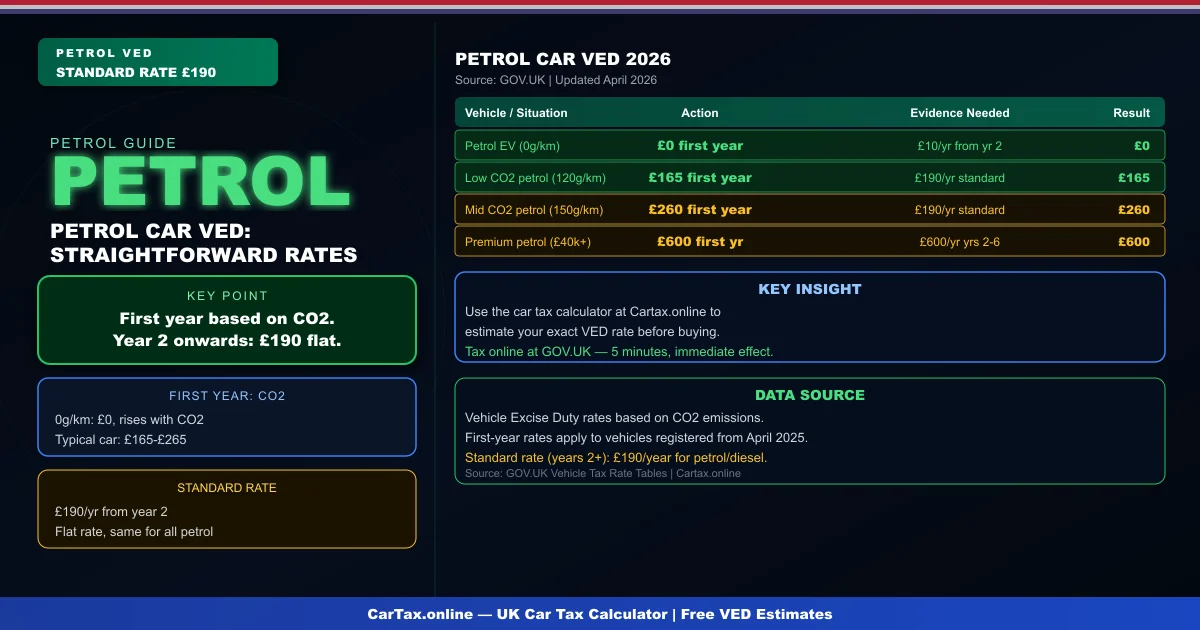
Petrol cars remain the most common vehicle type on UK roads and are taxed on the same CO2-based VED system as all cars. Understanding how petrol car road tax works helps you estimate costs before buying and avoid surprises at renewal time.
First-Year VED Bands for Petrol Cars
Petrol cars registered from April 2025 pay first-year VED based on their CO2 emissions per kilometre. The lowest band — 0g/km — costs £0, and bands rise progressively up to £2,605 for petrol cars emitting over 255g/km. A typical 1.5-litre petrol family car emitting around 120g/km falls into the £165 first-year band. The first-year rate covers 12 months from the first registration date and is non-negotiable.
Standard Annual Rate: £190 Per Year
From year two onward, all petrol cars pay the same standard VED rate of £190 per year — regardless of engine size, performance or original CO2 emissions. A Ford Fiesta and a Porsche 911 Carrera both pay £190 annually from year two. This flat standard rate has applied since April 2017 and is currently set to remain in place. It applies to all petrol and diesel cars with CO2 emissions above 0g/km.
CO2 Bands and What They Mean
The VED first-year rate is determined by official CO2 emissions recorded on the V5C. These are measured in grams per kilometre (g/km) under the WLTP test cycle. The bands range from £0 (0g/km) through increments at 1-50, 51-75, 76-94, 95-99, 100-109, 110-119, 120-129, 130-139, 140-149, 150-159, 160-169, 170-179, 180-189, 190-199, 200-209, 210-225, 226-255 and over 255g/km. Use the car tax calculator at Cartax.online to find the exact first-year band for a specific vehicle. Related: Petrol Car Tax Explained UK 2026 | Car Tax Savings with Low Emission Cars UK 2026 | UK Car Tax Bands 2026 | UK Road Tax Bands 2026.
Premium Rate for Expensive Petrol Cars
If a petrol car's list price exceeds £40,000, an additional £410 annual supplement applies for years two through six. This is the same premium rate that applies to any vehicle above the list price threshold — not specific to petrol. A petrol Mercedes C-Class at £45,000 list price pays £600 annual VED ( £190 standard + £410 premium) from year two, compared to £190 for the same car below £40,000.
Petrol vs Diesel: Which Is Cheaper?
Petrol cars almost always have lower first-year VED than equivalent diesel cars because petrol engines typically produce lower CO2 emissions. A 130g/km petrol car pays £205 first year; an equivalent 150g/km diesel pays £260. From year two, the standard £190 applies to both. For most buyers, petrol is the cheaper option on VED — and petrol avoids the Clean Air Zone surcharges that affect older diesel vehicles.
Petrol Car Tax: A Simple Summary
In summary: first-year VED is based on CO2 (check your V5C). Standard annual rate is £190 from year two. No annual increase — it has been frozen since 2017. Premium rate of £410 applies only if list price exceeds £40,000. Use the GOV.UK vehicle tax check to verify your current VED status.
Frequently Asked Questions
Q: How much is car tax (VED) in the UK 2025?
Car tax rates in the UK depend on your vehicle's CO2 emissions and list price. Standard rates start from £190 per year for petrol and diesel cars, with zero-rated VED for EVs. First-year rates vary from £0 to £2,605 depending on emissions. Additional premiums apply for vehicles over £40,000.
Q: How do I check if my car is taxed online?
You can check your vehicle's tax status for free on the Gov.uk website at gov.uk/check-vehicle-tax. You'll need your vehicle's registration number (number plate). You can also check via the Motor Insurance Database to verify road tax and insurance status simultaneously.
Q: Can I get a refund on car tax if I sell my vehicle?
Yes — if you sell or scrap your vehicle, you can claim a refund on any full months of remaining road tax. Contact DVLA with the V11 reminder letter or apply online at gov.uk. Refunds are usually processed within 4-6 weeks.
Q: Is road tax refund available when transferring ownership?
No — road tax does not transfer with the vehicle. When you sell your car, the tax is automatically cancelled and any remaining months are refunded to you by DVLA. The new owner must tax the vehicle immediately. As a buyer, always verify the vehicle's tax status before purchasing.
Q: What is the luxury car tax threshold in the UK 2025?
The additional rate for vehicles over £40,000 (list price) adds £410 per year to standard VED rates for years 2-6 of registration. This surcharge brings the annual cost for high-emission vehicles over £40,000 to around £600-690 per year. Pure EVs under £40,000 pay zero VED.