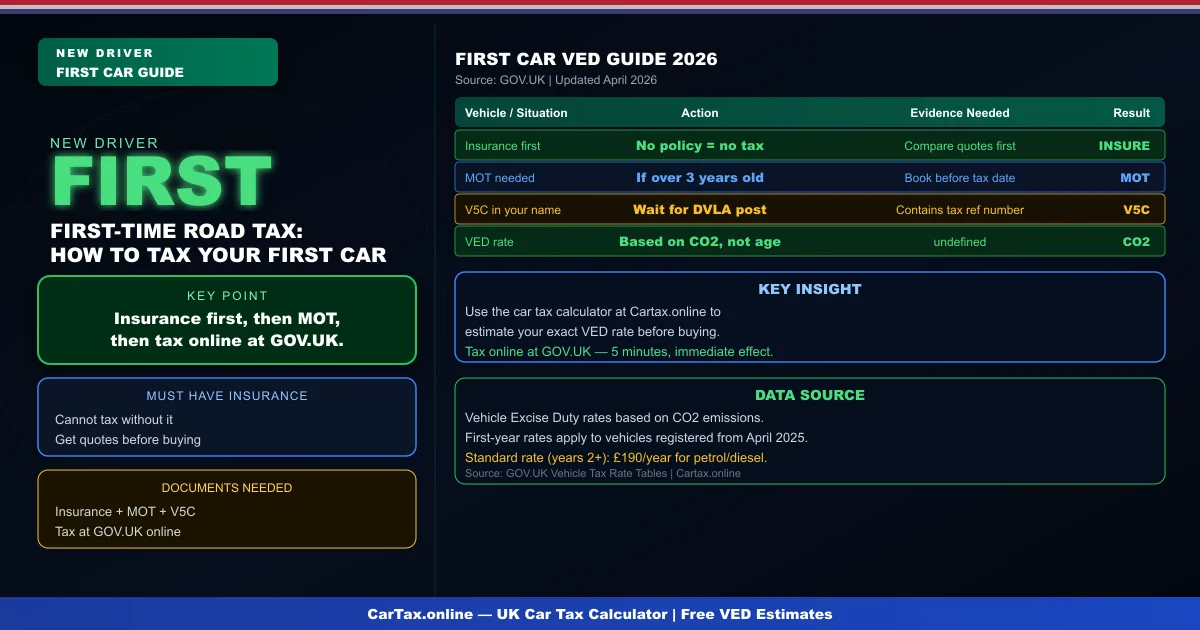
Getting behind the wheel of your first car is exciting, but the admin side — including road tax — can feel confusing. This guide explains everything new drivers need to know about taxing their first vehicle in the UK in 2026.
You Cannot Tax a Car Without Insurance
Before you can tax any vehicle, you need insurance cover. This is a DVLA requirement — you cannot complete vehicle taxation without an active insurance policy in your name as the registered keeper. Get insurance quotes before buying a car so you know the full cost of ownership. Insurance for new drivers can be expensive, so factor this into your budget alongside VED.
Documents Needed to Tax Your First Car
To tax a vehicle for the first time as a new keeper, you need three things: a valid MOT certificate (if the car is over three years old), insurance, and your V5C registration certificate. Your V5C will arrive by post from DVLA within a few weeks of registering the vehicle. Keep it safe — it is your proof of ownership and contains the reference number you need to tax online at GOV.UK.
VED Rates for Your First Car
Your VED rate depends on the vehicle's CO2 emissions and fuel type, not on your driving experience. A new driver in a low-CO2 petrol car pays the same VED as an experienced driver in the same car. Zero-emission electric cars pay £0 first year and £10 per year thereafter. High-CO2 performance cars can cost £2,605 in the first year. Use the car tax calculator at Cartax.online to estimate your first-year and standard VED before buying. Related: Car Tax for New Drivers UK 2026 | Car Tax for First-Time Drivers UK 2026 | Car Tax for New Drivers | Car Tax for First-Time Drivers UK 2026.
First-Year Rate vs Standard Rate
New vehicles pay a higher first-year VED rate based on CO2 bands. This rate applies for the first 12 months from the first registration date. After that, the standard annual rate applies — £190 per year for petrol and diesel cars, £10 for zero-emission EVs. The first-year rate is included in the on-the-road price if you buy new from a dealer. If you buy a used car already past its first year, you pay the standard rate only.
Can You Pay Monthly as a New Driver?
Yes — new drivers can pay road tax monthly by Direct Debit. However, monthly payments cost more overall than annual payment. There is no surcharge based on driver experience; the monthly instalment system simply divides the annual rate into 12 equal payments. If budget is tight as a new driver, consider choosing a vehicle with lower VED costs — an EV or low-CO2 hatchback will save hundreds over ownership.
SORN for Unused Vehicles
If you buy a car but are not yet driving it — for example if you are waiting for insurance to start or have a provisional licence gap — you must declare a SORN. A SORN means the vehicle is off the road and exempt from VED. You cannot drive the vehicle on the road while a SORN is active. Declare a SORN online at GOV.UK free of charge.
Official Resources: GOV.UK Check Vehicle Tax | GOV.UK Vehicle Tax | DVLA Online | MOT Check
Frequently Asked Questions
Q: How much is car tax (VED) in the UK 2026?
Car tax rates in the UK depend on your vehicle's CO2 emissions and list price. Standard rates start from £190 per year for petrol and diesel cars, with zero-rated VED for EVs. First-year rates vary from £0 to £2,605 depending on emissions. Additional premiums apply for vehicles over £40,000.
Q: How do I check if my car is taxed online?
You can check your vehicle's tax status for free on the Gov.uk website at gov.uk/check-vehicle-tax. You'll need your vehicle's registration number (number plate). You can also check via the Motor Insurance Database to verify road tax and insurance status simultaneously.
Q: Can I get a refund on car tax if I sell my vehicle?
Yes — if you sell or scrap your vehicle, you can claim a refund on any full months of remaining road tax. Contact DVLA with the V11 reminder letter or apply online at gov.uk. Refunds are usually processed within 4-6 weeks.
Q: Is road tax refund available when transferring ownership?
No — road tax does not transfer with the vehicle. When you sell your car, the tax is automatically cancelled and any remaining months are refunded to you by DVLA. The new owner must tax the vehicle immediately. As a buyer, always verify the vehicle's tax status before purchasing.
Q: What is the luxury car tax threshold in the UK 2026?
The additional rate for vehicles over £40,000 (list price) adds £410 per year to standard VED rates for years 2-6 of registration. This surcharge brings the annual cost for high-emission vehicles over £40,000 to around £600-690 per year. Pure EVs under £40,000 pay zero VED.