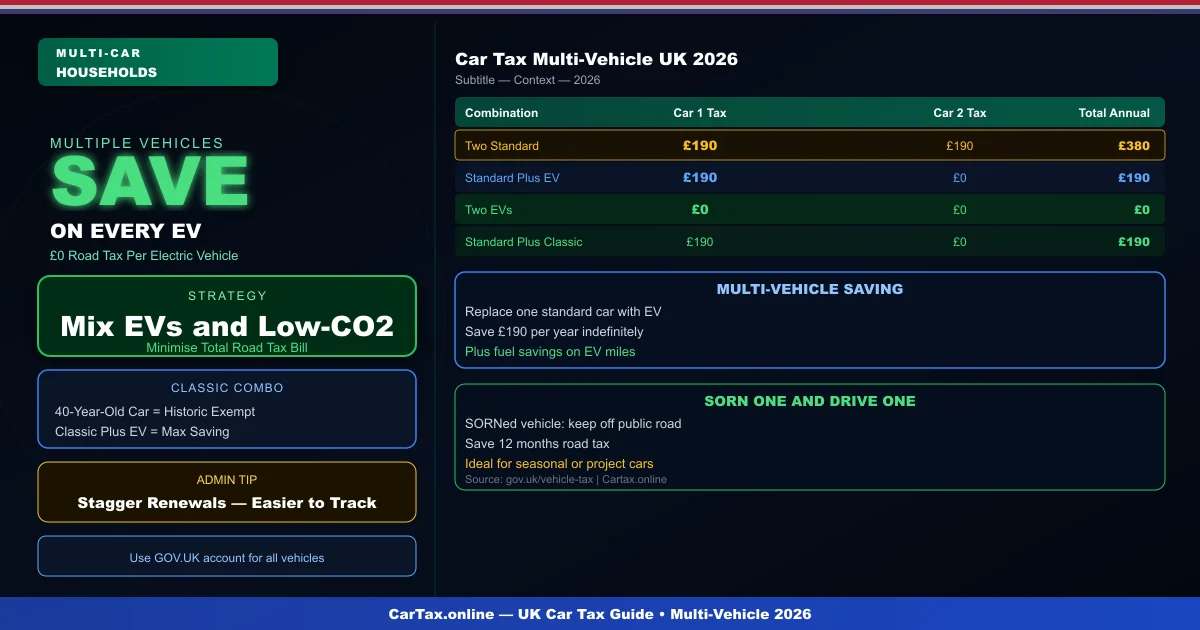
Households with multiple vehicles face multiplied road tax costs. Strategic vehicle selection — choosing the right combination of vehicles — can significantly reduce a household's annual road tax bill.
The Cost of Multiple Vehicles
Each vehicle in a household costs road tax independently. Two standard petrol cars emitting around 140g/km CO2 each cost £310 per year in road tax combined. Replacing one with an electric vehicle reduces the combined cost to £120 per year — a saving of £190 annually, or £950 over five years. For households with three or more vehicles, the savings compound significantly.
Tax-Efficient Vehicle Combinations
The most tax-efficient multi-vehicle household has one vehicle as an EV paying £0 and additional vehicles chosen for low CO2 emissions. A household with one EV and one small petrol car — such as a Nissan Leaf and a Toyota Yaris — pays around £30-£60 per year in total road tax. Compare this to two standard family SUVs at £360-£400 per year. The difference is the equivalent of a tank of fuel.
Classic Cars and Multi-Vehicle Households
A household with a classic car over 40 years old saves the £190 standard rate through the historic exemption. This exemption applies once per vehicle — not per household — so a household with three classic cars saves £380 per year compared to standard rates. Classic cars alongside one modern EV or low-CO2 daily driver represents a highly tax-efficient combination for car enthusiasts. Related: Car Tax and Multi-Vehicle Households UK 2026 | Car Tax for Family Cars UK 2026 | Car Tax for Fleet Operators UK 2026 | Car Tax and Child Seats UK 2026.
Managing Tax Renewals Across Multiple Vehicles
Keeping track of multiple MOT and tax renewal dates is one of the most common admin challenges for multi-vehicle households. Use the GOV.UK vehicle log-in to manage all vehicles in one account. Set calendar reminders one month before each MOT and tax renewal. Consider staggering renewals so they are not all due at the same time — you can choose any start date when taxing a vehicle, not just the MOT expiry date.
Insurance for Multi-Vehicle Households
Multi-vehicle insurance policies can offer significant savings over insuring each vehicle separately — typically 10-20% per vehicle. However, multi-vehicle policies from one insurer can be more expensive than shopping around separately. Always compare multi-vehicle insurer prices against individual quotes before committing. Road tax savings should also be factored into the total cost comparison.
Vehicle Storage and SORN
Multi-vehicle households with one vehicle off the road should use SORN to stop road tax liability. A SORNed vehicle must be kept off public roads — on private land. If you have a driveway or garage, you can SORN one vehicle while keeping the other taxed and on the road. This is a sensible strategy for households with seasonal vehicles, project cars, or a classic kept as a second vehicle.
Official Resources: GOV.UK Check Vehicle Tax | GOV.UK Vehicle Tax | DVLA Online | MOT Check
Frequently Asked Questions
Q: How much is car tax (VED) in the UK 2026?
Car tax rates in the UK depend on your vehicle's CO2 emissions and list price. Standard rates start from £190 per year for petrol and diesel cars, with zero-rated VED for EVs. First-year rates vary from £0 to £2,605 depending on emissions. Additional premiums apply for vehicles over £40,000.
Q: How do I check if my car is taxed online?
You can check your vehicle's tax status for free on the Gov.uk website at gov.uk/check-vehicle-tax. You'll need your vehicle's registration number (number plate). You can also check via the Motor Insurance Database to verify road tax and insurance status simultaneously.
Q: Can I get a refund on car tax if I sell my vehicle?
Yes — if you sell or scrap your vehicle, you can claim a refund on any full months of remaining road tax. Contact DVLA with the V11 reminder letter or apply online at gov.uk. Refunds are usually processed within 4-6 weeks.
Q: Is road tax refund available when transferring ownership?
No — road tax does not transfer with the vehicle. When you sell your car, the tax is automatically cancelled and any remaining months are refunded to you by DVLA. The new owner must tax the vehicle immediately. As a buyer, always verify the vehicle's tax status before purchasing.
Q: What is the luxury car tax threshold in the UK 2026?
The additional rate for vehicles over £40,000 (list price) adds £410 per year to standard VED rates for years 2-6 of registration. This surcharge brings the annual cost for high-emission vehicles over £40,000 to around £600-690 per year. Pure EVs under £40,000 pay zero VED.