Motorhomes fall into a specific VED classification depending on their weight, design and use. Understanding how road tax applies to motorhomes helps owners budget and avoid unexpected charges.
Motorhome VED Classification
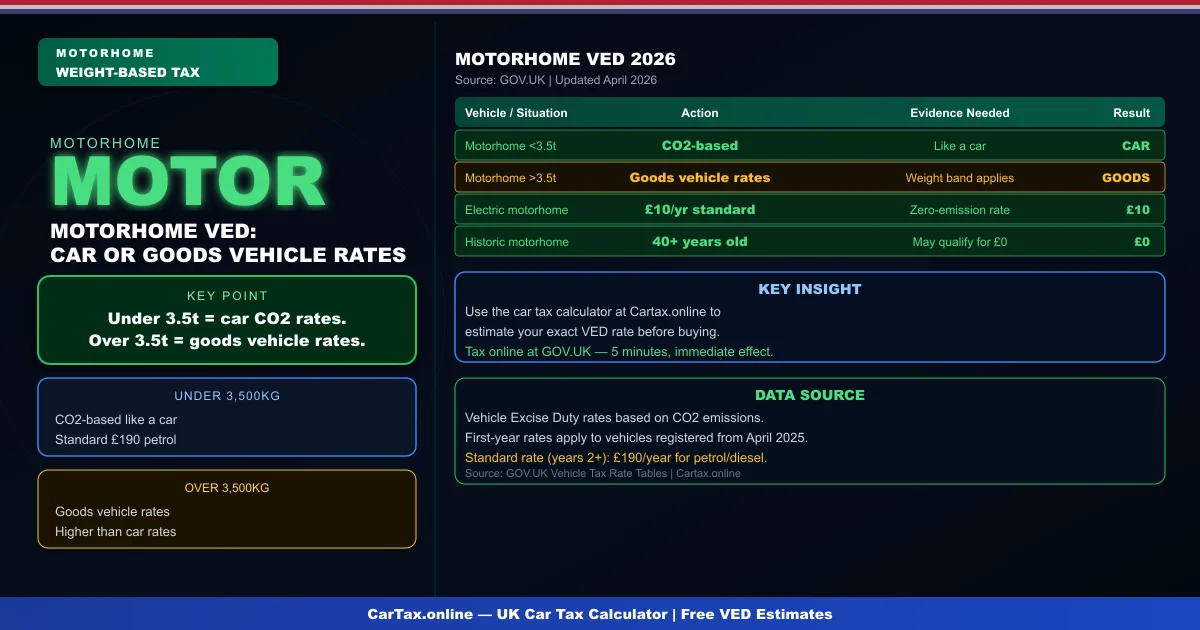
Motorhomes are generally taxed as private light goods vehicles if they have a maximum authorised mass (MAM) under 3,500kg. This means they are taxed on CO2 emissions, just like cars — the standard first-year and standard annual rates apply. A petrol motorhome with 180g/km CO2 pays the same VED as an equivalent petrol car. Zero-emission electric motorhomes pay just £10 per year from year two, making them increasingly popular.
Heavy Motorhomes Over 3,500kg
Motorhomes with a MAM over 3,500kg are classified as goods vehicles and pay the goods vehicle VED rate — which is higher than the car rate. These heavy motorhomes, typically large A-class or coachbuilt models, fall into revenue weight bands that can be significantly more expensive than standard car VED. The goods vehicle rate is based on weight and typically ranges from £165 to hundreds of pounds per year depending on the specific weight band.
Historic Motorhome Exemption
Motorhomes over 40 years old that are substantially in their original condition may qualify for historic vehicle exemption from VED. However, the definition of historic for goods vehicles is stricter than for private cars — significant modifications since manufacture may invalidate historic status. A 1984 motorhome in original condition qualifies for historic exemption, making it £0 road tax annually. Check DVLA's historic vehicle rules for motorhomes specifically. Related: Motorhome Road Tax UK 2026 | Motorhome Road Tax UK 2026 | Motorhome Road Tax UK 2026 | Car Tax and Vehicle Weight UK 2026.
Motorhomes and the Premium Rate
If a motorhome has a list price over £40,000, it pays the premium supplement of £410 per year in addition to the standard rate. However, most motorhomes — especially coachbuilt models — are priced in the £30,000-£60,000 range, so many fall into the premium rate threshold. High-specification luxury motorhomes at £70,000+ pay £600+ per year from year two (standard £190 + premium £410).
Driving Licence Requirements
While not strictly road tax, VED classification for motorhomes is linked to weight which affects driving licence requirements. A standard UK car licence (category B) covers motorhomes up to 3,500kg MAM. Driving a motorhome over 3,500kg requires category C1 on the licence. This is another reason why many motorhome owners choose vehicles under 3,500kg — to stay within the standard car licence category and the more favourable car-based VED classification.
Electric Motorhomes: The New Frontier
Electric motorhomes are an emerging market. Several manufacturers have launched or announced electric campervans and motorhomes. Zero-emission electric motorhomes pay the same favourable VED as electric cars — £0 first year and £10 per year standard rate (under 3,500kg MAM). The challenge is range: electric motorhomes currently offer 150-200 miles of range, which may limit touring options. Use the car tax calculator at Cartax.online to check VED for specific motorhome models.
Frequently Asked Questions
Q: How much is car tax (VED) in the UK 2026?
Car tax rates in the UK depend on your vehicle's CO2 emissions and list price. Standard rates start from £190 per year for petrol and diesel cars, with zero-rated VED for EVs. First-year rates vary from £0 to £2,605 depending on emissions. Additional premiums apply for vehicles over £40,000.
Q: How do I check if my car is taxed online?
You can check your vehicle's tax status for free on the Gov.uk website at gov.uk/check-vehicle-tax. You'll need your vehicle's registration number (number plate). You can also check via the Motor Insurance Database to verify road tax and insurance status simultaneously.
Q: Can I get a refund on car tax if I sell my vehicle?
Yes — if you sell or scrap your vehicle, you can claim a refund on any full months of remaining road tax. Contact DVLA with the V11 reminder letter or apply online at gov.uk. Refunds are usually processed within 4-6 weeks.
Q: Is road tax refund available when transferring ownership?
No — road tax does not transfer with the vehicle. When you sell your car, the tax is automatically cancelled and any remaining months are refunded to you by DVLA. The new owner must tax the vehicle immediately. As a buyer, always verify the vehicle's tax status before purchasing.
Q: What is the luxury car tax threshold in the UK 2026?
The additional rate for vehicles over £40,000 (list price) adds £410 per year to standard VED rates for years 2-6 of registration. This surcharge brings the annual cost for high-emission vehicles over £40,000 to around £600-690 per year. Pure EVs under £40,000 pay zero VED.